The international community's repeated failures in Haiti have bred deep fatigue and frustration. Neither the Organization of American States nor the United Nations has managed to reverse the country's tragic trajectory, and no superpower has shown a willingness to intervene on the ground. Yet in March 2024, the president of Central America's smallest nation, El Salvador's Nayib Bukele, boldly declared, "We can fix it."
Bukele has become a global symbol in the fight against gangs and organized crime, having transformed his own country from the most dangerous in the Americas to the safest in the Western Hemisphere. In 2025, El Salvador recorded a homicide rate of just 1.3 per 100,000 inhabitants. Now, he is turning his attention to Haiti, a nation besieged by powerful gang coalitions.
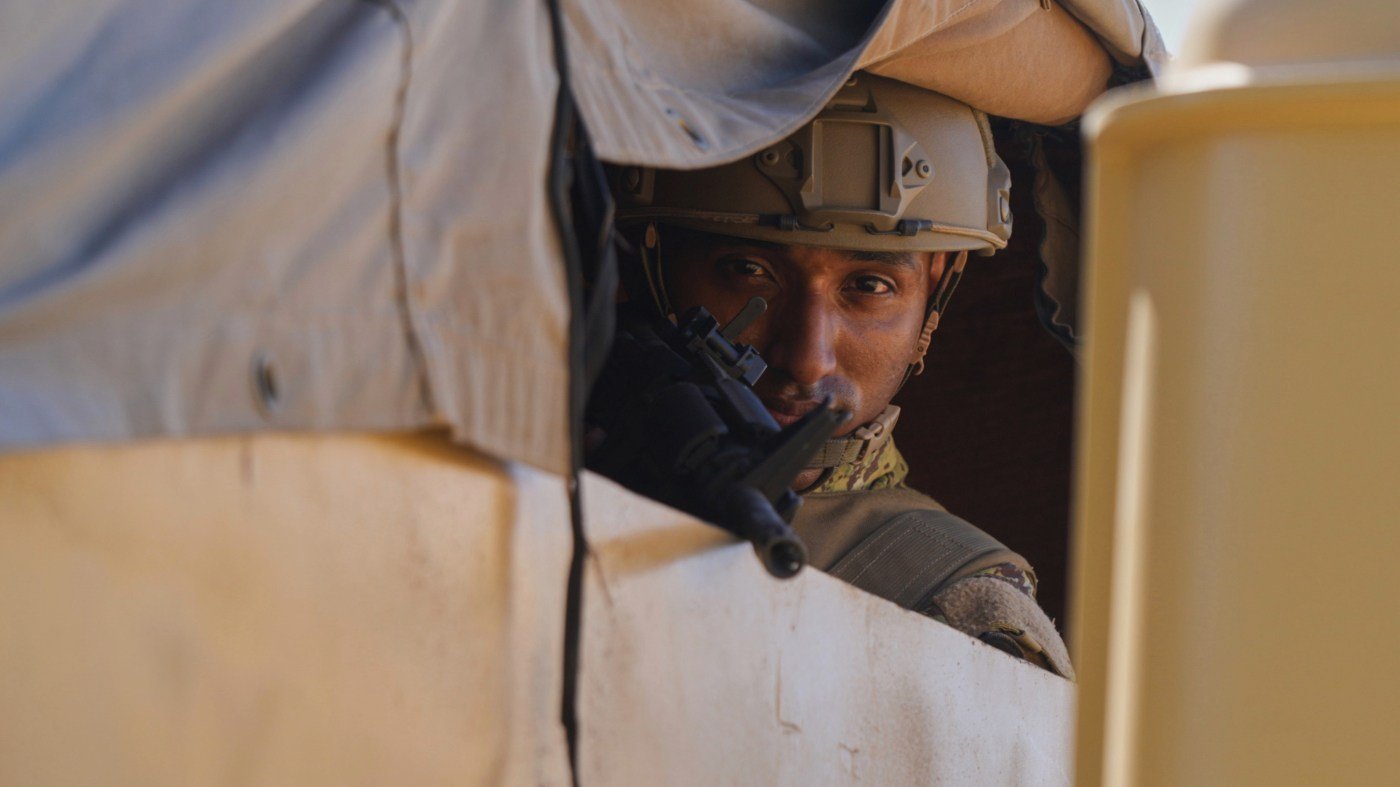
In January 2025, El Salvador joined UN security efforts in Haiti. The situation escalated in October when Haitian gangs captured four Salvadoran aviation technicians. Bukele responded by deploying an additional 2,000 troops and issuing a stark ultimatum: "We have already finished the gangs in El Salvador, and we can finish with you too."
Haiti's gang landscape is unlike anything Bukele has faced. The gangs operate under a nationwide coalition called Viv Ansanm ("Live Together"), which functions like an army. In 2025, the US designated Viv Ansanm as an international terrorist organization. According to the UN, between March 2025 and January 15, 2026, gang-related violence killed at least 5,519 people and injured 2,608, with 1.4 million internally displaced.
Bukele has sought to reassure Haitians, saying, "We can help you defeat them, but we are not invaders. We are people with the same courage as you. We must stand up, take back control of our communities, and bring those who are making us endure all this pain, all this suffering, under our control." His troops have been greeted with chants of "We are Bukele" and "Long live Bukele!" Haitian Prime Minister Alix Didier Fils-Aime thanked Bukele, stating, "He understands our fight. He came to stand on the side of the Haitian people."
Since the arrival of Salvadoran elite forces, there have been early signs of progress. For the first time, a gang leader, Jean Saint Louis (alias "Kenken"), was captured by Salvadoran forces and the Haitian Coast Guard. Last week, Mathias Saintil, a member of the "Boston Gang," was killed, and Wilson Joseph, the top leader of the 400 Mawozo gang, has requested UN mediation, expressing concern over the Salvadoran presence.
However, Bukele faces formidable challenges. Unlike in El Salvador, Haiti lacks a strong government, a functioning prosecutor's office, a robust judiciary, and a high-security prison system. He is also outnumbered by a massive gang coalition, and the unfamiliar terrain, language, and culture present additional obstacles.
US Secretary of State Marco Rubio has emphasized the need for coordination. "What you can't have is gang suppression force running into Salvadorian soldiers and shooting at each other because they think the other side are gang members," he said. "You'll need a lot of strong coordination, because they're operating alongside one another."
Amnesty International has raised concerns about human rights, noting that most Salvadoran troops deployed to Haiti are not part of the UN-authorized Gang Suppression Force, thus falling outside the mandate and monitoring mechanisms of the UN Support Office in Haiti.
The crisis in Haiti is far more complex than the gang problem in El Salvador. The country now hosts the UN Gang Suppression Force, security contractors linked to Erik Prince, Bukele's troops, Haitian police and military, and the Viv Ansanm coalition. This crowded and chaotic environment could lead to a new Vietnam in the Caribbean, or it could bring a glimmer of hope. Only time will tell whether Bukele's intervention ends in change or chaos.
For more on related political dynamics, see GOP leadership tensions and Haiti's TPS trap.