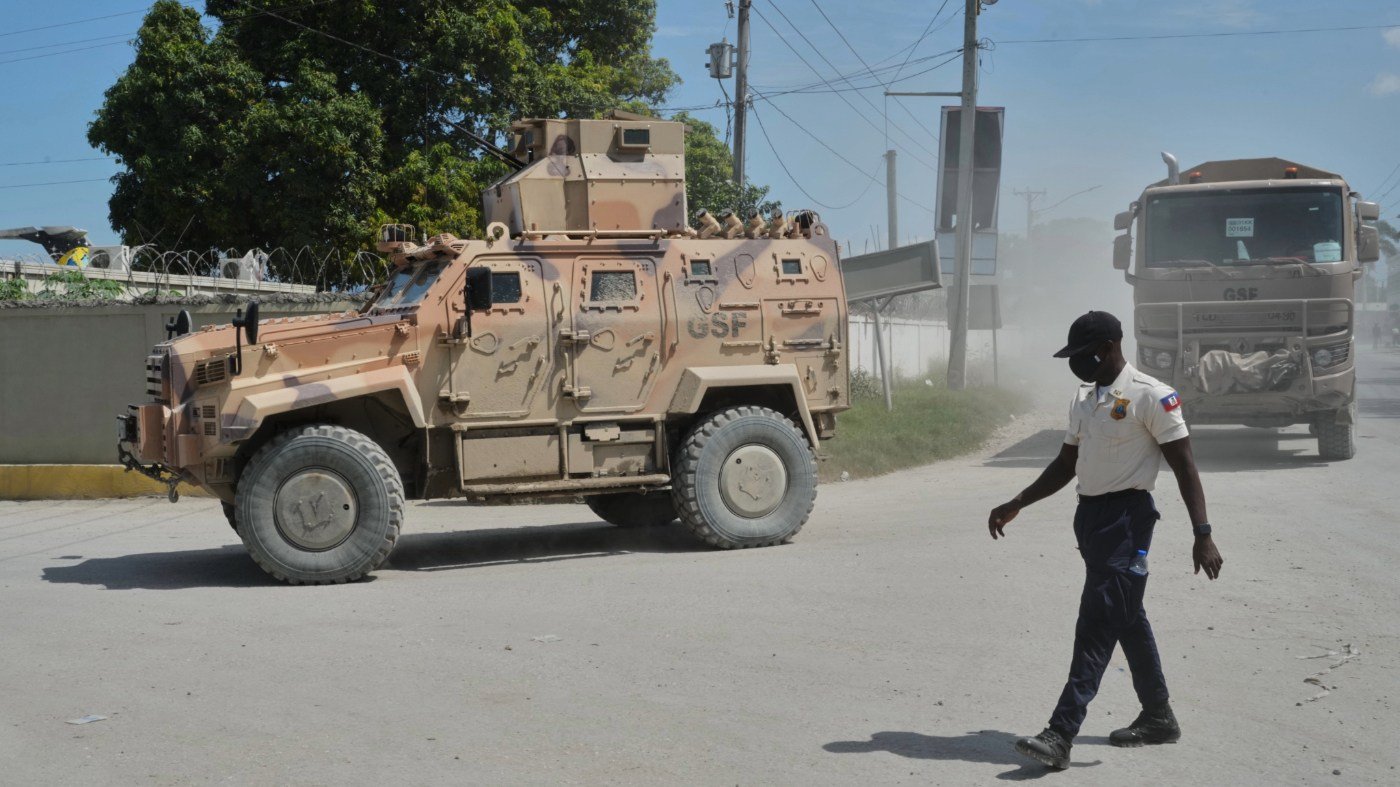
In a stark illustration of Haiti's enduring instability, the United States deported more than 160 people to the country on August 20, the first such flight since the termination of Temporary Protected Status (TPS) for roughly 350,000 Haitians. The plane landed in Cap-Haïtien, not the capital Port-au-Prince, because ongoing violence has made the main airport too dangerous for U.S. commercial flights.
TPS grants eligible foreign nationals already in the U.S. the right to stay and work legally when conditions in their home country make safe return impossible. Haiti's catastrophic 2010 earthquake—which killed over 220,000 and displaced 1.5 million—seemed to fit that model perfectly. For fifteen years, successive administrations renewed or redesignated Haiti for TPS. But this June, after a prolonged legal battle that reached the Supreme Court, Haitians lost that protection.
Both proponents and critics of TPS have pointed to the same fifteen-year duration as proof of their positions. Yet both overlook a more fundamental question: what should policy be when a disaster becomes chronic? The author, Alex-Handrah Aimé, who leads development of subsea and terrestrial networks, draws a parallel to network resilience. A well-designed system should be able to lose a link and reroute, but when recovery is incomplete, the system becomes more vulnerable and may never return to full capacity without sufficient investment.
Haiti's experience is a case in point. According to the Internal Displacement Monitoring Center, between 2008 and 2023, 44 natural disasters triggered about 2.9 million internal displacements in a country of roughly 10 million people. The nation has rarely had time to recover before the next shock. Meanwhile, successive Haitian governments have grappled with political instability, elite capture of the state, and chronic underinvestment, particularly in rural infrastructure, where barely one in ten people have electricity. By the mid-2010s, about 80 percent of urban households relied primarily on charcoal, driving demand for wood across an already stressed landscape and accelerating migration toward cities that lacked the jobs, housing, and public institutions to absorb it.
This trajectory is becoming familiar worldwide as climate and natural disasters collide with already stressed systems. Instead of the current approach—temporary renewals or terminations based on the latest country assessment—Congress should establish a formal process for when an emergency becomes a protracted national crisis. Aimé proposes a two-step national stability review, conducted jointly by the Departments of Homeland Security and State, triggered whenever a country has been designated for TPS for ten consecutive years. The country-level review, with published findings, would ask not whether the conditions that triggered the crisis persist, but whether their persistence indicates the crisis has become chronic.
Such a determination could be based on measuring the severity and durability of conditions, whether environmental and climate shocks compound them, whether safe return is feasible within a designated period, and whether institutional capacity can support returnees. Not every protracted crisis would result in a designation. But if the country review finds conditions chronic, a second-stage individual assessment would follow for people who have held TPS continuously for ten years. Only those demonstrating durable economic, community, or family ties to the U.S. would become eligible to apply for permanent residence, subject to criminal, security, and admissibility screening. Neither assessment alone would be sufficient.
The review would intentionally limit eligibility to those with a substantial history of temporary protection and deep rootedness in the U.S., matching relief to the nature of the problem and ensuring selectivity. Congress has provided permanent relief for specific populations and has considered broader legislation like the American Dream and Promise Act, but those have generally been limited to a nationality and a specific amnesty date. A national stability review would ask whether TPS remains the appropriate legal instrument given the nature and persistence of the crisis.
The United States cannot offer permanent residency to the billions of people who experience environmental vulnerability, weak infrastructure, or poor governance. A national stability review would neither admit new migrants nor automatically convert anyone's status, but it would end the practice of renewing protection for a decade or more and then suddenly declaring the country healed—or worse, signaling that we no longer care whether it is.
Fifteen years of temporary protection isn't merely evidence of political paralysis; it is evidence that in many cases, it is no longer logical to call a crisis temporary. An earthquake or hurricane ends. But a country where planes cannot safely land in its capital has already made the case that it is experiencing system-level failures. Congress should recognize the difference between acute emergencies and structural fragility and create a more nuanced humanitarian pathway for when the next disaster becomes a chronic condition.