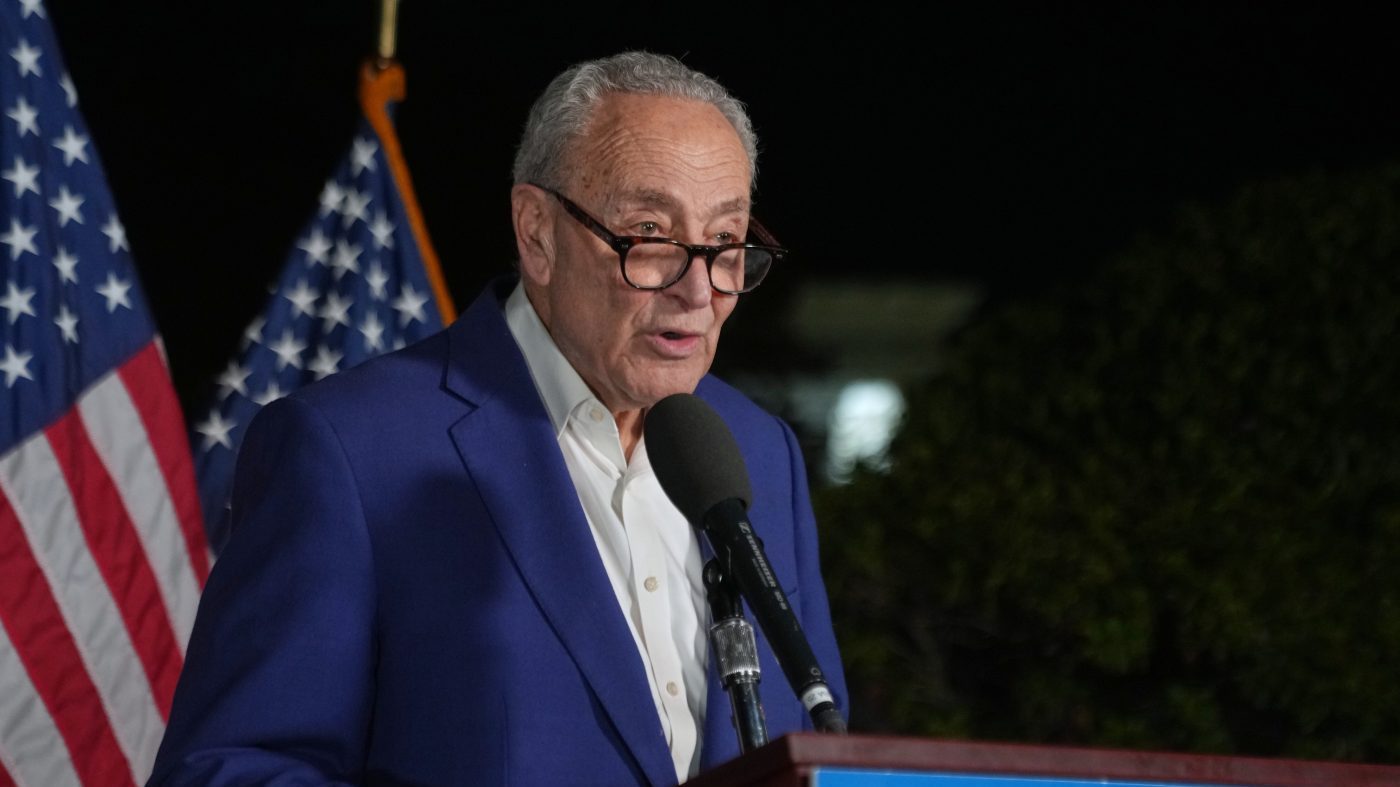
Senate Democratic Leader Chuck Schumer (N.Y.) is scheduled to address reporters Wednesday morning, fresh off a historic midterm performance that handed Democrats control of both chambers of Congress. The press conference, set for 11 a.m. EST, comes after Democrats defied expectations and delivered a sweeping rebuke to President Trump and the Republican Party.
Democrats flipped GOP-held Senate seats in Texas, South Carolina, Kansas, and Iowa—states that had long been considered safe Republican territory. According to Decision Desk HQ projections, Democrats will hold at least 54 seats in the next Senate, with only two races still too close to call. That margin gives the party significant leverage to advance its agenda and check the administration's final two years.
The victories have reshaped the political landscape in Washington, putting Democrats in a position to challenge Trump's priorities through aggressive oversight, legislative maneuvering, and the power to block judicial and executive nominees. Schumer is expected to frame the results as a mandate for Democratic governance, echoing his earlier declaration that the win represents a 'generational remake' of American politics.
The party's success extended beyond the Senate. In the House, Democrats netted a substantial number of seats, flipping districts in Wisconsin, Missouri, and elsewhere. Berman's defeat of Steil in Wisconsin's 1st District was emblematic of the broader trend, as suburban voters and independents abandoned the GOP in droves. Missouri voters also rejected a GOP redistricting plan that would have protected an incumbent Republican, instead preserving a Democratic seat—a sign that even traditionally conservative states are shifting.
Republican leaders have acknowledged the scale of the defeat. House Minority Leader Mike Johnson, who conceded the loss, has vowed to build a 'firewall against Democratic probes,' signaling a combative posture in the minority. Meanwhile, Johnson has stepped aside as the GOP's top House leader, triggering a race for his replacement. Senator John Thune has similarly promised fierce resistance as Democrats take control of the Senate, according to his recent statements.
For Democrats, the midterm wave represents a vindication of their strategy and a rejection of the administration's policies on the economy, healthcare, and social issues. The party now controls the agenda, with plans to push for voting rights protections, abortion access, and expanded healthcare coverage—issues that proved potent on the campaign trail. The wins also position Democrats to investigate the Trump administration's actions, including potential abuses of power and financial conflicts.
Political analysts note that the scale of the victory is rare in midterm elections, which typically favor the party out of power. The Democrats' success in traditionally red states suggests a realignment of the electorate, driven by demographic changes and suburban dissatisfaction with the GOP's hard-right turn. The party's ability to compete in Texas and South Carolina could have long-term implications for the 2028 presidential race.
Schumer's press conference will be closely watched for signals on the party's legislative priorities and its approach to governing with a narrow but workable majority. He is expected to emphasize unity and a focus on kitchen-table issues, while also outlining a robust oversight agenda. The event will stream live, allowing voters and political observers to hear directly from the incoming majority leader.
As the dust settles, the GOP faces an internal reckoning over its message and strategy. Some conservatives blame the losses on broken promises and a failure to deliver on key campaign pledges, as Representative Thomas Massie has argued. Others point to the polarizing effect of the president's rhetoric. Either way, the midterms have fundamentally altered the balance of power in Washington, setting the stage for a contentious final two years of Trump's presidency.