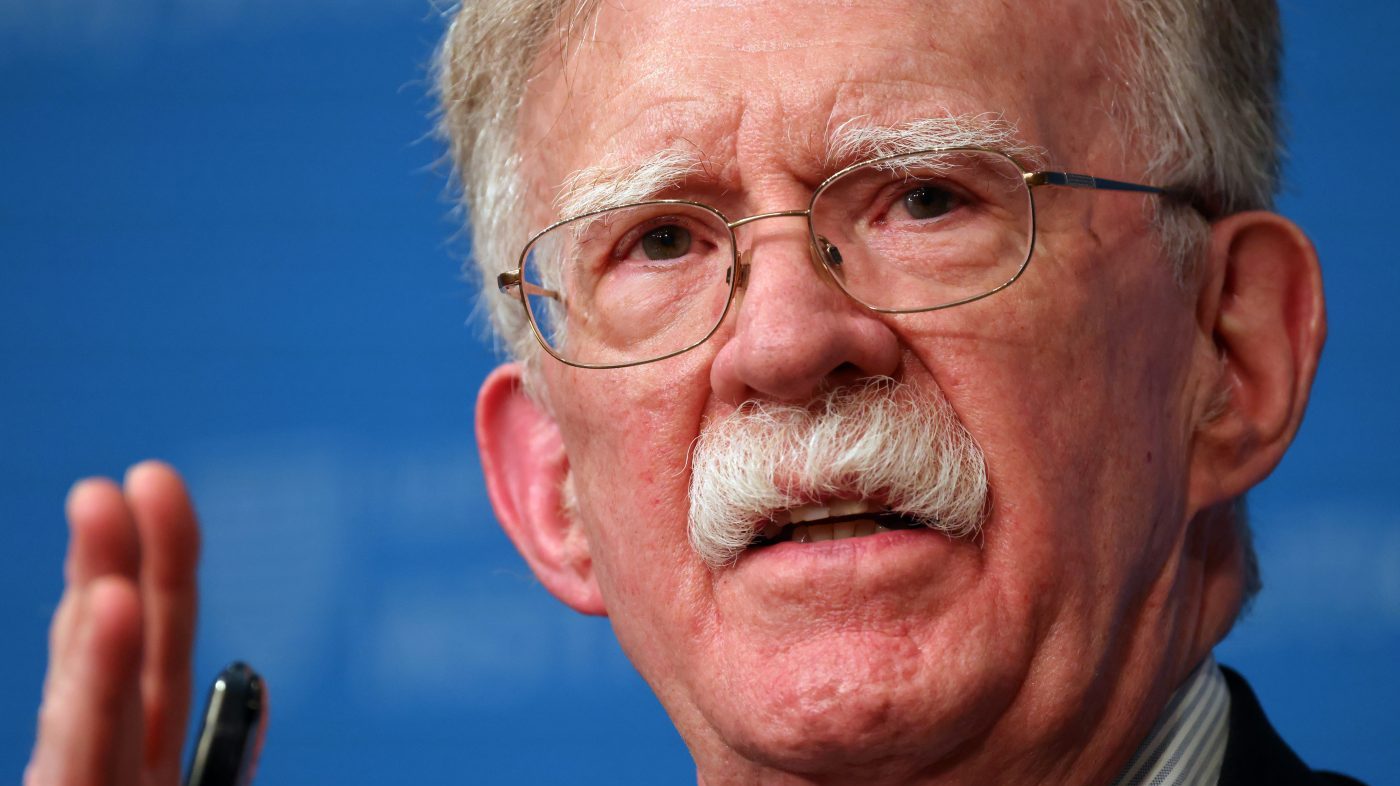
Former National Security Adviser John Bolton offered a pointed interpretation of President Trump's recent claim that Iran provided the United States with a "big present," suggesting the gesture was likely the sanctioned release of an oil tanker into global markets.
Appearing on NewsNation's "The Hill" on Wednesday, Bolton framed his assessment as informed speculation. "I believe it is a tanker loaded with Iranian oil that they permitted to leave," Bolton stated. "President Trump likely views this as a present because he anticipates it will exert some downward pressure on global oil prices."

Bolton tempered the potential domestic impact of a single shipment, noting, "If it does affect prices, I don't know the tanker's size, but we're talking about cents per gallon at the pump." His comments arrive amid broader political vulnerability for the administration on economic issues, including energy costs.
Questions Over Financing and Strategic Clarity
The former adviser raised significant national security concerns about the arrangement's potential consequences. "What remains unknown about that tanker, or other shipments of Iranian oil where the Treasury Department has lifted sanctions, is whether the purchasers will reimburse the Iranian government," Bolton told host Blake Burman. "This could mean financing Iran's efforts to kill our service members."
While Bolton praised Trump for conducting military strikes against Iranian targets, he reiterated his long-standing call for the administration to define clear strategic objectives and a timeline for engagement. This critique echoes concerns from other quarters, including from figures like Rep. Nancy Mace, who has urged caution against escalating hawkishness.
Broader Context of Strait of Hormuz Tensions
Bolton's analysis follows reports that commercial shippers have paid premiums as high as $2.2 million for safe passage through the Strait of Hormuz, a critical maritime chokepoint connecting the Persian Gulf to the Indian Ocean. The strait facilitates roughly one-fifth of the world's daily oil shipments.
Its effective closure, due to the threat of Iranian attacks on vessels, has been a primary driver of rising global fuel prices. The administration's handling of the crisis has faced public scrutiny, with polling showing majority opposition to military action and disapproval of Trump's management of Iran tensions.
The episode underscores the complex interplay between energy markets, sanctions policy, and military strategy. Trump's claim of a diplomatic "present" from Tehran, which Bolton has now interpreted as a commodity market maneuver, highlights the opaque nature of back-channel communications and economic bargaining amidst overt hostility.
This development occurs as the White House balances military pressure with diplomatic overtures, a dual-track approach formalized in initiatives like the recently confirmed 15-point peace framework. Bolton's public speculation serves to question the strategic coherence and potential unintended consequences of such deals, framing the oil tanker release not as a simple economic win but as a transaction with possible lethal ramifications.