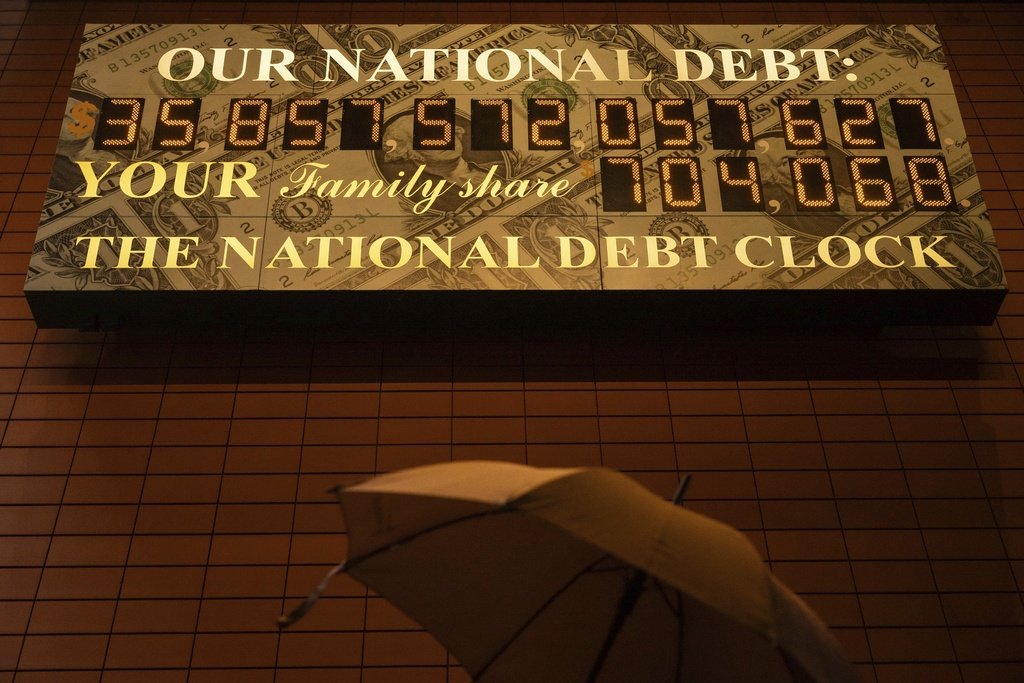
Lawmakers Propose Fiscal Anchor Amid Soaring Deficits
A coalition of lawmakers is pushing Congress to adopt a concrete fiscal target for the first time, arguing that the absence of any deficit benchmark has allowed borrowing to spiral dangerously. The Bipartisan Fiscal Forum, led by Representatives Bill Huizenga (R-MI) and Scott Peters (D-CA), is advocating for a statutory limit that would cap the annual federal deficit at 3 percent of gross domestic product.
The proposal comes as annual deficits approach $2 trillion, with interest payments now exceeding the entire defense budget. The current deficit-to-GDP ratio stands near 6 percent, a level the forum argues is unsustainable and twice what is needed to stabilize the national debt relative to the size of the economy. "We cannot grow our economy, safeguard our national security, or respond effectively to crises if we routinely run deficits this large," the lawmakers contend.

A Target Long Established Abroad, Absent at Home
The forum notes that while the European Union has long operated under the Stability and Growth Pact, which mandates deficits below 3 percent of GDP, the United States has no comparable framework. This lack of a target persists even as the U.S. national debt now surpasses the collective GDP of the European Union. The lawmakers attribute this gap to a prolonged era of low interest rates, which created a bipartisan illusion that borrowing could continue indefinitely without economic consequences.
The 3 percent target is designed to be a realistic constraint, not an unattainable ideal. It would, according to the forum's analysis, put the debt on a downward trajectory relative to the economy while allowing Congress to retain discretion over specific tax and spending decisions. The goal is to anchor fiscal debates to what the economy can sustainably support, a principle that has seen support across administrations. The concept echoes the 2010 Simpson-Bowles Commission's recommendations and has drawn backing from figures ranging from the Obama administration to Treasury Secretary Scott Bessent.
Warnings from Markets and Economists
Prominent financial experts have amplified calls for fiscal discipline, warning that the current path risks severe economic damage. Investors like Ray Dalio, Warren Buffett, and economist Ken Rogoff have all voiced concerns that persistent high deficits could erode confidence in the U.S. dollar, trigger higher interest rates, and stifle growth. Dalio issued a particularly stark warning, stating, "If the U.S. doesn’t cut the deficit to 3 percent of the GDP, and soon, we risk facing an economic heart attack in the next three years."
The forum's resolution aims to decouple this basic fiscal target from the normal partisan battles over policy specifics, framing it as a minimum requirement for any responsible budget. The effort reflects a growing, though often fragile, bipartisan recognition of fiscal risk, similar to moves seen in other policy areas, such as the recent bipartisan push to cap insulin costs or the legislation targeting Chinese-made robotics over security concerns.
Integrating Discipline into the Budget Process
The long-term strategy is to embed the 3 percent target into future congressional budget frameworks, forcing lawmakers to account for the fiscal impact of new legislation. "This will help us live within our means again and ensure our debt does not continue to spiral out of control," the chairs wrote. The proposal arrives amid other significant spending debates, including calls for increased NATO defense spending and ongoing struggles to pass appropriations, where bipartisan resistance has previously derailed funding deals.
Ultimately, the forum's members believe establishing this target would reset the congressional debate over how much debt the nation can safely carry. They argue it is a necessary first step toward more ambitious goals, like a balanced budget, and a critical measure to reassure global markets about America's fiscal stewardship in an increasingly volatile economic landscape.