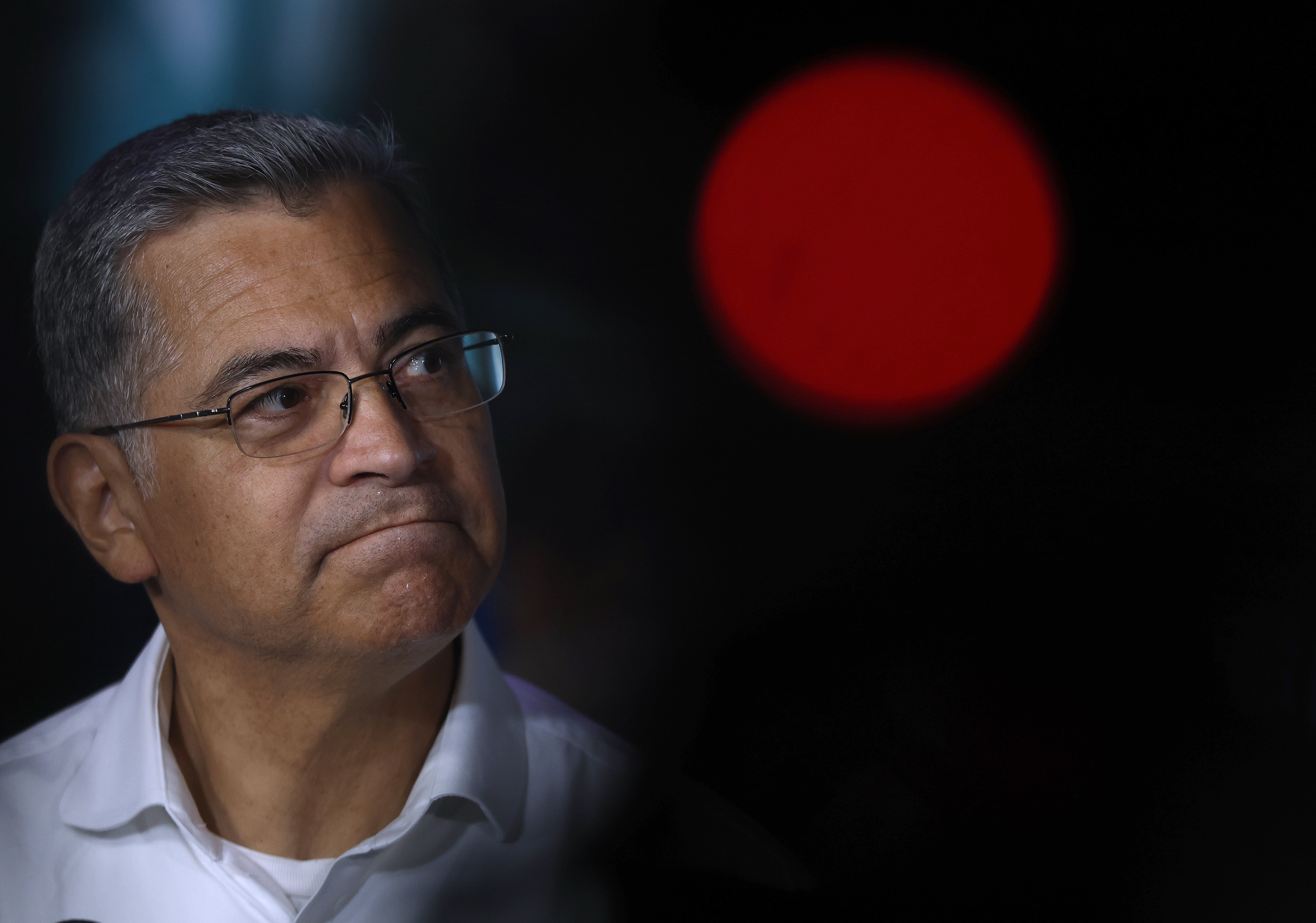
As California's gubernatorial primary narrows, Democratic frontrunner Xavier Becerra is facing mounting scrutiny over his ambiguous position on the death penalty—a issue that could define his tenure if elected. Becerra, who served as state attorney general from 2017 to 2021, has left voters and advocates guessing whether he would continue Governor Gavin Newsom's execution moratorium or pursue capital punishment more aggressively.
Becerra's record is a study in contradictions. Upon his nomination by then-Governor Jerry Brown, Becerra stated, "I support the death penalty, but I hate the way it's being executed." As attorney general, he pushed forward with capital prosecutions, including seeking death sentences in high-profile cases. In 2017, he pursued execution for a man who killed eight people at a beauty salon. More controversially, he pressed for the death penalty against Robert Lewis, a defendant with intellectual disabilities—a move the California Supreme Court later overturned, finding "substantial evidence" of his disability.
Becerra's office also argued against requiring jury unanimity and a "beyond a reasonable doubt" standard for death sentences, a position that drew a rare public rebuke from Newsom. Newsom filed a brief calling those safeguards essential given systemic flaws in California's capital punishment system. Despite the governor's opposition, Becerra's stance prevailed in court.
Yet Becerra has also expressed personal reservations. In 2016, he voted for Proposition 62, which would have abolished the death penalty in California. He told the Los Angeles Times, "I have real reservations about the death penalty. I think there is ample proof that it has not worked the way we would want when it comes to undertaking the most severe form of punishment that's not reversible."
Critics argue Becerra's "just doing my job" defense is a political dodge that obscures his true position. As attorney general, he did little to address racial disparities, geographic inequities, or the risk of wrongful convictions in capital cases. This has alarmed death penalty opponents in a state with the nation's largest death row population.
Becerra's evolution mirrors the broader debate in California, a state that has not executed anyone in over a decade but still retains capital punishment on the books. Political analysts describe California as a "death penalty swing state," where gubernatorial decisions could influence national trends. With Becerra now leading the race, as recent polls show him pulling ahead, his stance carries outsized weight.
The question remains: Will Becerra align with progressives who want to abolish the death penalty, or will he enforce the law as written? His record offers no clear answer, leaving voters to wonder what kind of governor he would be.