California remains in a peculiar state of paralysis over capital punishment. Though the death penalty is still on the books and juries continue to hand down death sentences, the state has not executed anyone since 2006. Governor Gavin Newsom's 2019 moratorium, combined with the lack of an approved execution protocol or a functioning execution chamber, means the more than 500 inmates on death row face no imminent threat of execution.
This limbo reflects a broader tension: voters have repeatedly chosen to keep the death penalty, yet governors have refused to carry it out. According to the Pacific Research Center, since 1978 California has imposed 769 death sentences, carried out 13 executions, and exonerated six inmates. Nearly 200 condemned individuals have died while awaiting execution.

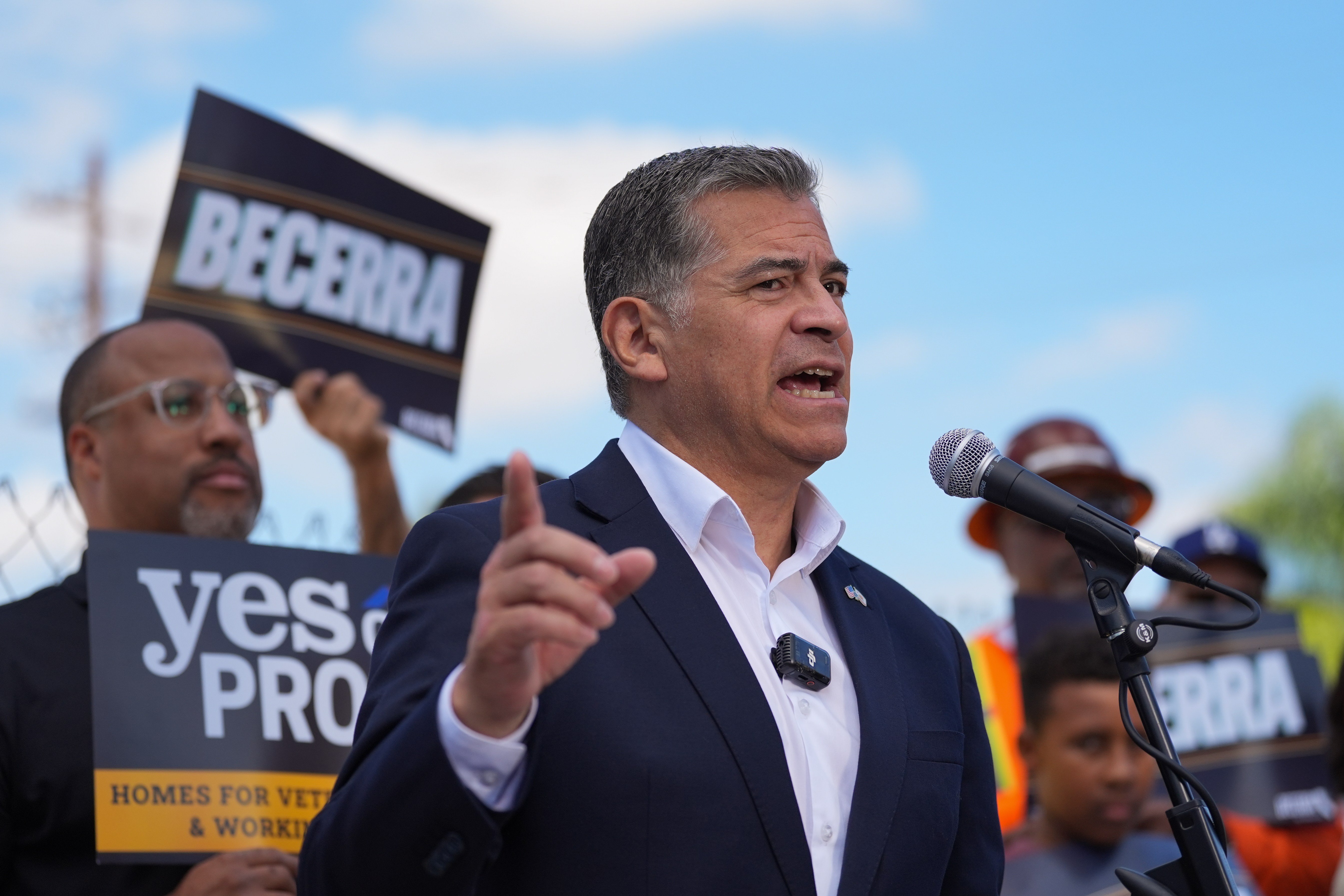
Now, Xavier Becerra, the Democratic nominee for governor and Newsom's likely successor, has announced he would continue the moratorium if elected. That position, announced on Sept. 8, is a welcome shift for a politician who once supported capital punishment. But advocates argue Becerra must go further to break the state's death penalty impasse.
Becerra has called the system “a costly, flawed system that disproportionately impacts Black and brown communities and too often gets it wrong.” The statistics back him up: Black defendants are 8.7 times more likely to receive a death sentence than others, and Latino defendants are 6.2 times more likely. Cases with white victims are nearly nine times more likely to result in a death sentence. All eight exonerations from California's death row have involved people of color.
Given these disparities, Becerra should urge Californians to support efforts to end the death penalty entirely. If that's not politically feasible, he should at least commit to working with the legislature to narrow the scope of capital punishment and apply the state's Racial Justice Act retroactively to those sentenced before it became law in 2020.
Unlike many states, California's death penalty cannot be abolished by the legislature alone because it was approved by voters in 1978. Two subsequent ballot measures, in 2012 and 2016, also upheld it. Although recent polls show most Californians now prefer life without parole, abolitionists have largely abandoned ballot initiatives in favor of a legal strategy.
That strategy centers on a lawsuit arguing that capital punishment violates the state constitution's equal protection clause because of its discriminatory application. The plaintiffs contend that proof of intentional discrimination is not required; a disparate impact is enough. The California Supreme Court has ordered an evidentiary hearing on the statistical evidence, a first-of-its-kind systemic challenge that could pave the way for similar cases in other states.
Becerra should publicly support this litigation and embrace the abolitionist cause. More boldly, he should call on Newsom to commute all existing death sentences before leaving office. Such a move would reduce the nation's death row population by more than a quarter, surpassing even President Biden's commutation of 37 federal death sentences.
If Newsom won't act, Becerra should promise to do so himself. Now is the moment for him to make that clear to California's voters. The state has a chance to lead on criminal justice reform, but it requires more than maintaining the status quo.