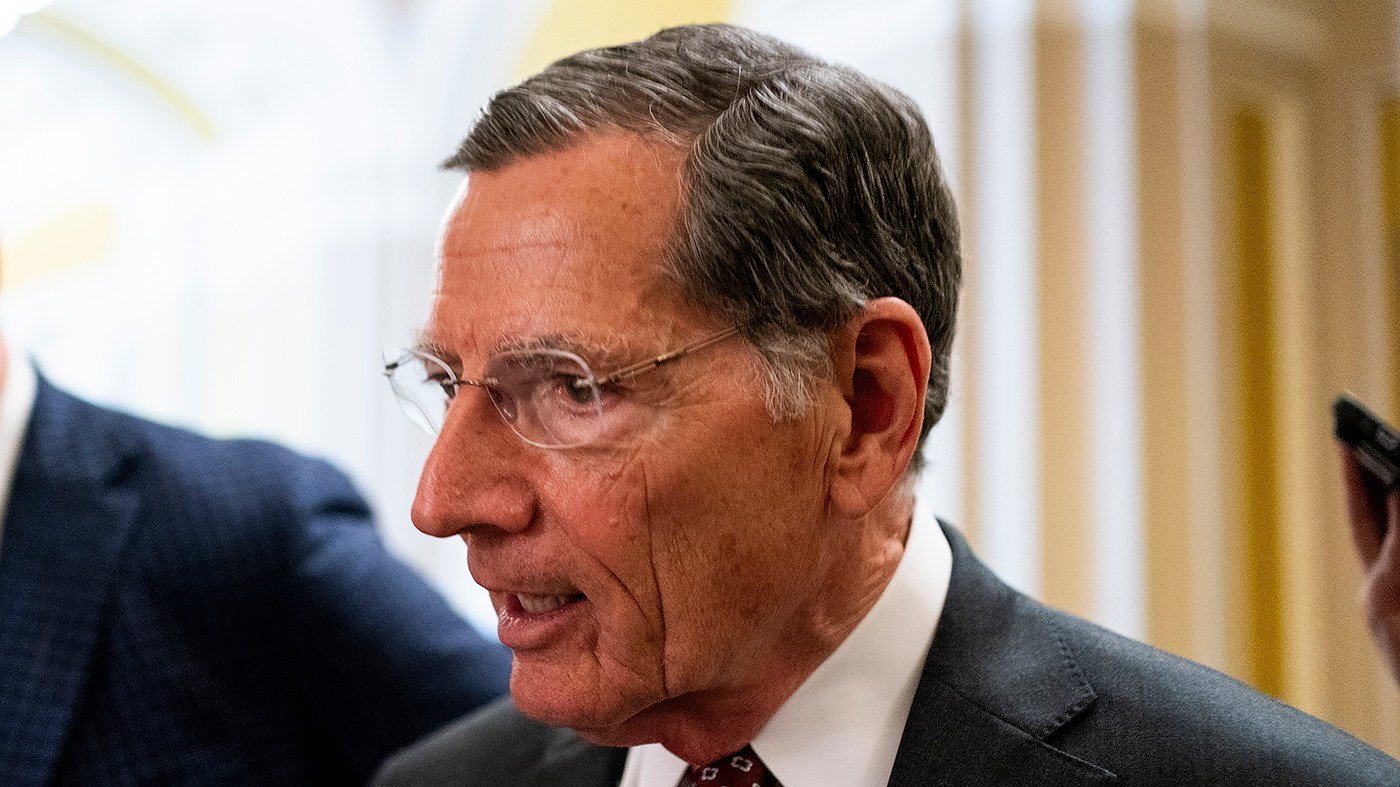
Senate Majority Whip John Barrasso (R-Wyo.) said Sunday that the Trump administration's next wave of economic pressure on Iran will be a decisive blow, calling it “D-Day” for the country's already struggling economy. Speaking on Fox News’s “Sunday Morning Futures” with guest host Jason Chaffetz, Barrasso argued that Tehran’s financial system is on the verge of collapse and that the president’s aggressive strategy is the right approach.
“Their economy is in shambles. And they’re still dangerous. So the President’s right to focus on it. And now he’s going even further economically. And as you said, tomorrow is D-Day for the economy in Iran,” Barrasso said.

The Wyoming Republican predicted that the intensified pressure will force Iran to back down on two key fronts: reopening the Strait of Hormuz to commercial shipping and abandoning its nuclear weapons ambitions. Iran’s decision to effectively close the strait has disrupted the flow of oil through a waterway that carries roughly one-fifth of the world’s daily oil shipments, sending ripples through global energy markets.
The centerpiece of the administration’s “economic D-Day” is the aggressive use of secondary sanctions, which would penalize any foreign nation, bank, or business that provides economic lifelines to Iran. The Treasury Department has also ramped up enforcement on digital exchanges, freezing an estimated $500 billion in Iran-linked cryptocurrency assets. Meanwhile, the U.S. Navy is hunting down unregistered tankers and oil smuggling networks, aiming to drive Iranian crude exports to zero. Federal enforcement is also targeting alternative banking mechanisms, including currency swap lines, cash transfers, and underground exchange houses, according to CBS News.
Treasury Secretary Scott Bessent is scheduled to unveil the detailed mechanics of this expanded “Operation Economic Fury” plan during a press conference on Monday. The announcement is expected to outline how the administration will coordinate sanctions, naval operations, and financial enforcement to maximize pressure on Tehran.
Iranian officials, however, dismiss the campaign as counterproductive. Foreign Minister Seyed Abbas Araghchi took to social media Thursday, writing that the so-called “Economic D-Day” is a distraction from America’s own economic troubles. “The so-called ‘Economic D-Day’ is a diversion from America’s own crisis: unprecedented debt & surging interest costs,” Araghchi posted on X. “Doubling down on failed policies will only bring further defeat—and enmity of Iranians.”
The standoff comes amid a broader trade war that has already disrupted global markets. As tariffs on Canadian goods took effect, the administration is juggling multiple economic fronts. The trade war with Canada has drawn sharp criticism from some lawmakers, and the administration’s aggressive tariff posture has sparked internal GOP disputes, as seen in President Trump’s recent attacks on Reps. Marjorie Taylor Greene and Thomas Massie over a beef tariff issue.
Barrasso’s comments signal that the administration remains committed to its maximum-pressure strategy, despite warnings from Tehran that it will only deepen U.S. debt and international isolation. Analysts say the coming weeks will test whether economic coercion can achieve what years of military threats have not: a fundamental shift in Iran’s behavior.