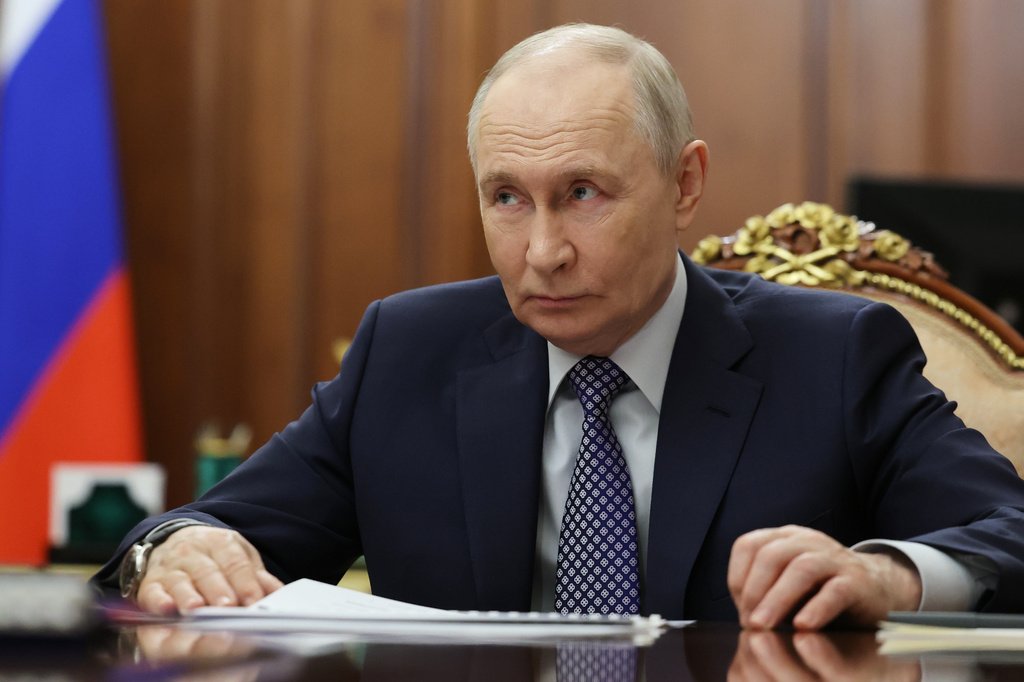
A group of exiled Russian analysts argues that the Western strategy of economic sanctions has fundamentally failed to alter the Kremlin's course, necessitating a complete overhaul that focuses on fracturing the domestic elite and offering a viable future to the Russian middle class. They contend that without providing an attractive alternative, the current approach only solidifies President Vladimir Putin's control.
Sanctions Fail to Deliver Promised Results
For years, Western powers have implemented escalating sanctions with the stated goal of pressuring Moscow to change its behavior, particularly regarding Ukraine. Proponents repeatedly predicted these measures would cripple the Russian economy and spark internal revolt. Yet, as the analysts note, the Russian economy has not collapsed, and no popular uprising has materialized. The policy, they argue, has been unsuccessful because it targets the regime as a monolith without creating internal divisions.
The Regime Change Dilemma and Elite Loyalty
The authors draw parallels to other authoritarian contexts, suggesting that simply removing a leader is insufficient. Regimes endure through the loyalty of their supporting elite and the acquiescence of the population. They point to recent U.S. actions in Venezuela and Iran as examples where forceful intervention did not guarantee a pro-Western outcome. The core failure regarding Russia, they state, is that the West has never seriously engaged in dialogue with or made attractive offers to members of the Russian elite who might seek distance from Putin.
This failure was starkly illustrated in early 2022 when numerous wealthy Russians fled to Europe following the invasion of Ukraine. Instead of being welcomed, many—including some who publicly criticized the war—found themselves swiftly sanctioned and stripped of residency rights, effectively pushed back toward Moscow. A similar dynamic played out when hundreds of thousands of Russians fled mobilization later that year, only to face significant bureaucratic hurdles in obtaining legal status in the European Union. These policies, the analysts say, have alienated potential allies and reinforced the Kremlin's narrative.
The Crucial Role of the Silent Middle Class
The analysis identifies a critical group beyond the oligarchs: the educated, professional middle class. These individuals possess the technical knowledge and competence required to run the country but currently see no alternative to silent compliance. The consolidation of a police state, the degradation of digital connections to the outside world, and the threat of arbitrary nationalization leave them with little choice but to stay. The recent conspicuous absence of many billionaires from a key meeting with Putin, with only 10 of 149 attending, may signal underlying elite unease, but without an exit ramp, dissent remains muted.
A Proposed Strategic Shift
The authors propose a new strategy centered on creating "ways for both individual and collective exit." This means actively working to split the local elites and presenting a credible program to reincorporate the Russian middle class into Western economic, societal, and cultural spheres. The goal is not a direct military confrontation—an untenable option with a nuclear power—but rather fostering conditions where Putin's own inner circle might eventually move against him, akin to the fate of former Serbian leader Slobodan Milosevic.
This approach is framed as a strategic necessity, not merely an ideological preference. As long as the current regime holds power, any durable global security architecture is impossible, and opportunities to drive a wedge between Moscow and Beijing remain limited. The ongoing conflict between Israel and Iran has inadvertently provided Russia with economic relief through higher oil prices and reduced sales restrictions, further underscoring the limitations of the current pressure-based model. Parallel debates are occurring regarding policy toward Iran, where some analysts urge a shift in U.S. visa policy to target the regime rather than the Iranian people.
Consequences of Inaction
Without such a strategic pivot, the analysts warn, the confrontation will become self-perpetuating. They argue that anti-Western dictatorships cannot be pacified through economic pressure alone; they must be undermined from within. This requires winning the trust of segments of the local elite and the middle class, both inside Russia and in exile. Engaging these groups, fostering rifts between them and the Kremlin, and bringing them to the West's side is presented as the only viable path to a more stable and predictable Russia—and, by extension, a secure Ukraine. The international community's challenges in confronting Russian aggression are further highlighted by incidents like the recent bipartisan Senate demand for answers on sanctioned Russian officials visiting Capitol Hill, and diplomatic stalemates such as the failed UN Security Council resolution on the Strait of Hormuz after Russian and Chinese vetoes.
Ultimately, the report concludes that the West's failure to offer a compelling alternative future for Russia's key societal groups ensures the continuation of the status quo. A lasting resolution to the security crisis emanating from Moscow depends on a policy that looks beyond sanctions to actively cultivate the forces within Russia that could one day facilitate its transformation.