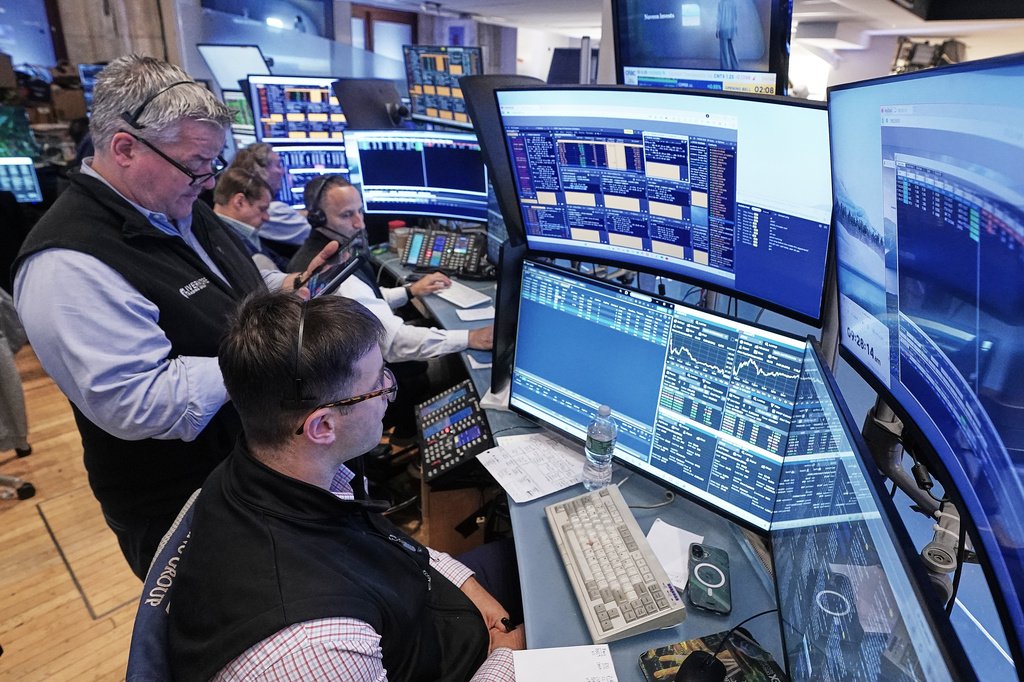
Wall Street analysts are increasingly sounding the alarm that the current stock market surge, fueled by artificial intelligence, may be inflating a dangerous bubble. Concerns center on sky-high valuations and a self-reinforcing cycle of investment that could unravel with severe consequences.
The hype around AI has reached fever pitch, with major events like the SpaceX IPO—priced at $135 per share, valuing the company at over $1.75 trillion—and upcoming offerings from AI firms Anthropic and OpenAI drawing intense scrutiny. The so-called hyperscalers—Alphabet, Amazon, Meta Platforms, Microsoft, and Oracle—are projected to spend approximately $755 billion on AI-related capital expenditures in 2026 alone. So far, strong earnings have justified the parabolic rise in some stocks, but analysts question whether this growth is sustainable.

Debt-Fueled Investment Raises Red Flags
While semiconductor and memory chip revenues have boomed, relying on this momentum for long-term outperformance is risky. The assumption that AI infrastructure spending will continue unabated is uncertain. Major tech firms are already turning to additional debt and equity financing to support their elevated capital expenditures, as even their substantial free cash flow proves insufficient for the escalating investments needed for AI infrastructure.
This spending has become a key driver of U.S. GDP growth, both directly through massive capital investment and indirectly through increased purchasing power among the wealthiest. But this reliance on a concentrated AI boom means a burst bubble could trigger a severe economic downturn, as highlighted by recent analysis of market trends.
Historians like Charles Kindleberger, in his work Manias, Panics, and Crashes, describe asset bubbles as episodes where prices become disconnected from fundamentals, fueled by investor psychology and credit expansion. His insights resonate today amid evidence of irrational exuberance. Similarly, financial historians William Quinn and John Turner note that technological innovations can trigger bubbles by creating high profits for early adopters, attracting momentum investors, and encouraging more tech firms to go public. The roaring twenties and dot-com bubble are classic examples.
Media and Novice Investors Fuel the Fire
Intense media coverage and a “new era” narrative help sustain high prices, as traditional valuation rules are ignored. Investors buy not for intrinsic value but in hopes of selling to a “greater fool.” Brent Goldfarb and David Kirsch, in Bubbles and Crashes, identify four conditions for bubble formation: high uncertainty, novice investors, pure-play investment opportunities, and a compelling narrative. All are present today, with retail investors driving gains and “buy the dip” behavior preventing corrections. Passive investing has also amplified momentum, channeling capital to winners and inflating valuations beyond fundamentals.
The economic stakes are high. The U.S. economy is weaker than during the dot-com era, with growth dependent on high-income consumers, according to a New York Fed study. Unlike the late 1990s, when real GDP grew over 4% annually and prosperity was widely shared, today’s economy is unbalanced. The federal government, which ran surpluses from 1998 to 2001, now faces large deficits, with debt exceeding 120% of GDP. This fragile fiscal backdrop could exacerbate the fallout from a bubble burst.
Recent political developments, such as the secrecy surrounding Trump's Iran deal stirring market gains, add to the uncertainty. Meanwhile, strains in the U.S. debt market highlight the risks of high Treasury yields and foreign pullback. The convergence of these factors suggests that the AI bubble may be more perilous than past manias.