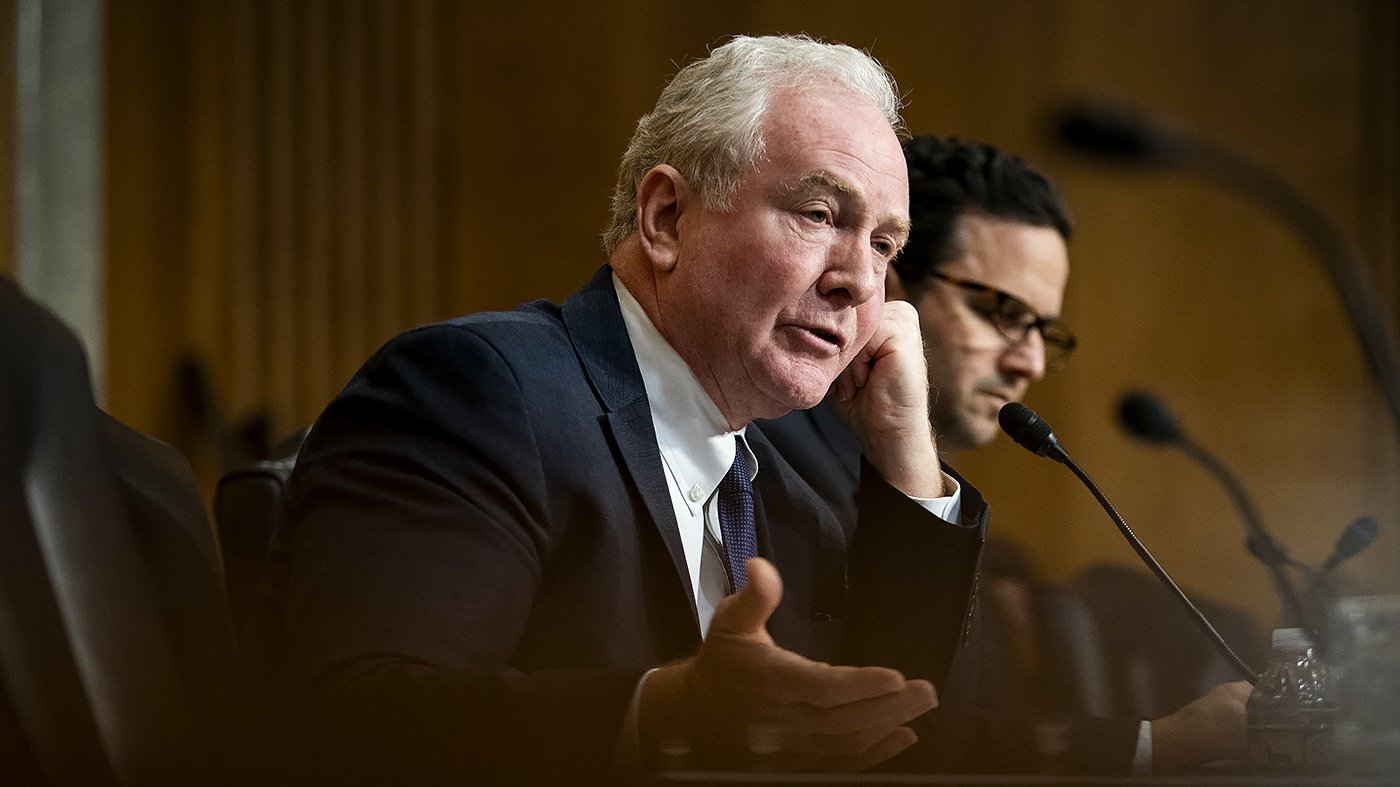
Sen. Chris Van Hollen (D-Md.) on Thursday declined to offer a clear endorsement of Senate Minority Leader Chuck Schumer (D-N.Y.) remaining in his leadership post, instead emphasizing the party's focus on the upcoming midterm elections.
In an interview with CNN's Kaitlan Collins, Van Hollen repeatedly deflected when asked whether Schumer should continue as the top Democrat in the Senate. "I'm focused on the 2026 elections," he said, avoiding a direct answer.
His reluctance comes amid growing discontent among Democratic voters with the party's current leadership. A Politico poll from June found that 47 percent of Democratic-leaning voters believe Schumer should not retain his role as minority leader, while only 28 percent support him staying. The same survey revealed a split over the party's direction: 40 percent want candidates to align with Democratic leadership to defeat President Donald Trump, but 42 percent prefer challengers who would push for new ideas.
When Collins pressed further, noting that only about 3 in 10 Democratic voters view Schumer favorably, Van Hollen acknowledged the difficulty of the job. "Well, he's got a very tough job," he said. "My view is we should get through the 2026 election. See what voters say."
Van Hollen also stressed the importance of preparing for the 2028 presidential race, arguing that Democrats need to win back the White House. "It would be good to win the upper or lower chamber, but we need to have a Democrat in the White House," he added, signaling that the party's long-term strategy extends beyond the immediate midterm cycle.
The Maryland senator's comments echo a broader unease among Democratic candidates in competitive races. Iowa state Rep. Josh Turek (D), who is running for the Senate seat being vacated by Republican Joni Ernst, also declined to say whether he would back Schumer for leader in the next Congress. Meanwhile, Troy Jackson, a former Maine Senate president challenging Republican Sen. Susan Collins, told The New York Times he would not support Schumer as the party's leader.
These refusals come as Democrats navigate a difficult political landscape, with recent polling showing the party holding a modest advantage over Republicans in generic midterm tests, yet facing internal divisions over ideology and strategy. Van Hollen's avoidance of a direct answer underscores the delicate balance many Democrats are striking as they seek to rally the base without alienating voters who are hungry for change.
The question of Schumer's future is likely to remain a flashpoint as the 2026 elections approach, with some candidates openly distancing themselves from the current leadership. As Democrats hold a narrow edge in midterm polls, the party's ability to unify behind a clear message—and a clear leader—may prove crucial.
For now, Van Hollen's stance suggests a wait-and-see approach, deferring to voters rather than committing to any internal leadership battle. Whether that strategy will satisfy a restive Democratic base remains to be seen, but it reflects a party in flux as it looks toward both the midterms and the next presidential contest.