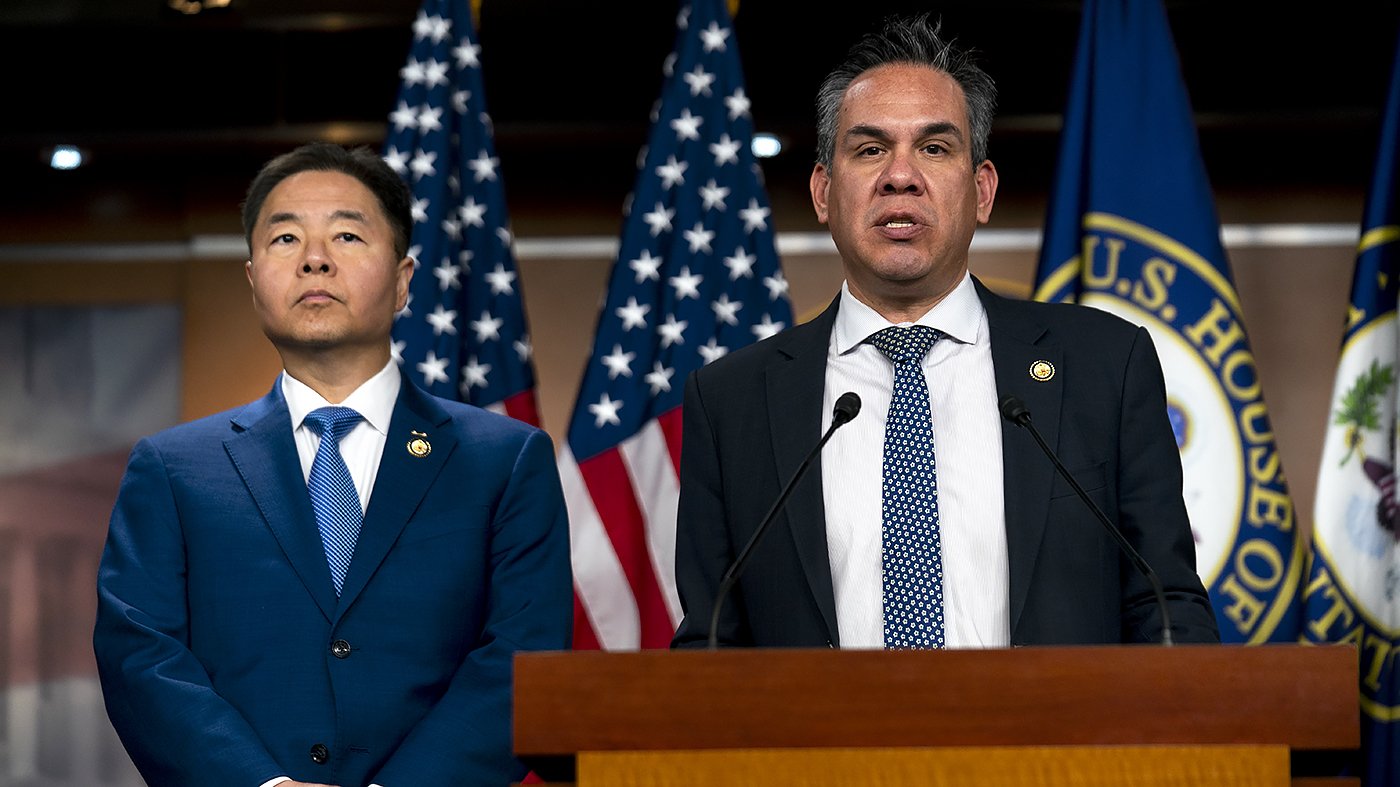
House Democratic Caucus Chair Pete Aguilar of California will lead a delegation of party leaders in a Wednesday morning press conference, confronting dual crises: a protracted shutdown of the Department of Homeland Security and escalating military tensions with Iran. The briefing comes as congressional negotiations remain deadlocked, leaving DHS and its subsidiary agencies without appropriated funds for over a month.
Funding Impasse Strains Security Operations
The political standoff centers on Democratic demands for significant changes to immigration enforcement policies established during the prior administration. The funding lapse has triggered operational consequences, most visibly within the Transportation Security Administration. Reports indicate more than 400 TSA officers have resigned since the shutdown began, exacerbating lengthy security lines at major airports and deepening a staffing crisis that is worsening travel delays nationwide.
Despite mounting pressure from affected constituencies and within Congress itself—where some members have urged the cancellation of recess to resolve the crisis—a path to agreement remains elusive. Bipartisan disagreements have proven intractable, effectively stalling any funding deal and extending what is now a record 40-day shutdown for the department.
Iran Conflict Complicates Political Landscape
The domestic funding battle unfolds against a volatile international backdrop. Last month, the United States conducted joint military strikes with Israel against Iranian targets. Subsequent retaliatory strikes by Iran on U.S. bases in Gulf states and the strategic closure of the Strait of Hormuz have driven a spike in global energy prices, injecting economic uncertainty into an already tense geopolitical situation.
Efforts in Congress to constrain the military operation have failed. Meanwhile, a recently unveiled U.S. diplomatic proposal for a 15-point peace plan has been outright dismissed by Tehran. This dual deadlock—on Capitol Hill and with the Islamic Republic—presents a complex challenge for the administration and lawmakers. The military engagement has also seen the controversial integration of advanced artificial intelligence systems, according to Pentagon confirmations.
Political Maneuvering and Message Discipline
The confluence of events tests political cohesion within both parties. The Democratic leadership's remarks are likely to emphasize the tangible impacts of the DHS shutdown on homeland security while reiterating their policy conditions. Across the aisle, the situation is complicated by internal divisions, notably illustrated when House Republicans recently rebuffed a proposal from their party's leadership to consider a partitioned funding approach.
Further complicating Republican strategy, the former president's recent unscripted public comments have been cited as undermining party message discipline ahead of the next election cycle. The ongoing crises also fuel legislative threats on other fronts, including from members like Rep. Nancy Mace, who has threatened to block a major war funding package over concerns about potential ground troop deployments to the Middle East.
The press conference, scheduled for 11:45 a.m. Eastern Time, will be closely watched for signals of any potential shift in Democratic strategy or for new proposals to break the fiscal and diplomatic logjams. With security agency operations degrading and international conflict simmering, the pressure on Congress to act continues to intensify.