GOP Leadership Clashes with Senate, White House Over Homeland Security Strategy
House Republican leaders are mounting stiff resistance to a proposal that would separate funding for immigration enforcement agencies from the broader Department of Homeland Security appropriations bill. This stance puts them at odds with Senate Republicans and the White House, where President Donald Trump has indicated a new willingness to consider the partitioned approach.
"Defund the Police" Warnings and a Shifting White House
For weeks, GOP leadership has argued that funding most of DHS—including the Transportation Security Administration and the Federal Emergency Management Agency—while delaying money for U.S. Immigration and Customs Enforcement and Customs and Border Protection would effectively "defund the police" and endanger national security. However, during a Monday meeting with Senate Republicans, Trump signaled he might be open to carving out ICE enforcement funding and moving it through a separate, partisan legislative process.
This shift caught House Republicans off guard and forced a recalibration. Speaker Mike Johnson (R-La.) told reporters it is not his "preference" to advance a DHS bill that excludes ICE funding. "I can tell you, the House has funded DHS twice. We’re prepared to do it again. Completely fund the entire department. That is the responsible way to do this thing," Johnson stated, emphasizing the chamber's repeated resistance to breaking the bill apart.
Conservative Backlash and Political Risk
The idea has sparked immediate protest from conservatives. The move presents a difficult political choice: stick with demands for full, immediate ICE funding and risk a clash with Trump, or back a two-track plan and gamble that a second, complex reconciliation bill can pass later. "When you start splitting things off, it’s going to give the Democrats more leverage in the future," warned Rep. Mark Alford (R-Mo.). Rep. Beth Van Duyne (R-Texas) was more blunt, stating any deal that does not fund ICE "would be dead on arrival."
House Majority Leader Steve Scalise (R-La.) reiterated the established position, noting the House has already passed full funding measures twice and is scheduled to do so again this week. "Anything short of that, we’d need to see the details obviously, talk to the White House about the implications," Scalise said.
The Senate's Complex Reconciliation Gambit
Senate Republicans used the White House meeting to pitch a plan to seek Democratic votes to fund most of DHS—excluding ICE removal operations—while moving the contested immigration enforcement money separately through the budget reconciliation process. This procedural tool allows legislation to bypass a Senate filibuster but comes with strict rules. The senators also aim to attach the SAVE America Act, which includes voter ID mandates, to the same reconciliation package.
Trump has not formally endorsed any plan, offering a characteristically non-committal public response. "Well, I don’t want to comment until I see the deal... I guess they’re getting fairly close, but I think any deal they make, I’m pretty much not happy with it," he said Tuesday. This stance continues a pattern of volatile positions from the president, whose political standing has faced recent pressure from multiple fronts.
Shutdown Pressure and Internal GOP Divisions
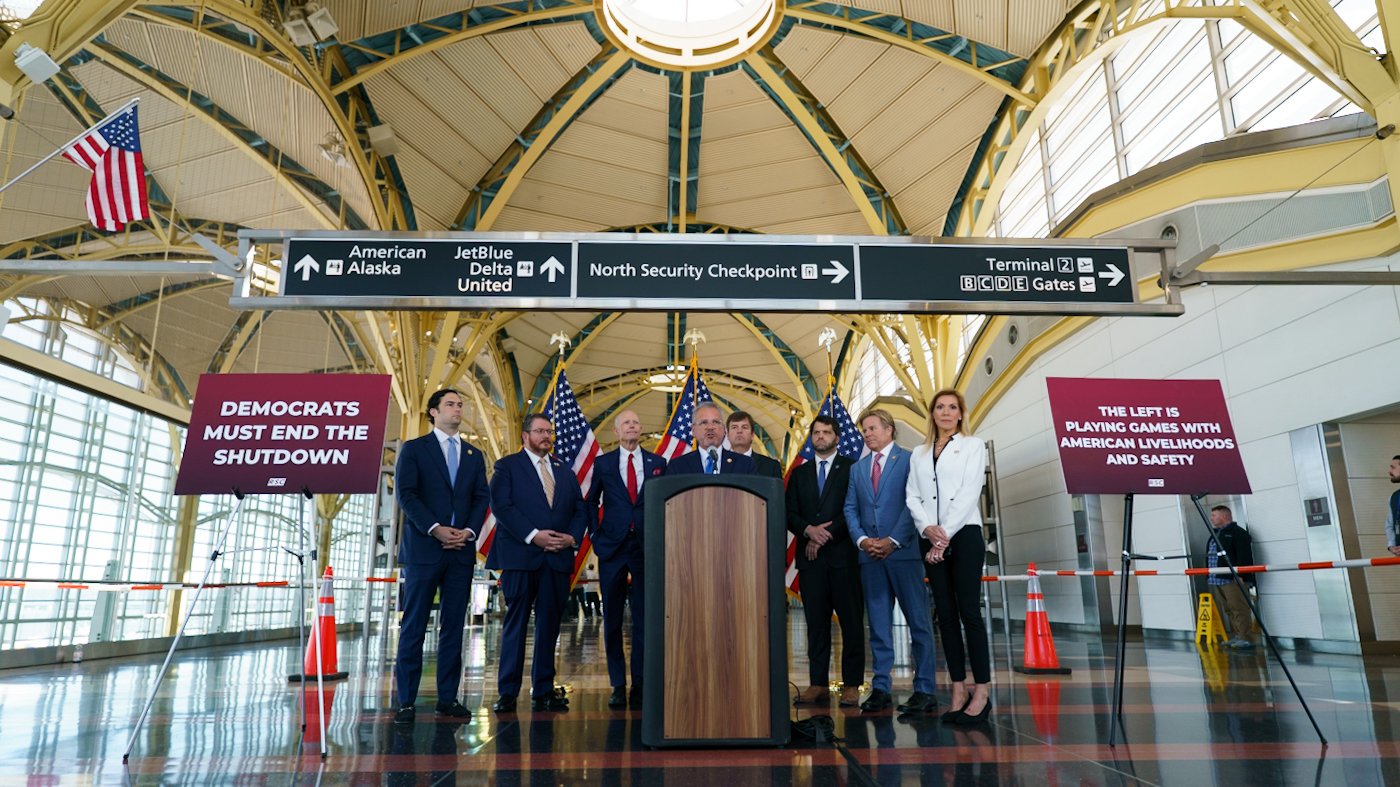
The developments suggest a potential path to ending the partial DHS shutdown, now in its sixth week, which has furloughed FEMA and TSA workers, disrupted airports, and increased pressure on Congress. However, a deal faces significant hurdles from both parties. The House Freedom Caucus is already criticizing the Senate's plan to bundle election reforms with funding, arguing it will fail reconciliation rules and that the GOP should use its leverage to pass the SAVE America Act immediately.
The internal Republican conflict over strategy underscores deeper party tensions, as figures like California Governor Gavin Newsom have mocked Trump's leadership style, while the party grapples with its policy direction. Furthermore, the debate over immigration enforcement funding occurs amid continued scrutiny of the administration's border policies, which have drawn sharp criticism from former officials.
With the House moving forward with another vote on a full funding bill and the Senate pursuing its bifurcated strategy, the path to reopening DHS remains fraught, dependent on bridging a considerable gap between Republican factions and the White House.