The U.S. service industry has grown in lockstep with the digital economy, turning data into a monetizable asset that fuels innovation and economic growth. The rapid expansion of artificial intelligence across sectors has only accelerated the collection, storage, and analysis of data, creating a multibillion-dollar industry.
This is most visible in the proliferation of data centers. There are now over 4,400 data centers nationwide—more than the combined total in Germany, the U.K., France, Canada, Australia, the Netherlands, China, and Japan. Six states—Virginia, California, Texas, Illinois, Ohio, and Georgia—host roughly half of these facilities, giving the U.S. a commanding lead in global data storage and analytics capacity. But this advantage comes with a steep price.

Data centers consume enormous amounts of electricity and water, straining local infrastructure and sparking opposition in some communities. In 2023, data centers accounted for just over 4% of total U.S. electricity consumption. That share is expected to climb to 12% by 2028, according to projections. To put that in perspective, data centers used 58 billion kilowatts in 2014, 176 billion kilowatts in 2023, and could consume as much as 580 billion kilowatts in 2028—equivalent to the electricity used by about 16 million homes, or more than 10% of all U.S. households.
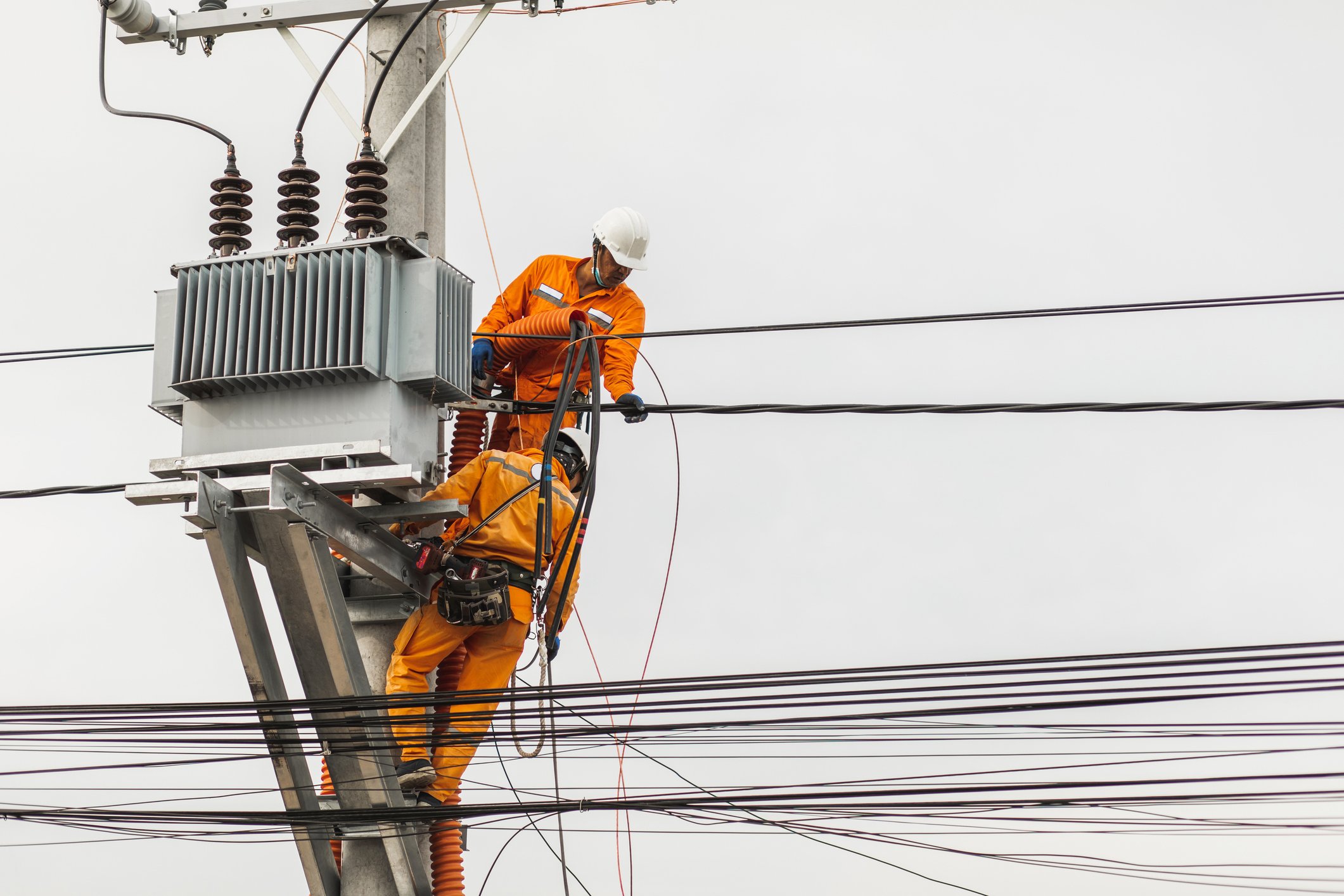
Sustaining this growth requires a reliable, efficient power grid. The good news is the grid has held up remarkably well so far. The bad news: it badly needs modernization. Most of the grid is over 25 years old, and like any aging cyber-physical system, it faces rising maintenance costs and growing risks of unplanned outages. Replacing and upgrading this infrastructure will cost an estimated $10 billion annually for decades.
Government investments will cover some of that, but consumers will bear much of the burden. Electricity prices have already risen faster than costs for heating oil, gasoline, natural gas, and even the consumer price index. The summer of 2024—one of the hottest on record—put additional stress on the grid, which managed to weather peak demand thanks in part to solar energy. Without solar, it's unclear whether those surges could have been met.
Given that 60% of U.S. electricity in 2023 came from fossil fuels, growing demand requires diversifying power sources. Efforts by the administration to slow the growth of renewables like wind and solar are misguided if residential, industrial, and data center demand continues to rise. While fossil fuels won't disappear soon, their dominance is waning. Suppressing other efficient generation methods undermines grid resilience and adds unnecessary risk and uncertainty for consumers.
As data centers expand, localized electricity demand burdens will emerge. Basic supply and demand economics will dictate future costs, and recent price increases are no short-term anomaly—they are likely to persist. Concentrating electricity production on fewer sources also heightens vulnerability to cyberattacks. Any successful disruption forces the grid to find alternative pathways, and redundancy is key to reliability.
The power grid is now under a microscope, and investments to upgrade its performance are critical to maintaining U.S. data dominance. Unlike other infrastructure, the grid supports multiple critical sectors—finance, healthcare, national defense, and more. Keeping it strong is about more than keeping the lights on; it's about preserving the nation's digital supremacy and protecting society as a whole.
Sheldon H. Jacobson, Ph.D., is a professor of computer science at the University of Illinois Urbana-Champaign. He applies data-driven risk-based decision-making to public policy.