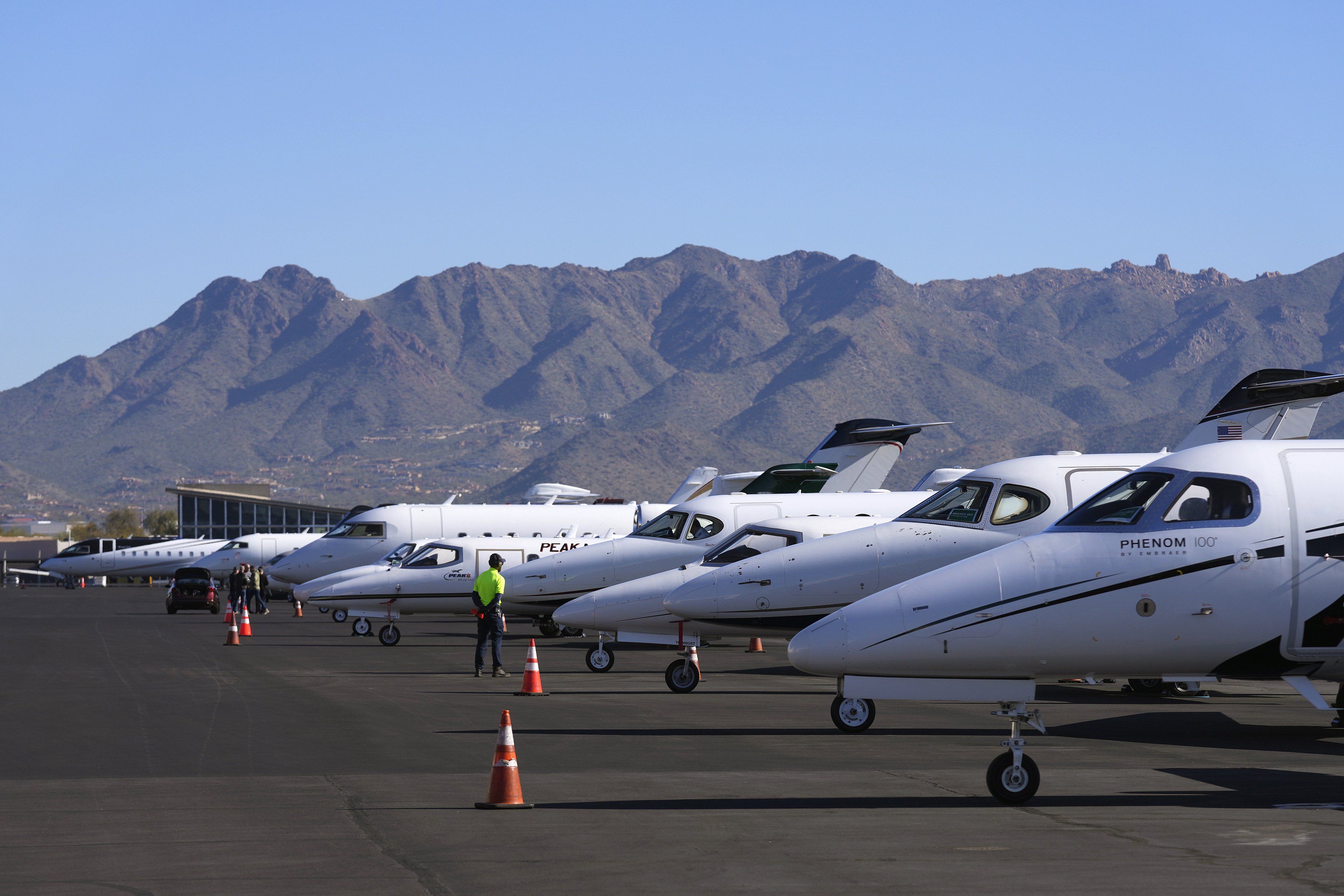
The FIFA World Cup’s glitz came with a hidden cost: a massive spike in private jet emissions that ordinary fans and taxpayers are effectively subsidizing. A new tracking system from the Institute for Policy Studies reveals that more than 92,000 private jets landed in host cities during match days, pumping an additional 147 kilotons of carbon dioxide into the atmosphere—equivalent to running 34,000 gas-guzzling cars for a year.
FIFA President Gianni Infantino drew particular criticism for logging an estimated 60,400 miles on a Gulfstream luxury jet provided by sponsor Qatar Airways, spewing nearly 600 metric tons of CO2. But he was far from alone. The Private Jet Emission Tracker compared flight activity during the tournament to similar dates over the past five years, documenting the extra pollution tied directly to World Cup matches. Rutherford, New Jersey, which hosted the finals and seven other games, saw 21,289 private jets generate 39.4 kilotons of excess emissions.

Subsidies Shift Costs to Public
The injustice goes beyond emissions, according to the report. While commercial passengers pay a 7.5 percent ticket tax that funds airport infrastructure, private jets dodge most of those fees. Non-commercial aviation accounts for 16 percent of flights but contributes just 2 percent of air traffic system costs. Lawmakers have compounded the problem: last year’s budget bill included new tax breaks for private jets, allowing corporations to expense 100 percent of a jet’s purchase price in a single year—potentially a $20 million deduction. By contrast, most businesses depreciate vehicle purchases over five years. The National Business Aviation Association has lobbied to keep these subsidies flowing, even as other congressional ethics questions swirl.
These breaks don’t account for the biggest subsidy of all: private jets bear no responsibility for the health and environmental costs of their pollution. The World Cup final itself was nearly played under a shroud of wildfire smoke that blanketed the eastern U.S., with stifling heat adding to the discomfort. A thunderstorm cleared the air just in time, but the conditions underscored the link between climate change—driven in part by luxury aviation—and the worsening wildfire seasons affecting millions of Americans.
FIFA’s Carbon Neutral Pledge Under Fire
The report, titled “Red Card for Private Jets at the FIFA World Cup,” calls on FIFA to ban private jets at matches and honor its pledge to achieve carbon neutrality by 2040. Critics also point to the organization’s tournament design, which increasingly spans continents and caters to ultra-wealthy fans. The 2030 World Cup will be played across six countries, with opening matches in Uruguay, Argentina, and Paraguay to mark the event’s centennial, while most games are in Morocco, Portugal, and Spain. This sprawling format, critics argue, only encourages more private jet use.
The contrast was stark during the final: extremely wealthy fans arrived in private jets, were chauffeured in black SUVs, and escorted to private boxes, while ordinary attendees and the broader public breathed smoky air. Research shows human-caused climate change—to which private jets are hefty contributors—is driving more intense wildfires and smoke exposure. As economic anxieties and environmental concerns mount, the disparity between the jet set and everyday travelers grows harder to ignore.
Chuck Collins, director of the Program on Inequality and the Common Good at the Institute for Policy Studies, argues that FIFA must do more to protect players, fans, and the planet. “The World Cup belongs to everyone, not just the private jet class,” he said. The report’s authors hope the data will pressure FIFA and governments to close loopholes that let luxury aviation offload costs onto the public.