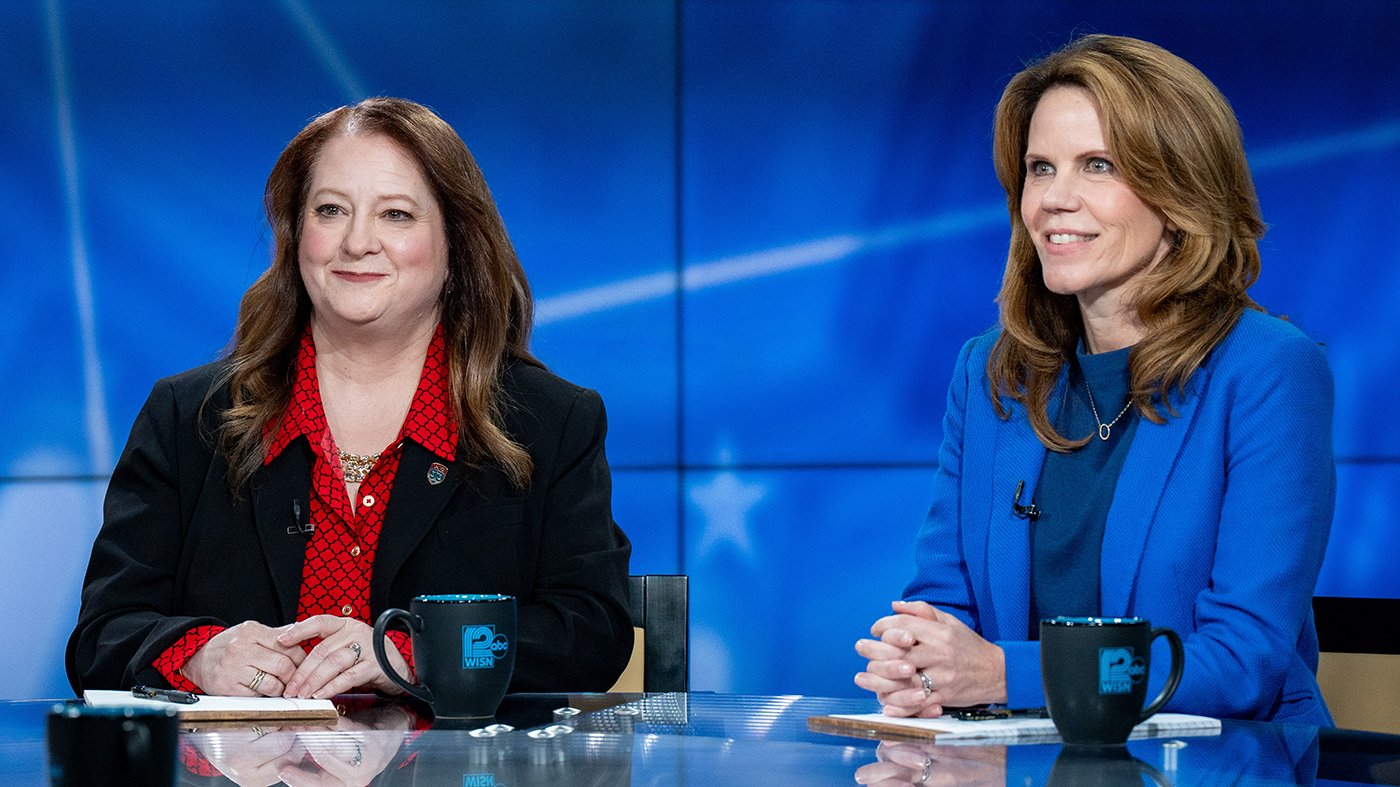
Wisconsin Republicans are facing the prospect of a decisive defeat in Tuesday's state Supreme Court election, a contest that underscores the party's persistent struggles in critical statewide races over the past decade. The liberal-backed candidate, Judge Chris Taylor, holds a significant lead in polling and an overwhelming fundraising advantage over her conservative opponent, Judge Maria Lazar. The election will determine whether the court's current 4-3 liberal majority expands to a more commanding 5-2 edge.
A Dormant Race Reflects GOP Weakness
The judicial election has generated notably less energy and attention than past high-stakes battles, partly because a liberal victory would not flip control of the court but merely solidify it. This dynamic has made it harder for conservatives to mobilize their base. The race has become a stark indicator of the Wisconsin GOP's diminished organizational and financial strength compared to its Democratic rivals.
"The conservative campaign apparatus is really degraded over the course of the last 10 years or so, particularly on the fundraising side," said Republican strategist Ben Voelkel, a former aide to Senator Ron Johnson. "The state party really does not have the same kind of money, oomph, that it has had in the past, certainly not what Democrats have going now."
The Candidates and the Contrast
The two appellate judges have presented sharply different profiles. Lazar, who served under two Republican attorneys general, has campaigned on a platform of judicial independence and impartiality. Taylor, a former Democratic state legislator, has been more direct in signaling her positions, particularly on abortion rights—a central issue in the post-Roe landscape. During a recent debate, Taylor stated she would have sided with the court's liberals in rejecting the state's 1849 criminal abortion ban.
Their campaigns have traded accusations of extremism. Lazar has portrayed Taylor as a "radical, extreme legislator" and "judicial activist," while Taylor's campaign has effectively framed the election around issues like abortion to motivate progressive voters. Some Republicans privately express frustration that Lazar has not more forcefully emphasized conservative priorities, questioning what incentive she gives GOP voters to turn out. This reflects a broader national trend where state judicial races have shed any pretense of nonpartisanship, becoming explicit ideological battlegrounds, a shift underscored by recent Supreme Court actions affecting election rules.
A Staggering Financial Disparity
The financial gap between the campaigns is immense and telling. Taylor's campaign has raised nearly $6.2 million, outraising Lazar's $1.2 million by a roughly 5-to-1 margin. The disparity in state party support is even more pronounced: between January and late March, the Wisconsin Democratic Party contributed or spent nearly $750,000 for Taylor, while the state Republican Party provided only about $96,000 for Lazar.
This fundraising chasm highlights a systemic problem for Wisconsin Republicans, who have struggled to match Democratic infrastructure for years. The disadvantage extends beyond this single race, mirroring challenges the national GOP faces as it looks toward a post-Trump era and potential party reclamation.
Broader Political Environment
Some Republicans attribute the difficult race to a challenging midterm political climate, comparing it to the 2018 elections. However, the roots of the problem appear deeper, relating to a sustained decline in party apparatus. A Wisconsin Republican operative who has run statewide campaigns asked pointedly, "If you're a Republican voter, what reason has Maria Lazar's campaign given you to show up and go to a poll on Tuesday?"
In response, Lazar campaign spokesperson Nathan Conrad pointed to her debate performance as evidence of her clear judicial philosophy. The outcome of this race will have significant implications for Wisconsin law, potentially locking in a durable liberal majority on the court for years to come. It also serves as a critical data point in the national struggle for state-level power, a fight where Democrats have been aggressively targeting GOP-held legislative seats. The Wisconsin result will be closely watched as a barometer of party strength heading into the November elections.