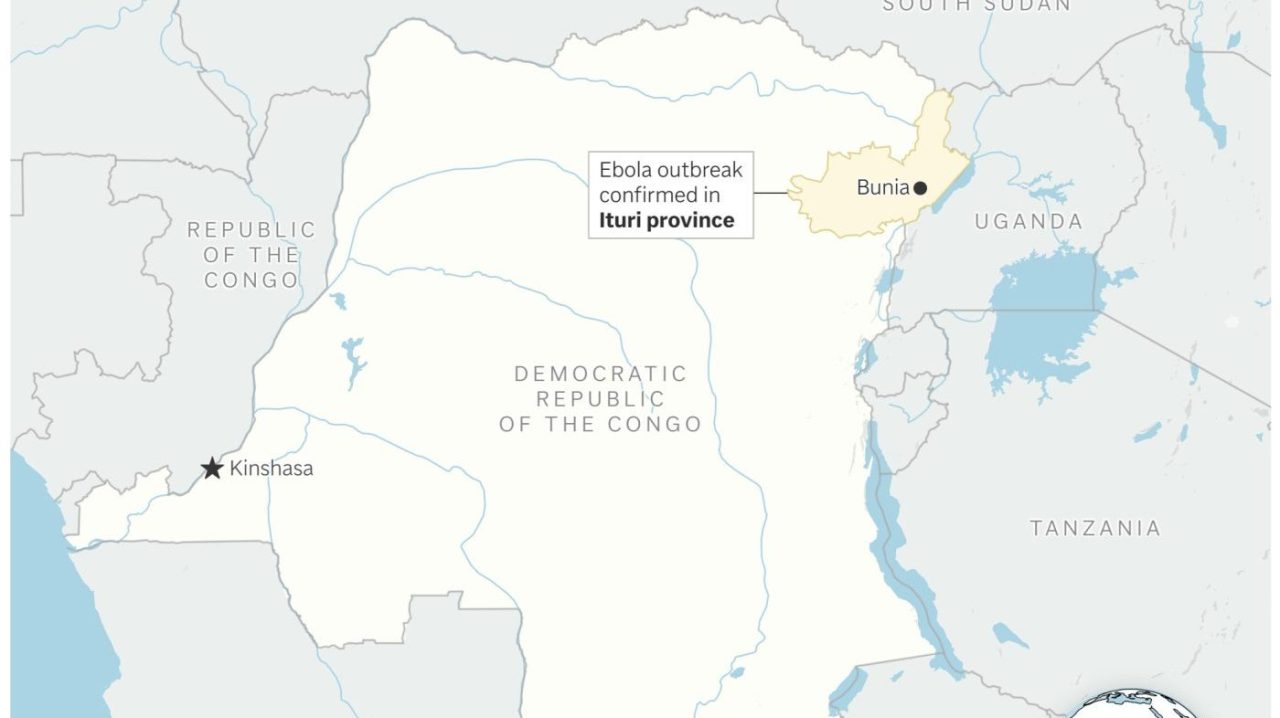
The World Health Organization on Sunday declared a public health emergency of international concern over an outbreak of a rare Ebola virus in the Democratic Republic of Congo and neighboring Uganda, as the death toll climbed to 88 among more than 300 suspected cases. The decision, which aims to galvanize international action, comes amid mounting evidence that the virus is spreading beyond rural areas into major cities, including Kinshasa, the Congolese capital.
The outbreak, first detected in Ituri province in eastern Congo, is caused by the Bundibugyo virus, a rare variant of Ebola for which no approved vaccines or therapeutics exist. According to the WHO, this is only the third time the Bundibugyo virus has been identified since it was first discovered in Uganda in 2007. The agency stressed that the situation does not meet the criteria for a pandemic emergency like COVID-19 and advised against closing international borders.

Rare Virus Poses Unique Challenges
Health authorities reported that a laboratory-confirmed case has been recorded in Kinshasa, about 1,000 kilometers from the outbreak's epicenter, signaling potential wider spread. The patient had traveled from Ituri, and other suspected cases have emerged in North Kivu, a densely populated province bordering Ituri. Ebola is highly contagious through bodily fluids and often fatal, but the Bundibugyo variant has historically caused fewer deaths than the more common Zaire strain.
Dr. Jean Kaseya, director-general of the Africa Centres for Disease Control and Prevention, noted that the slow detection of the outbreak has hampered response efforts. The earliest known case, a 59-year-old man, developed symptoms on April 24 and died three days later, but health authorities were not alerted until May 5, by which time 50 deaths had already occurred. “We don’t know the index case,” Kaseya said, referring to the first detectable infection. “It means we don’t know how far is the magnitude of this outbreak.”
Conflict and Migration Complicate Containment
Violent conflict involving militants, some linked to the Islamic State group, and constant population movement due to mining in Congo and Uganda have significantly complicated containment and contact tracing. The Africa CDC reported 336 suspected cases and 87 deaths in Congo as of Saturday, with two cases in Uganda, including one person who died in Kampala after traveling from Congo. The WHO warned that the high proportion of positive tests, the spread to Kampala, and clusters of deaths in Ituri point to a potentially much larger outbreak.
Shanelle Hall, principal adviser to the Africa CDC head, said that while four therapeutics are under consideration for Bundibugyo, no vaccine is being actively developed. The lack of local manufacturing capacity for Ebola vaccines and treatments remains a critical gap, echoing Africa's struggles during the COVID-19 pandemic. Kaseya emphasized the need for self-sufficiency: “If we are serious in this continent, we need to manufacture what we need. We cannot every single day look for others to come to tell us what they are doing.”
Global Response Under Scrutiny
The WHO’s emergency declaration is intended to spur donor agencies and countries into action, but past responses have been mixed. During the 2024 mpox outbreaks in Congo and elsewhere, experts said the global emergency designation did little to accelerate access to diagnostic tests, medicines, and vaccines. The current outbreak has already claimed the lives of at least four healthcare workers who showed Ebola symptoms, underscoring the risks to frontline responders.
“There are significant uncertainties to the true number of infected persons and geographic spread associated with this event at the present time,” said WHO Director-General Tedros Adhanom Ghebreyesus. “In addition, there is limited understanding of the epidemiological links with known or suspected cases.” The WHO’s declaration marks a critical step, but the path to containing this rare virus remains fraught with logistical, political, and health system challenges.