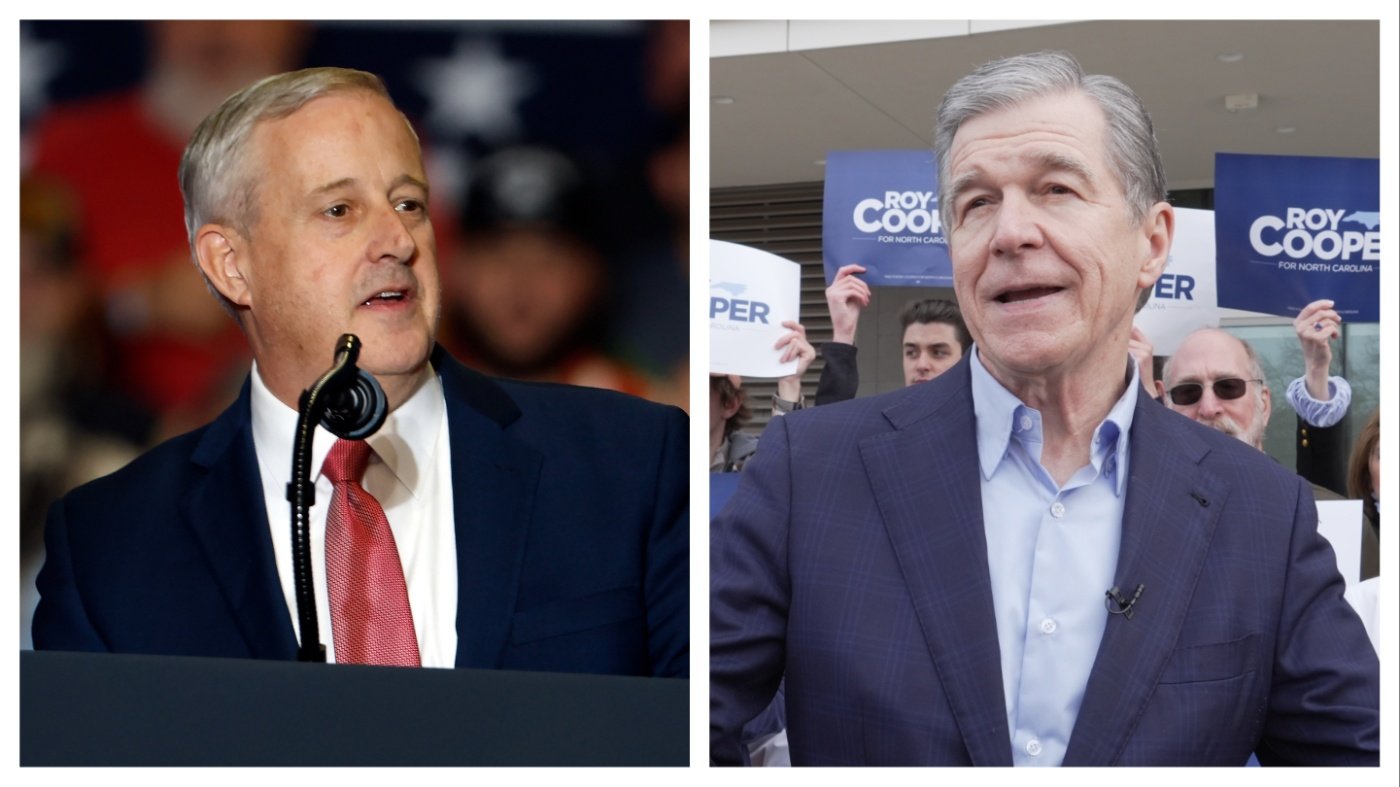
A fresh survey from The Carolina Journal/Harper Polling puts Democrat Roy Cooper 11 points ahead of Republican Michael Whatley in the contest for North Carolina's open Senate seat. The poll, conducted May 10–11 among 600 likely voters, found 49 percent backing Cooper compared to 38 percent for Whatley. Just under 4 percent said they would choose another candidate, while nearly 8 percent remained undecided. The margin of error is 4 percentage points.
Cooper, the state's former two-term governor, has won every statewide race he has entered since 2000—a streak that includes six elections. That record stands in stark contrast to the state's recent Senate history: a Democrat has not held the seat since Kay Hagan left office in 2015 after losing to Republican Thom Tillis. Tillis, who is retiring, won both his Senate races by fewer than 2 points, underscoring how competitive the state remains.
Whatley, who stepped down as chair of the Republican National Committee last August to run, trails not only in the polls but also in fundraising. According to Federal Election Commission filings through March, Cooper’s campaign had more than $18.4 million on hand, while Whatley’s had just over $2.5 million. That cash disparity gives Cooper a significant organizational advantage as the race intensifies.
Outside groups are already trying to close the gap. The Senate Leadership Fund, aligned with Senate Majority Leader John Thune (R-S.D.), announced a $71 million investment to boost Whatley. The race is one of several that could determine control of the Senate, with Democrats seeing openings in traditionally red states.
On the trail, Whatley has hammered Cooper on public safety, arguing the former governor’s policies were too soft. He has also emphasized agriculture and manufacturing—key sectors in a state where the economy is a top concern. Cooper, meanwhile, has centered his campaign on affordability, noting that North Carolina’s cost of living is 4 percent below the national average, according to RentCafe.
“We need somebody who will go to the United States Senate who will put the people first, and that is what I will do,” Cooper told a crowd in Johnston County last week. “I’m going to put the people before power. I’m going to put the people before party. I’m going to put the people before politics. The people will be my entire focus.”
The latest numbers represent a slight uptick for Cooper compared to an earlier poll by Carolina Forward, conducted May 4–8, which gave him a 49–42 lead among 957 likely voters, with 9 percent undecided. That survey had a margin of error of 3.3 points. The consistency of Cooper’s advantage suggests his name recognition and moderate image are proving formidable against Whatley’s GOP ties.
Democrats have struggled to win Senate races in North Carolina, but Cooper’s strong showing in this poll—combined with his financial edge—has energized the party. The outcome could hinge on turnout in a state where both parties are pouring resources. For now, Cooper appears to have the upper hand, but the race remains fluid as the general election approaches.
For more on the broader battle for Senate control, see our analysis of how Democrats are seizing openings in red states. And for context on the national political landscape, read about the leadership vacuum fueling individual candidates.