The White House Office of Management and Budget (OMB) is blocking the release of congressionally appropriated grant funding for the National Oceanic and Atmospheric Administration (NOAA), a move that has halted scientific work and triggered furlough warnings for dozens of researchers. The funding pause, described by former agency officials as highly abnormal, affects nearly all NOAA programs and prevents the agency from issuing new awards, forcing some operations to plan only 15 days at a time.
Scientists Face Immediate Furlough
At the University of Colorado's Cooperative Institute for Research in Environmental Sciences (CIRES), which operates NOAA's Global Monitoring Laboratory, 42 employees have received furlough notifications. Institute director Waleed Abdalati stated that if funds do not arrive by May 15, these scientists—who track greenhouse gases, ozone recovery, and atmospheric composition—will be sent home. "We lose observations and data that help us understand the condition of our atmosphere," Abdalati warned, noting that the long-term damage includes the loss of critical observational capabilities that are difficult to rebuild.

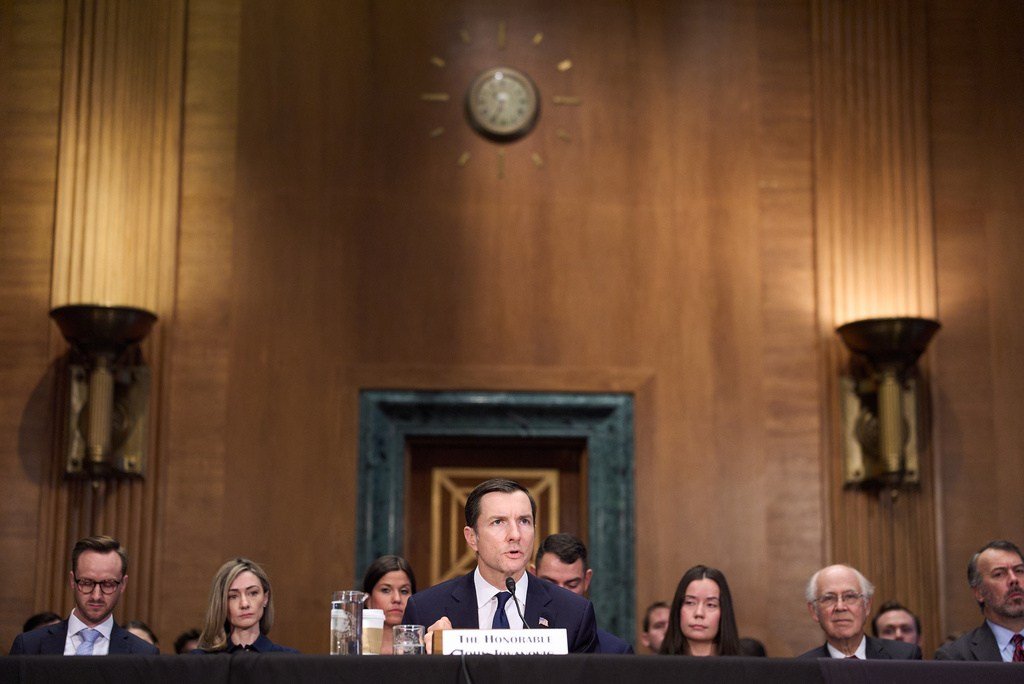
The withheld money is part of a spending package Congress passed earlier this year, which directed NOAA to spend approximately $198 million on climate and weather laboratories and cooperative institutes. Senator Chris Van Hollen (D-Md.), the top Democrat on the Senate subcommittee that funds NOAA, accused OMB Director Russ Vought of violating the law by preventing the obligation of these funds. "On a bipartisan basis, we rejected Trump’s attempt last year to slash NOAA’s budget," Van Hollen said in a statement. "It’s time for Vought to follow the law and release the funds as Congress intended."
Part of a Broader Pattern
This obstruction follows a consistent pattern of the administration targeting climate science. Last year, a leaked document revealed plans to eliminate NOAA's Office of Oceanic and Atmospheric Research and cut 74% of its funding. The administration's latest budget proposal includes a $1.6 billion cut to NOAA's operations, research, and grants, and has proposed zeroing out the agency's climate research entirely for fiscal 2026. This comes amid other controversial foreign policy actions that have disrupted global markets and drawn bipartisan criticism.
Andrew Rosenberg, former deputy director of NOAA's National Marine Fisheries Service, characterized the grant delays as a deliberate weaponization of the budget process. "OMB normally wouldn’t hold up money like this," Rosenberg said. "NOAA is mostly a science agency, and there’s a real anti-science bent to all of this. They’re using the budget as a weapon to fundamentally change what people have access to and the work that the government does."
The impact extends beyond climate data. Abdalati emphasized that the threatened research is vital for understanding seasonal weather variability, which affects agriculture, including crop yields and cattle ranching. The funding impasse has already caused some scientific work to stop entirely.
Administration Silence and Wider Implications
NOAA referred budget questions to OMB, whose spokesperson did not respond to inquiries. The delay is not isolated to NOAA; other research agencies, including the National Institutes of Health, have also experienced grant approval holdups this year. This administrative bottleneck creates uncertainty that echoes other funding fights threatening government operations.
The confrontation underscores a deepening rift between the executive branch and Congress over science funding priorities. With scientists at the Global Monitoring Lab facing imminent job loss, the standoff threatens to degrade the United States' capacity to monitor and understand fundamental planetary systems, with consequences for both national security and economic sectors dependent on environmental forecasting.