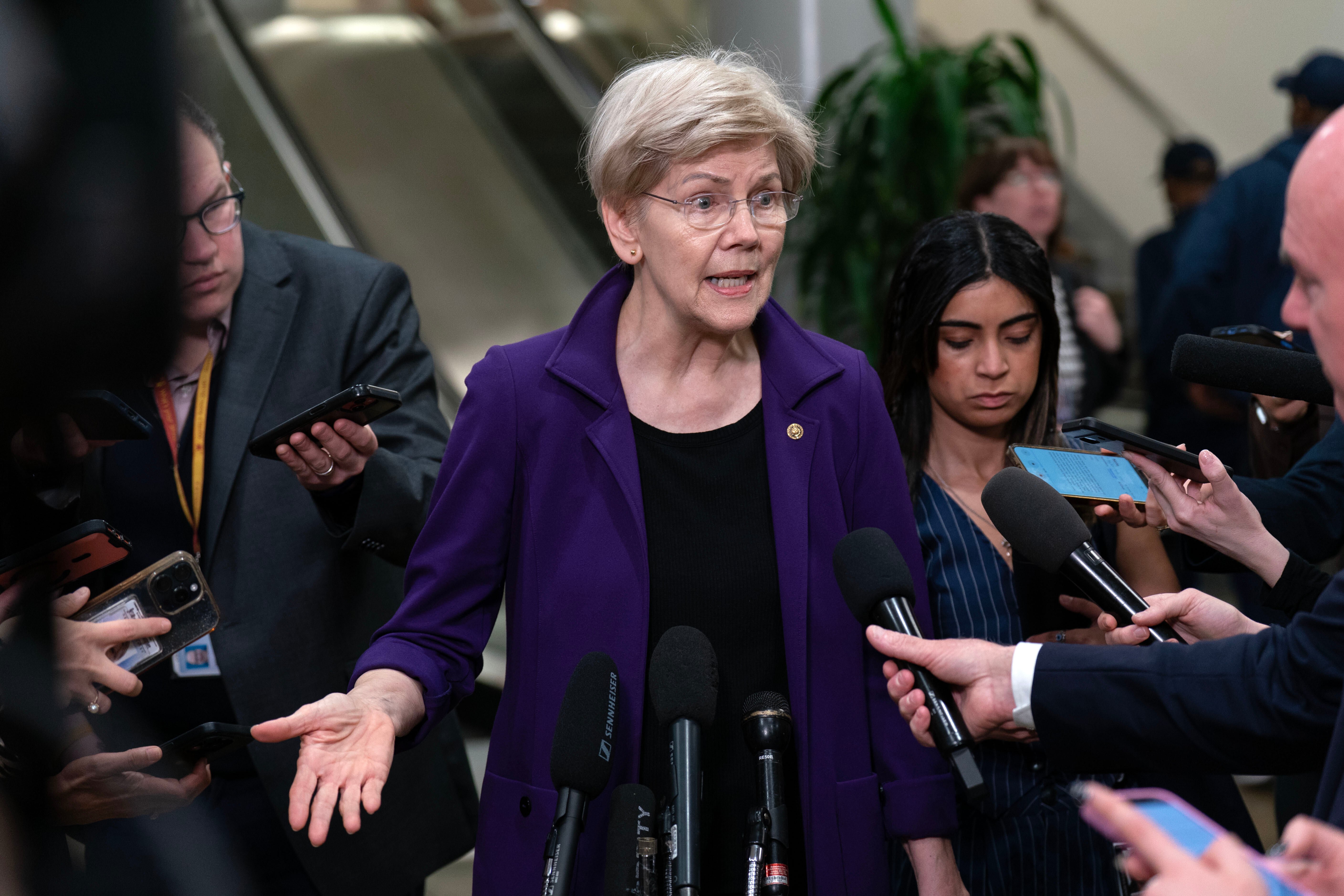
Senator Elizabeth Warren's signature policy proposal—a tax on extreme wealth—presents a politically seductive solution to funding ambitious social programs. The plan, which would levy a 2% annual charge on fortunes exceeding $50 million and an additional 1% on wealth over $1 billion, promises revenue for universal childcare, free college, and expansive housing initiatives. Its appeal lies in suggesting that vast resources are merely awaiting political mobilization.
The Mechanics of a Moving Target
This is not an income tax. It is a direct levy on capital already invested in businesses, innovation, and job creation. The central question becomes what happens when government systematically extracts this active capital from the economy. The arithmetic alone is sobering: seizing 100% of all U.S. billionaire wealth—approximately $6.8 trillion—would cover less than one-fifth of the national debt, a one-time haul incapable of funding perpetual commitments.

Historical Precedents and Capital Flight
We need not theorize about outcomes. France maintained a similar wealth tax for decades, resulting not in greater equity but in significant capital flight. Tens of thousands of affluent citizens relocated assets and residency abroad. Economist Eric Pichet estimated the tax ultimately cost France nearly double its revenue in lost investment. President Emmanuel Macron, a centrist, abolished it in 2017, concluding it harmed the economy without meaningfully reducing inequality.
The pattern repeats where such taxes are merely proposed. In California, anticipation of a wealth tax referendum prompted high-profile figures including Google co-founders Larry Page and Sergey Brin, investor Peter Thiel, and filmmaker Steven Spielberg to shift residency. A Stanford-Hoover analysis found just six such departures removed about $536 billion from the proposed tax base—nearly one-third of the targeted wealth—before the measure even passed.
The Economic Philosophy of Incentives
The frustration underpinning the proposal is genuine. Wealth concentration in America is at a multi-decade high, and the system's tilt toward existing capital holders is widely felt. However, policies that reduce investment do not redistribute opportunity; they shrink the total supply. Wealth is not static—it is capital in motion, financing businesses, underwriting risk, and driving productivity gains that raise living standards broadly. Redirecting it from productive investment to political allocation weakens the engine of prosperity.
This debate echoes a foundational economic principle articulated by the late Rep. Jack Kemp: "If you tax something, you get less of it. If you subsidize something, you get more of it." His focus was on expanding wealth through investment and enterprise, not dividing existing assets. That growth-oriented vision has receded from today's discourse, which often centers on redistribution, but the underlying reality remains. Systems prioritizing production expand opportunity; those prioritizing redistribution over growth ultimately constrain it.
The Illusion of Permanent Funding
Nobel laureate Milton Friedman observed that "nothing is so permanent as a temporary government program." Benefits, once created, demand sustained funding. Friedman also noted that "to spend is to tax," meaning every distributed dollar must first be extracted via taxation, inflation, or borrowing—a tax on tomorrow. The wealth tax attempts to obscure this cost, promising expansive benefits funded by a narrow base that history shows is highly mobile.
France is not an anomaly. Every society attempting to fund permanent commitments through capital extraction eventually confronts the same math: the tax base shrinks, the programs remain, and the fiscal burden shifts. The current political moment, where polling shows bipartisan appetite for taxing the wealthy, tests whether policymakers will heed these lessons or repeat familiar errors in pursuit of an economically illusory prosperity.