The House Armed Services Committee approved its annual defense policy bill late Thursday with a 44-12 vote, but the tally marked an unusually sharp partisan divide. Twelve Democrats broke ranks to oppose the nearly $1.15 trillion National Defense Authorization Act, a rare defection on a panel that typically produces near-unanimous bipartisan support for the must-pass legislation.
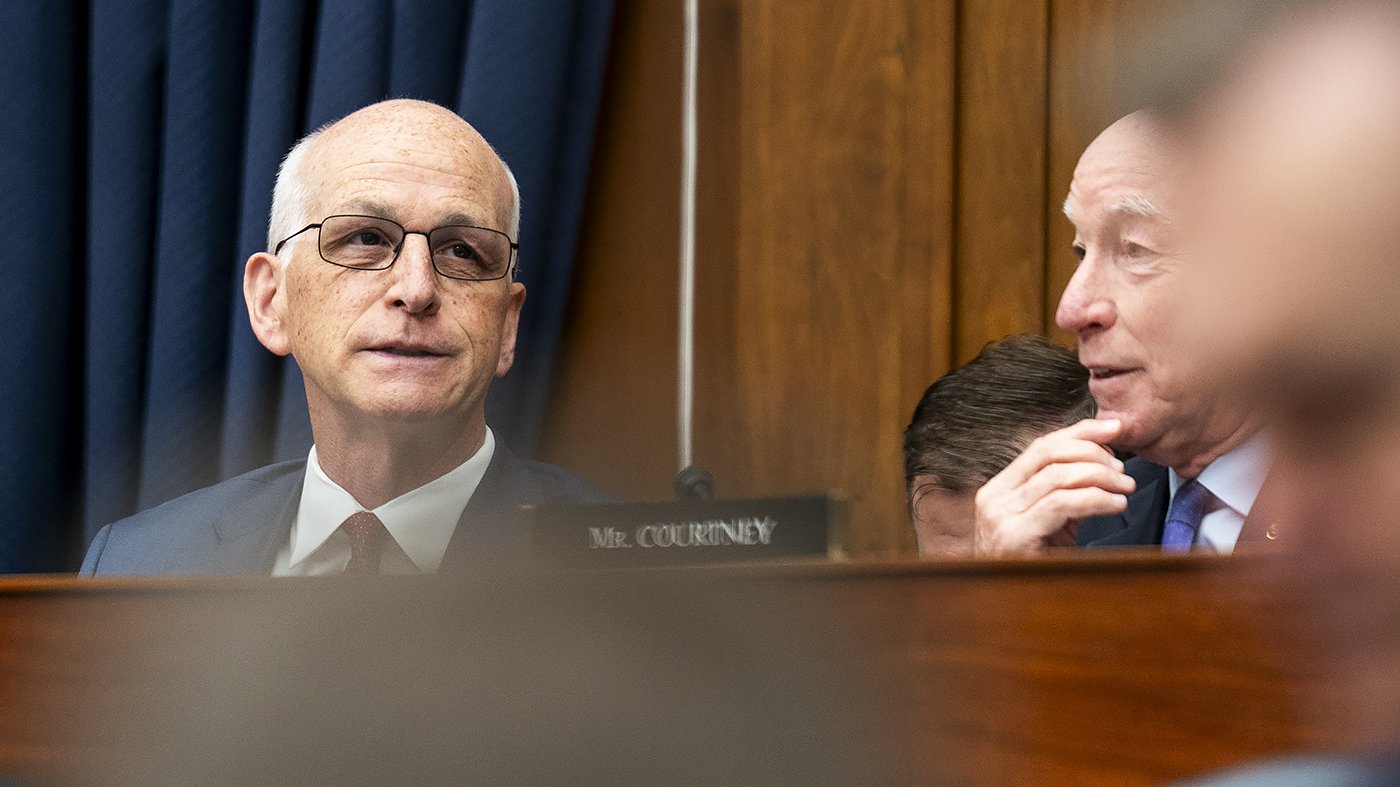
Ranking member Rep. Adam Smith (D-Wash.) called the bill a "good solid document" that would fund troop pay raises, bolster alliances, and streamline defense procurement. But his endorsement failed to sway a dozen of his own members, who cited the massive price tag and the absence of any restrictions on President Trump's military posture toward Iran.
The dissenting Democrats are a mix of progressives and moderates: Reps. John Garamendi (Calif.), Salud Carbajal (Calif.), Ro Khanna (Calif.), Sara Jacobs (Calif.), Seth Moulton (Mass.), Bill Keating (Mass.), Jason Crow (Colo.), Pat Ryan (N.Y.), Chris Deluzio (Pa.), Maggie Goodlander (N.H.), Sarah Elfreth (Md.), and Wesley Bell (Mo.).
Historically, only one or two members vote against the committee's NDAA. Last year, just Khanna and Jacobs opposed it. Khanna, a frequent critic of Pentagon spending, noted the shift on social media: "The tide is turning. In past years I used to be the only no vote on the House Armed Services Committee."
This year's vote is the most partisan since 2019, when nearly all committee Republicans opposed a Democratic-led version. That tally was 33-24. This year's 44-12 margin underscores growing Democratic unease with the scale of defense spending and the administration's foreign policy approach.
Smith, while supporting the bill, voiced "deep concern" over the broader fiscal picture. He pointed to the administration's proposed $1.5 trillion defense budget and a separate $350 billion reconciliation package, arguing they ignore the nation's $4 trillion national debt. "There is zero recognition of our precarious fiscal reality," Smith said, also criticizing the White House for cutting programs that help families facing inflation and high energy costs.
The split comes as Democrats seek a unified message against Trump ahead of the midterms, but internal divisions over military spending and foreign policy remain. Some progressives have pushed for deeper cuts, while moderates worry about national security.
The full House is expected to debate the NDAA in the coming weeks, where the partisan fissures could widen. The bill also faces scrutiny in the Senate, where Democrats have already clashed with the administration over surveillance and intelligence appointments.