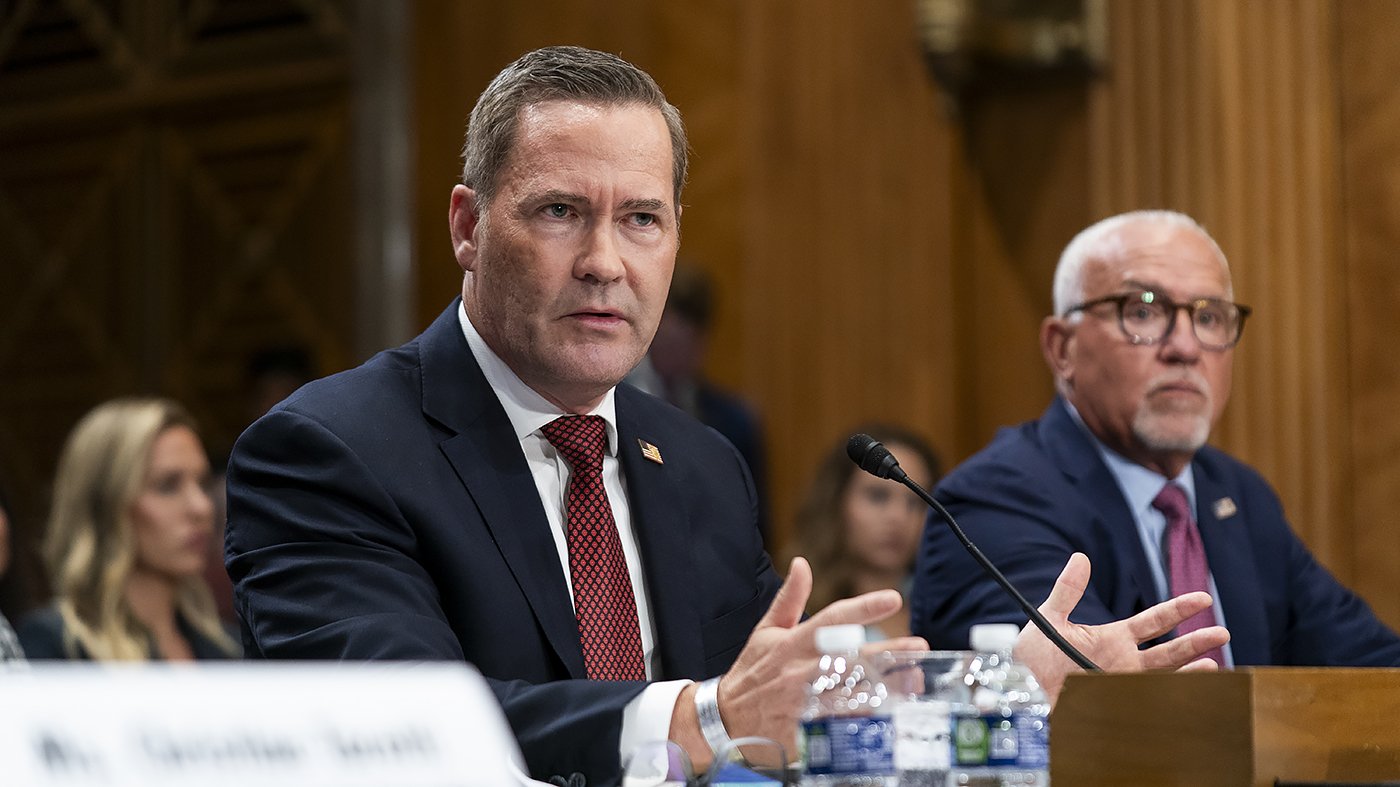
U.S. Ambassador to the United Nations Mike Waltz declared on Sunday that key international partners are shifting their position and showing greater willingness to back a military operation aimed at reopening the vital Strait of Hormuz. The announcement follows sustained pressure from President Donald Trump, who has publicly criticized allies for their initial reluctance to contribute forces while complaining about soaring global energy costs.
Allies "Coming Around" to Military Support
"We are seeing our allies come around as they should," Waltz stated during an interview on CBS's 'Face the Nation.' He emphasized that the administration would not tolerate Iran's long-standing strategy of leveraging global energy supplies. "The president is not going to stand for this regime, as it has threatened and tried for five decades to hold the world's energy supplies hostage under its genocidal intent," Waltz told host Margaret Brennan.
The strategic waterway has been effectively closed by Iran in response to recent U.S. and Israeli military strikes, triggering a sharp spike in oil prices worldwide. This has had a direct impact on fuel costs for American consumers and the broader global economy. Initially, NATO members and other nations expressed significant reservations about committing military assets to what they viewed as a potentially escalatory mission.
Trump's Criticism and Allied Condemnation
President Trump renewed his attacks on NATO countries just days before Waltz's comments, dismissing the alliance as a "paper tiger" without U.S. support on his Truth Social platform. He accused them of complaining about high oil prices while refusing to assist with a "simple military maneuver" to reopen the strait. This criticism came despite a coordinated statement from the leaders of France, Germany, Italy, Japan, the Netherlands, and the United Kingdom, who jointly condemned Iran for restricting shipping. They expressed a readiness "to contribute to appropriate efforts to ensure safe passage" and welcomed planning by other nations, signaling a diplomatic opening for the U.S.-led effort.
Waltz pointed to specific commitments, highlighting Japanese Prime Minister Sanae Takaichi's pledge to deploy elements of the Japanese navy to help protect commercial shipping. Takaichi met with President Trump at the White House last Thursday, underscoring the diplomatic push behind the security operation. This development follows other signals from the Trump administration about potential de-escalation, even as military planning advances.
Broadening Coalition for Strait Security
NATO Secretary-General Mark Rutte provided further evidence of a growing coalition, revealing that 22 nations—both within and outside the NATO alliance—have now offered to address security in the Strait of Hormuz since Thursday. He identified new British Prime Minister Keir Starmer as being "at the forefront" of the initiative. Rutte stressed that military planners are now focused on operational details. "One of the key questions is not only the what question and the where question, but also the when question," Rutte said. "This is why military planners are now working together to make sure that we are ready... to secure the free sailing there, which is crucial for the world economy."
The potential for a significant Marine deployment to the region has raised concerns about the specter of ground combat and casualties, adding a layer of risk to the proposed mission. The military planning occurs against a backdrop of broader regional violence, with a recent UNICEF report detailing the deaths of over 320 children in Iran and Lebanon as the U.S.-Israel conflict with Iran has escalated.
Iran's Defiant Response
Tehran has rejected the premise of the crisis, with Iranian Foreign Minister Abbas Araghchi claiming on social media that the Strait of Hormuz is not technically closed. He blamed the disruption on commercial insurers who "fear the war of choice you initiated—not Iran." This stance continues Iran's pattern of defying U.S. ultimatums over the strait and shifting responsibility for the economic fallout onto Washington.
The evolving situation presents a complex challenge for the Trump administration, which has simultaneously pursued aggressive rhetoric and intermittent diplomatic gestures. While allies now appear more engaged, the path to a stable reopening of the world's most critical oil chokepoint remains fraught with military and diplomatic peril. The coming days will test whether the emerging coalition can translate pledges into a coherent operational plan that secures shipping lanes without triggering a broader war.