The potential deployment of the 11th Marine Expeditionary Unit to reinforce the 31st MEU already stationed in the Middle East marks a significant escalation in President Trump's ongoing confrontation with Iran. This movement signals that ground troops may soon play a direct role in securing the Strait of Hormuz, shifting the conflict beyond airstrikes and naval posturing into territory where American casualties become inevitable.
A Shift in War Aims
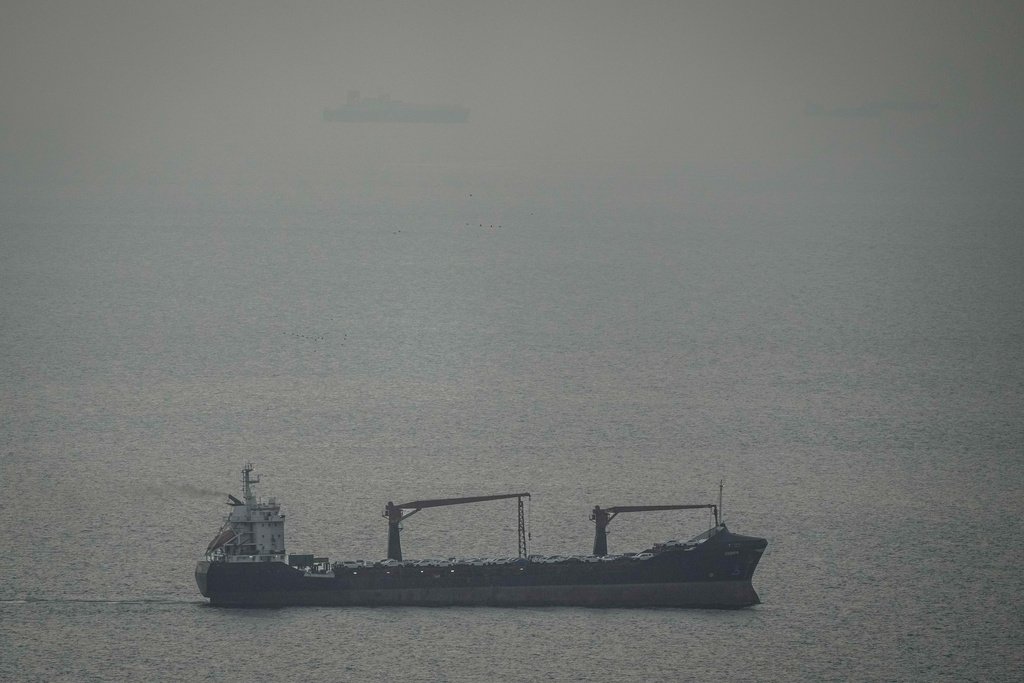
The administration's stated objectives have shifted repeatedly—from regime change to nuclear containment to now guaranteeing oil shipping lanes. Iran's move to close the Strait of Hormuz caught the White House off guard, creating immediate economic pressure. As the markets react to the volatility, Trump has publicly insisted rising gas prices are temporary, but the military mobilization suggests a more urgent reality. The Marine Corps represents the most direct tool to forcibly reopen the vital waterway.
Militarily, analysts agree Marines could seize and hold islands in the Strait and monitor the Iranian coastline. They would be supported by naval assets and air power, likely including the A-10 Warthog for close air support. A successful operation would provide the powerful visual victory Trump seeks. He has consistently invoked World War II-era rhetoric, demanding "unconditional surrender" and seemingly chasing a historic, defining moment of triumph.
The Iwo Jima Parallel and Its Cost
Trump appears to desire his own version of the iconic Iwo Jima flag-raising—a singular image to rally public support for an increasingly unpopular war and burnish his legacy as a wartime leader. However, that famous photograph obscured a grim truth: it was followed by newspapers publishing the names of thousands of dead Americans. President Franklin Roosevelt was forced to justify those losses as part of a greater strategic necessity, a burden that later influenced the decision to use atomic weapons.
While casualty counts in the Gulf would not approach Iwo Jima's scale, the nature of reporting them has changed catastrophically. The U.S. has not fought a major peer conflict since its withdrawal from Afghanistan, and warfare has evolved. The proliferation of battlefield drones, starkly demonstrated in Ukraine, means the public—and soldiers' families—could witness real-time combat deaths on social media before official notifications arrive. This is a horrifying new reality of modern combat.
The Asymmetrical Warfare Challenge
Iran has spent decades refining asymmetrical warfare through proxies in Lebanon, Iraq, Syria, Yemen, and Gaza. They are prepared for exactly the kind of grinding, irregular conflict that could follow an initial Marine landing. The administration, particularly Secretary of Defense Pete Hegseth—whom Trump credits as an early advocate for strikes—initially suggested the conflict would be swift, invoking the discredited "kick in the door" analogy used before the Iraq War.
This optimism belies the complex battlefield. Taking territory is one challenge; holding it against a determined, technologically enabled insurgency is another. The question becomes whether Trump, a leader who habitually claims victory in advance, possesses the resilience and empathy to manage a prolonged campaign with mounting casualties. The political fallout could be severe, especially if the conflict exacerbates domestic issues like the ongoing DHS funding and staffing crisis.
The deployment decision forces a stark reckoning. It moves the U.S. closer to a ground war whose human and political costs are unpredictable but assuredly high. The administration's hope for a clean, photogenic victory clashes with the high probability of a bloody, protracted struggle in a region defined by its capacity for violent, enduring resistance.