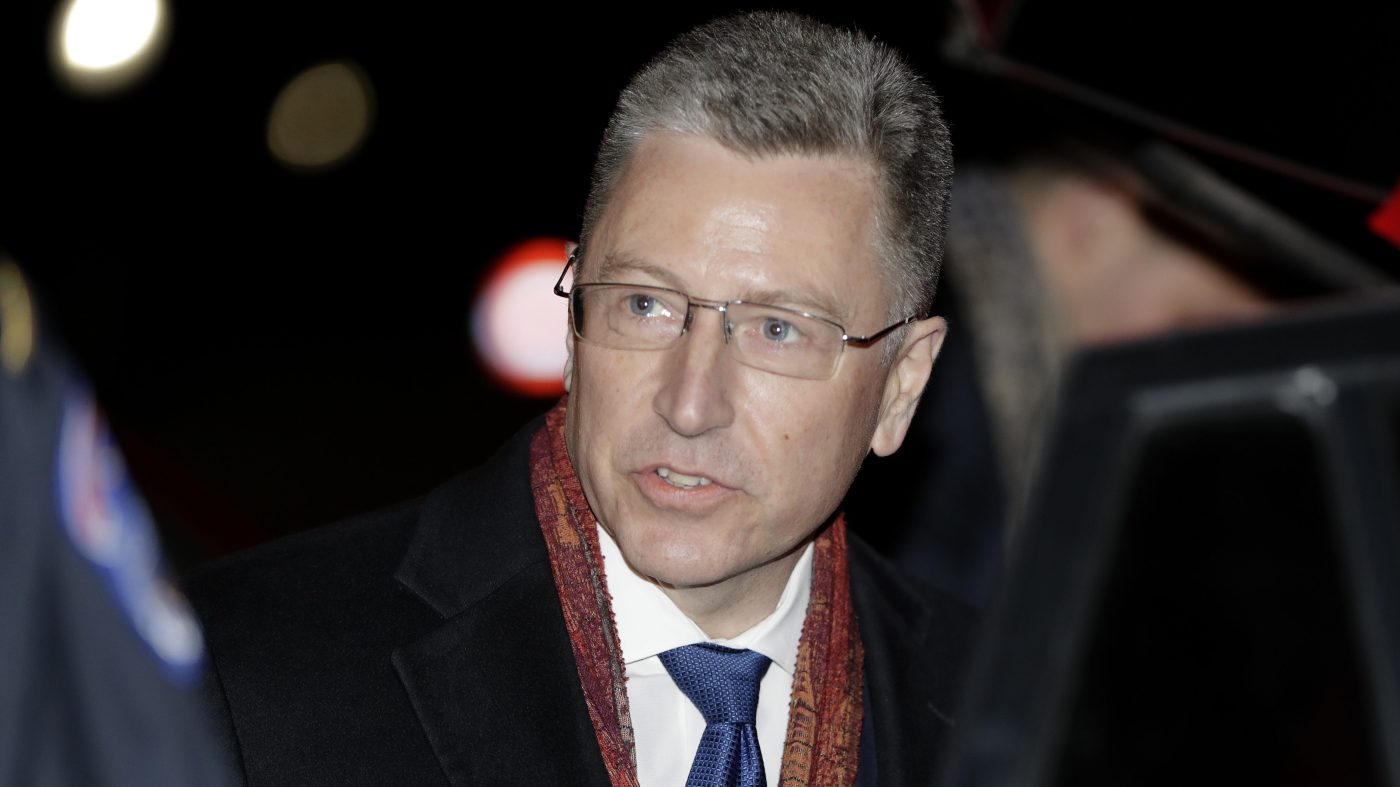
Kurt Volker, a former U.S. ambassador to NATO, has urged European leaders to hold their tongues when it comes to criticizing President Trump's military campaign against Iran, arguing that open opposition could trigger a backlash from the White House.
Speaking on Politico's “EU Confidential” podcast last Friday, Volker said allies may privately view the U.S.-led strikes as reckless but should refrain from saying so. “You might think that this is a huge folly and going to have terrible consequences, but you don’t have to say it,” he stated. “By saying it, you alienate Donald Trump and you run the risk that he will then link your unhappiness with his policies to his unhappiness for some of your policies.”
Volker, who served as NATO ambassador from 2008 to 2009 and later as Trump's special representative for Ukraine, advised European governments to find “ways to be proactive…without taking gratuitous shots at President Trump that don’t actually help.” His remarks come amid growing transatlantic tensions over the conflict, which has now stretched into its eighth week.
The current U.S. ambassador to NATO, Matt Whitaker, told Newsmax earlier this month that Trump is “reevaluating” America's commitment to the alliance, a signal that European dissent could have real consequences. The warning echoes broader strains within NATO, as highlighted by the UK's recent rejection of Trump's Falklands sovereignty challenge.
European leaders have been vocal in their unease. The U.K., France, and Germany have jointly called for a return to nuclear negotiations, while Italian Prime Minister Giorgia Meloni condemned an airstrike on an Iranian elementary school that killed 175 people. U.S. officials attributed that incident to a targeting error, though the Pentagon has not confirmed the report.
In response to the conflict's disruption of global oil flows, the U.K. and France convened 51 nations in Paris last week to discuss a “strictly defensive” plan to keep the Strait of Hormuz open. The waterway normally handles about a fifth of the world's oil consumption, but Trump's naval blockade and mining operations have choked traffic during a fragile ceasefire. The administration has extended a Jones Act waiver to ease gas prices, but the economic toll is mounting.
Volker's advice underscores a broader diplomatic calculus: European leaders must balance their principles with the risk of further alienating a president who has shown little tolerance for criticism. As the conflict drags on, the question remains whether quiet diplomacy can bridge a growing Atlantic divide.