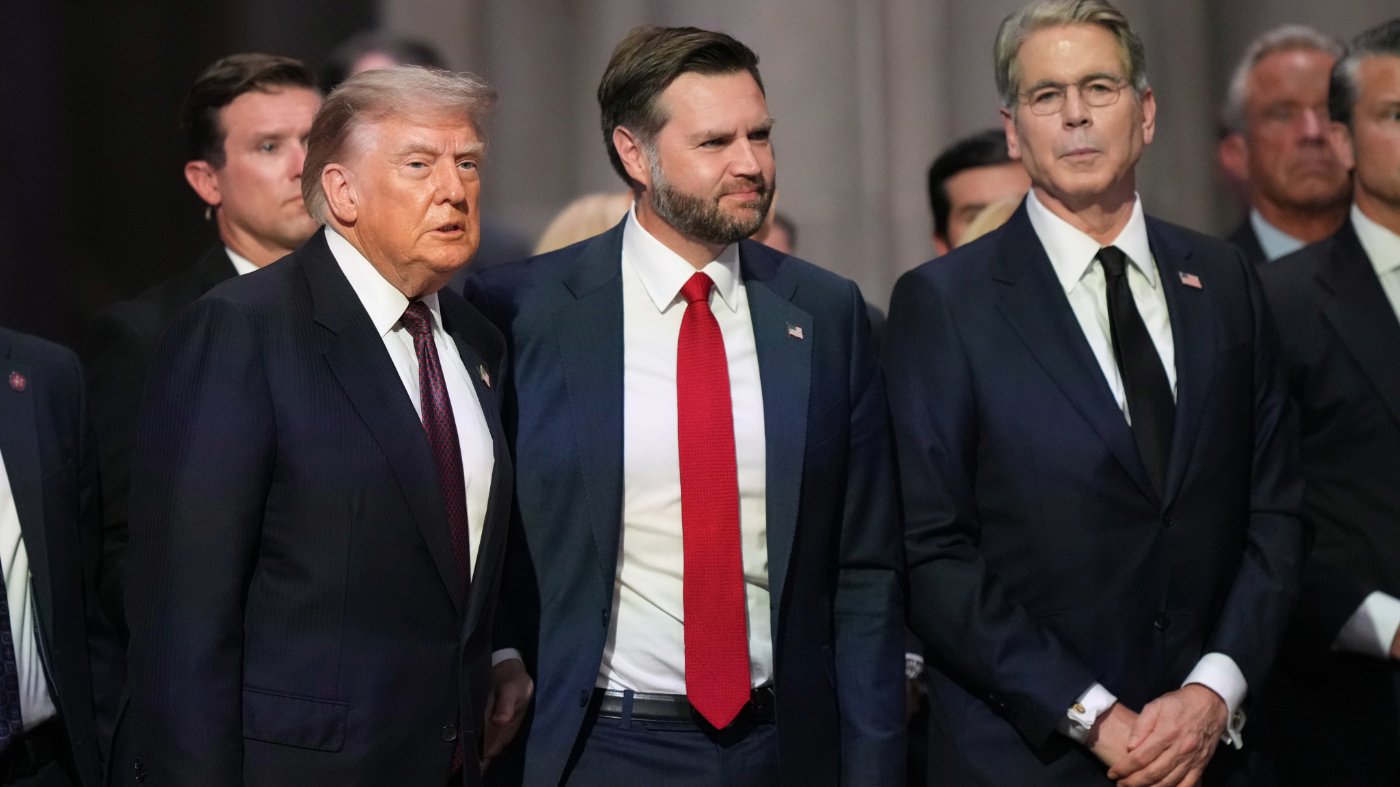
Despite the Trump administration's aggressive investigations into universities over antisemitism, the president and senior Republicans have not publicly addressed Vice President JD Vance's recent embrace of conspiracy theories with anti-Jewish undertones.
In a lengthy interview with podcast host Joe Rogan, Vance agreed with Rogan's baseless speculation that Jeffrey Epstein was linked to Mossad, Israel's intelligence agency. "He clearly had connections to the upper — the highest — levels of Israeli intelligence," Vance said, despite no evidence in the 3.5 million pages released under the Epstein Files Transparency Act supporting such a claim.
Conspiracy theories, as analysts note, are self-sealing: any absence of evidence is treated as proof of a cover-up. And they disproportionately target Jews. Vance's Epstein-Mossad affirmation fits that pattern, echoing a familiar trope that Jewish or Israeli actors wield hidden power.
Vance also suggested that a "very discreet, extremely well-funded" foreign influence campaign, allegedly on Israel's behalf, was working to undermine the Iran deal. He claimed to know this "beyond a shadow of a doubt" without offering evidence. This rhetoric mirrors classic anti-Jewish conspiracy narratives about clandestine funding and manipulation.
The vice president is not alone in this territory. Former Representative Marjorie Taylor Greene speculated about AIPAC's influence in a Senate race, while pundits Candace Owens and Tucker Carlson have dabbled in Holocaust denial and promoted the Epstein-Mossad link. Carlson, who has hosted antisemite Nick Fuentes, suggested Epstein's wealth came from a foreign government, naming Israel.
These theories often use "Zionist" as a coded reference to Jews, a tactic dating back to the Protocols of the Elders of Zion and later Soviet propaganda. The implication that Israeli or Jewish actors facilitated Epstein's crimes revives age-old blood libels.
The silence from the White House and Republican leaders is striking given the administration's stated commitment to combating antisemitism. Critics argue that failing to condemn such rhetoric from the vice president normalizes it.
As the administration pushes forward with bipartisan farewells and other priorities, the lack of response to Vance's comments stands out. Meanwhile, Justice Gorsuch's recent remarks on pluralism offer a contrast to the vice president's conspiratorial leanings.
Vance's foray into these theories raises questions about his judgment and the administration's tolerance for antisemitic tropes. With midterm elections approaching, the political fallout remains to be seen.