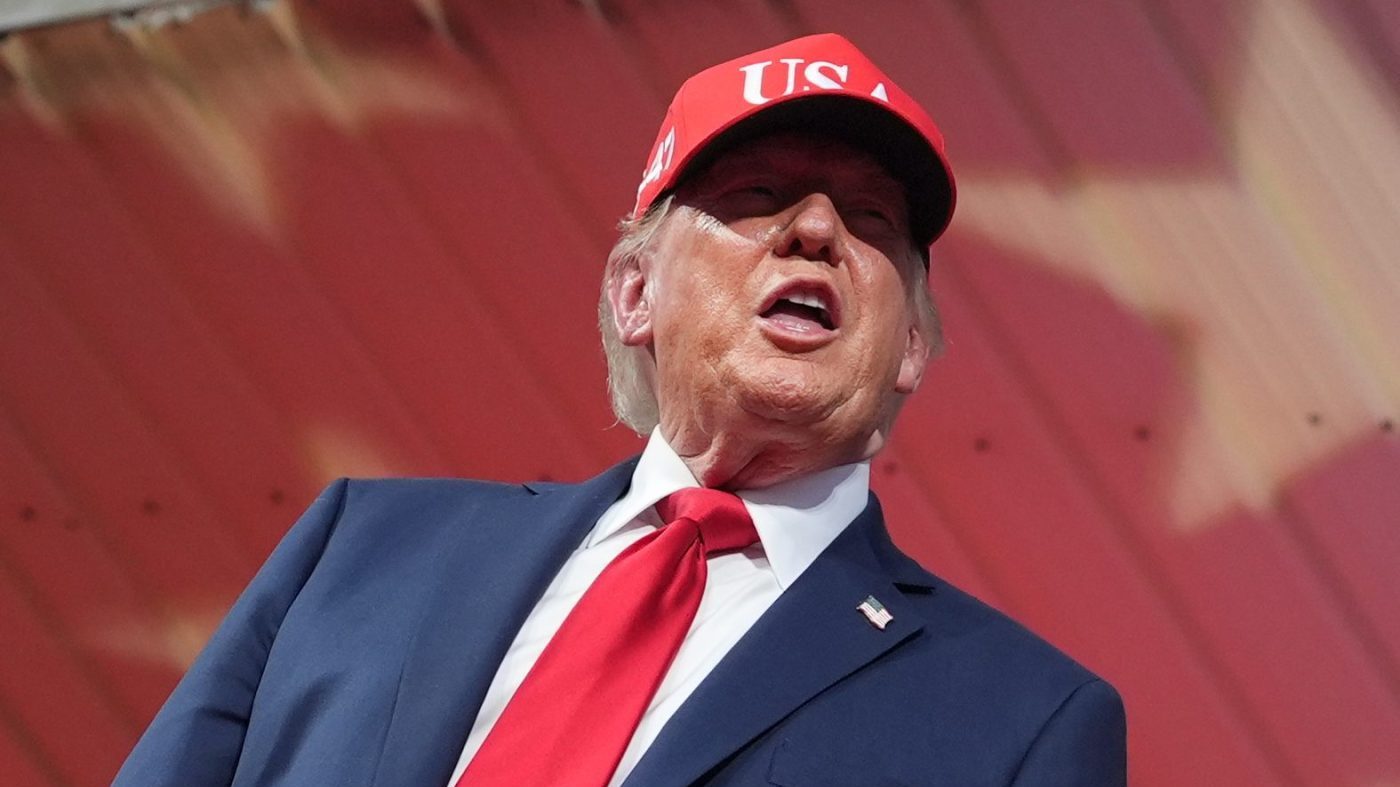
President Trump on Wednesday dismissed surging gasoline prices as a minor cost of the U.S. military campaign in Iran, telling a crowd in North Carolina that the economic pain is a worthwhile trade-off for the administration's actions.
"It's a very inexpensive price to pay for what we've done. Remember that. It's a little more. Frankly, even if it was a lot more," Trump said at a rally in Gastonia, where he was campaigning for GOP Senate nominee Michael Whatley. He added that prices would soon drop, predicting they would come down "like rocket ships in reverse."
The remarks come as American motorists face sharply higher costs at the pump. According to AAA, the national average for regular unleaded gasoline jumped from $4.31 to $4.43 in just four days this week, while diesel prices surged 42 cents over the past week.
The spike is a direct consequence of the ongoing conflict with Iran, which has disrupted global oil markets. The Strait of Hormuz, a critical shipping lane for crude, remains closed, exacerbating supply concerns and driving energy prices upward.
Analysts are struggling to assess the trajectory of the crisis. "For the first time since the start of the Iran conflict, we don't have a baseline view," Natasha Kaneva, a commodities strategist at JP Morgan, wrote to clients. "We simply don't know how to model the endgame."
The economic fallout poses a political challenge for Republicans, who are trying to counter Democratic messaging on affordability. A New York Times/Siena University poll released this week found that 62 percent of respondents disapprove of Trump's handling of the economy, with only 36 percent approving.
Rising fuel costs are likely to weigh on voters as the November midterms approach. Some GOP senators have already criticized the White House's Iran strategy, warning that the price surge could hurt the party's chances.
Trump's defense of the price increase echoes his earlier comments that the war is necessary for national security, but the economic strain is becoming harder to ignore. Even as he predicted a rapid decline in prices, analysts caution that the uncertainty surrounding the conflict makes such forecasts highly speculative.
The administration's handling of the economy is a central issue in the campaign, and the latest polling suggests that voters are increasingly skeptical. The president's approval rating on economic matters has slipped, and the gas price spike is likely to amplify those concerns.