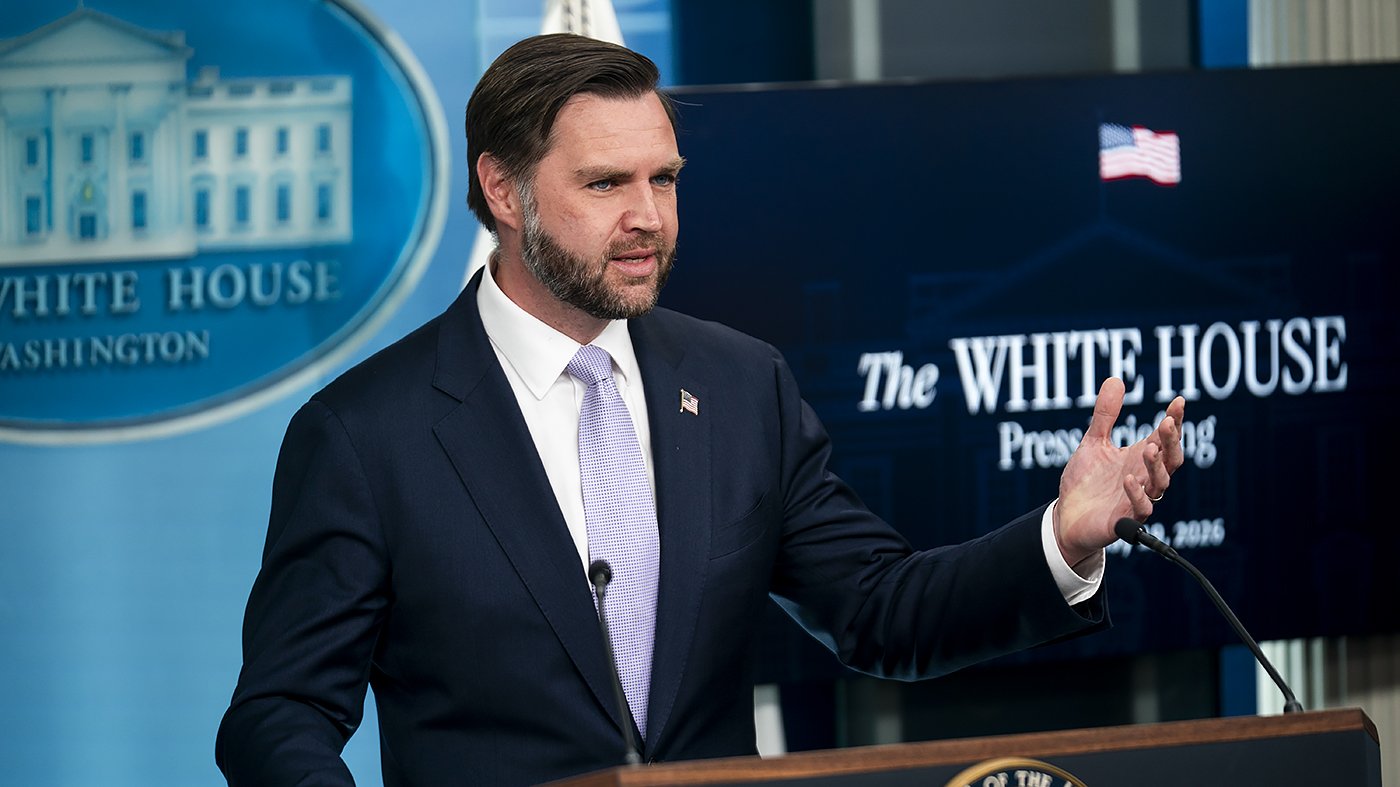
Vice President Vance confirmed Monday that the full text of the preliminary agreement between the United States and Iran to reopen the Strait of Hormuz will be made public this week, as the Trump administration works to shore up support and push back against skepticism from both Democrats and some Republican allies.
In an interview on ABC's Good Morning America, Vance laid out the core structure of the deal: “We’ll be releasing the text this week and what everybody will see is that Iran doesn’t get a dime of money unless they perform their obligations, and the money that we’re talking about is fundamentally sanctions relief.”
The administration announced Sunday that a preliminary framework had been reached to restore navigation through the strategic waterway, which Iran had effectively closed off earlier this year. Pakistani Prime Minister Shehbaz Sharif, who has acted as a mediator between Washington and Tehran, posted on X that a formal signing ceremony is scheduled for Friday in Switzerland. President Trump has previously indicated Vance may represent the United States at that event.
During a morning media blitz, Vance underscored that under the emerging deal, “not a single dollar” of American taxpayer money would flow to Tehran. Instead, the United States is “willing to give significant sanctions relief” contingent on Iran making verifiable, long-term commitments—including dismantling its nuclear weapons program and ceasing funding for militant groups across the Middle East.
Despite the administration’s push for a quick rollout, the preliminary deal has drawn early criticism. Senator Lindsey Graham (R-S.C.) expressed unease on Sunday, writing on X that he is “somewhat concerned that Iran’s view of the agreement seems different than what the American negotiating team is claiming.”
Vance shot back at Graham during the ABC interview, warning fellow Republicans not to take Iranian statements at face value. “I’d caution Lindsey Graham and anybody else not to believe the hardliner propaganda in Iran, but to believe what’s actually in the agreement,” the vice president said.
The vice president also drew a sharp contrast between this preliminary deal and the 2015 Obama-era nuclear accord, arguing that U.S. allies now “love” the Trump approach. “They feel that it’s going to create a totally new dynamic in the Middle East,” Vance said. “That’s a great testament to what the president and the entire team has accomplished.”
The administration’s handling of the deal comes as other matters continue to swirl around the White House. Vance’s longtime chief of staff Jacob Reses is set to step down at summer’s end, and the vice president is also scheduled to appear on The View amid ongoing tensions with the show’s hosts over their criticism of Trump. Meanwhile, President Trump heads to the G7 under a cloud of scrutiny over the Iran framework.
With key details still under wraps, the coming release of the deal’s text is expected to intensify debate on Capitol Hill and among foreign policy analysts, as the administration seeks to lock in support before the Friday signing in Switzerland.

