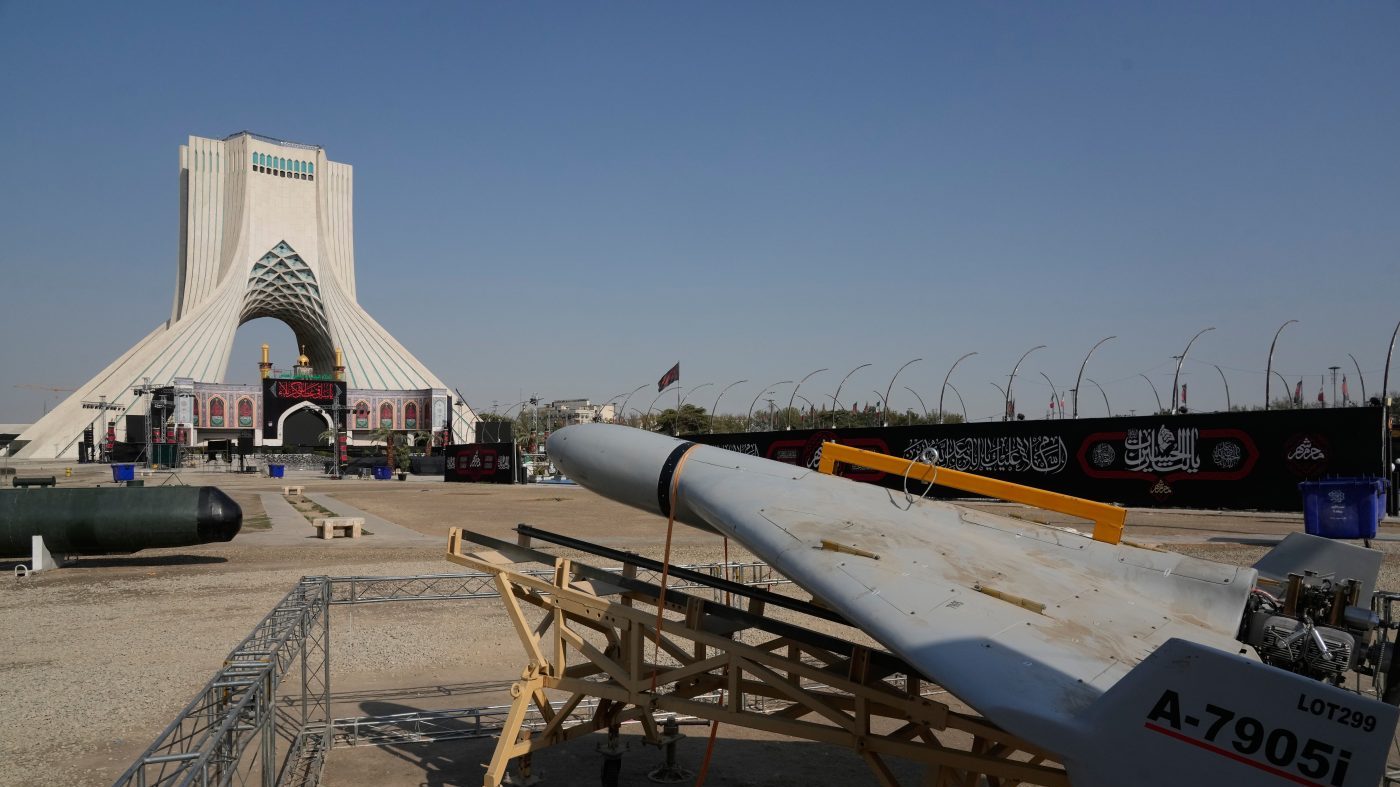
The U.S. military initiated airstrikes against Iran late Wednesday, retaliating for an attack by the Iranian Revolutionary Guard Corps (IRGC) on a U.S. base in Jordan the previous day. The strikes began at 8 p.m., according to U.S. Central Command, hours after the IRGC fired five missiles at American forces stationed in Jordan on Tuesday evening.
The escalation marks a sharp turn after President Trump had paused military action against Iran over the weekend to explore diplomatic avenues. That pause came as Trump weighed a major bombing campaign backed by Republican defense hawks in Congress, but he held off partly due to concerns about widening the conflict and depleting U.S. munition stockpiles.
In the immediate aftermath of Tuesday's missile strike, the U.S. and Saudi Arabia jointly launched strikes on Iran-backed militias in Iraq, further ratcheting up regional tensions and raising the specter of a broader war. The back-and-forth has intensified after Trump earlier this week threatened Iran with a graphic warning in a Fox News interview, saying the U.S. would “beat the f—ing s— out of them.”
Speaking at the White House later Wednesday, Trump framed the upcoming strikes as a matter of turn-taking. “In the meantime, we’re going to be hitting them very hard because it’s our turn to hit them. They know it’s coming. They’re asking us not to do it, but you know they tried shooting at us last night,” the president told reporters.
This latest round of U.S. strikes follows Trump’s earlier threats of retaliation after the Jordan base attack. The administration’s shifting stance—from a 13-night bombing campaign, to a pause for diplomacy, to renewed strikes—has left allies and adversaries uncertain about U.S. strategy in the region.
The tit-for-tat strikes come as public support for military action in Iran remains low. A recent poll found that only 33% of Americans back U.S. strikes on Iran as the conflict drags on. Meanwhile, the administration faces pressure from both hawks urging a decisive blow and critics warning of mission creep and unsustainable costs.
The White House has not ruled out further escalation, and the Pentagon is reportedly preparing additional options for the president. As the U.S. and Iran trade blows, the risk of a broader Middle Eastern conflagration continues to grow, with diplomatic off-ramps narrowing.