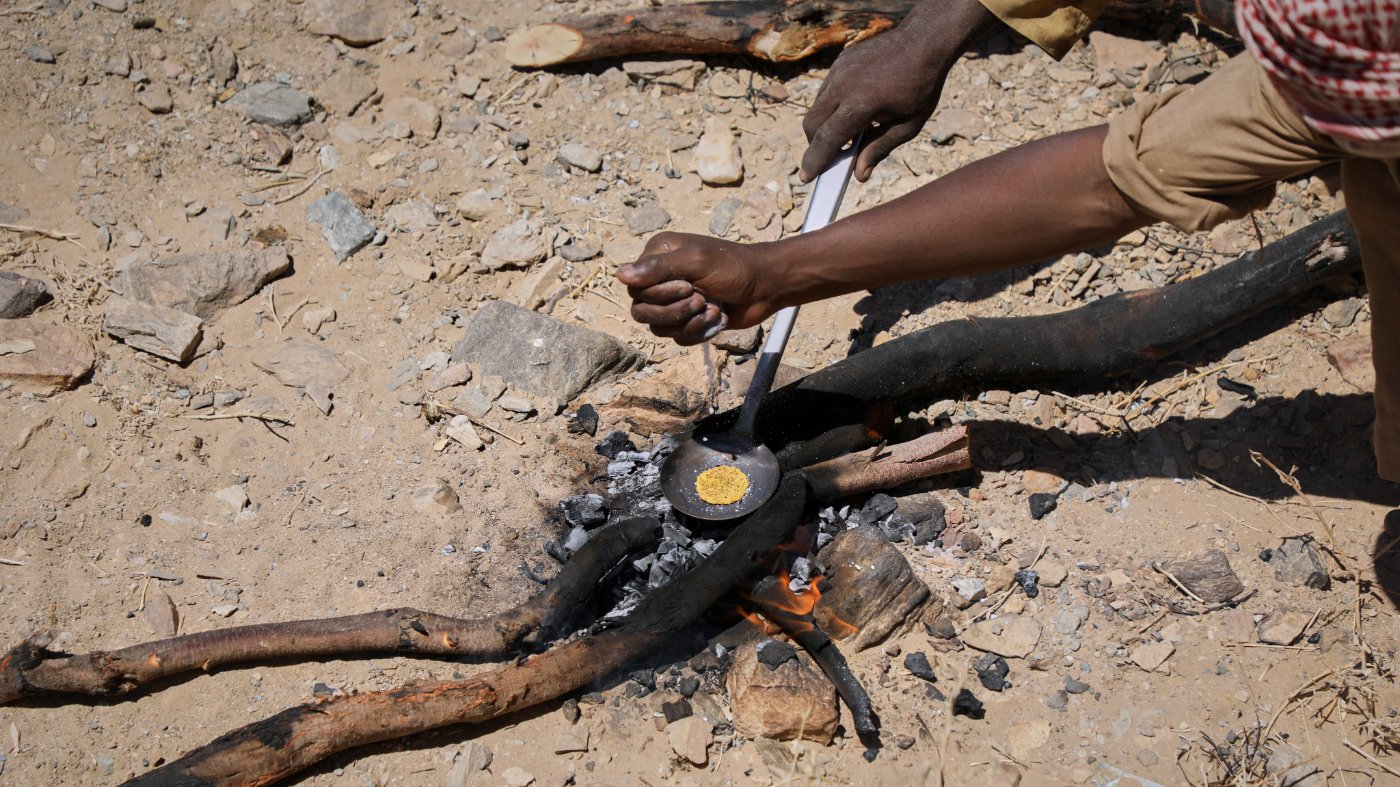
As the United States marked its 250th anniversary, a shadow looms over the golden legacy that helped build the nation. Gold has long been a symbol of American economic might and stability, from the coins that financed the Revolution to its role in the modern financial system. But today, the soaring price of gold—nearly double what it was two years ago—has exposed a dark underbelly: a surge in illicit artisanal and small-scale mining that is bankrolling criminal networks, terrorist groups, and hostile states.
Every ounce of gold that moves through opaque supply chains represents lost tax revenue, weakened governance, and heightened security and environmental risks, according to the World Gold Council. The organization warns that the problem is now a global security threat that demands urgent action from Washington.
Artisanal mining now operates in more than 80 countries, supporting the livelihoods of roughly 270 million people. While the sector accounts for about 20% of global gold production, it employs nearly 80% of the world's mining workforce. Yet much of this activity remains informal and unregulated, making it vulnerable to criminal exploitation. Illicit gold has become a parallel financial system that evades sanctions, bypasses oversight, and channels revenue into networks that thrive on corruption and violence.
The consequences are severe: human rights abuses, environmental degradation, and pervasive illicit finance. In regions where the state is weak, criminal actors move freely through supply chains while legitimate miners are locked out of formal markets and financing.
The World Gold Council argues that formalizing artisanal and small-scale mining is one of the most effective tools to counter these threats. Formalization, they stress, is not about exclusion or criminalization but about creating lawful, transparent pathways that reward responsible behavior and dismantle illicit networks.
To that end, the council advocates a three-pronged approach. First, gold must be verifiably tracked from production through processing, using robust technology to ensure origin integrity. Gold that cannot be traced should not be traded. Second, lawful processing infrastructure is essential to disrupt criminal exploitation and protect water resources and public health. Third, central banks and other official institutions must use their purchasing power to demand transparent sourcing, creating powerful incentives for reform.
On Capitol Hill, Senators John Cornyn (R-Texas) and Tim Kaine (D-Va.) have been advancing legislation to create a legal gold and mining partnership strategy, aiming to bolster US leadership in tackling the problem. The World Gold Council says a private-sector-led approach, aligned with clear public-sector objectives, offers the fastest path forward.
The costs of inaction are mounting. Every untraceable ounce of gold strengthens the criminal networks that profit from opacity and disorder. As the US charts its next quarter millennium, addressing this threat is not just a matter of economic integrity but of national and global security.

