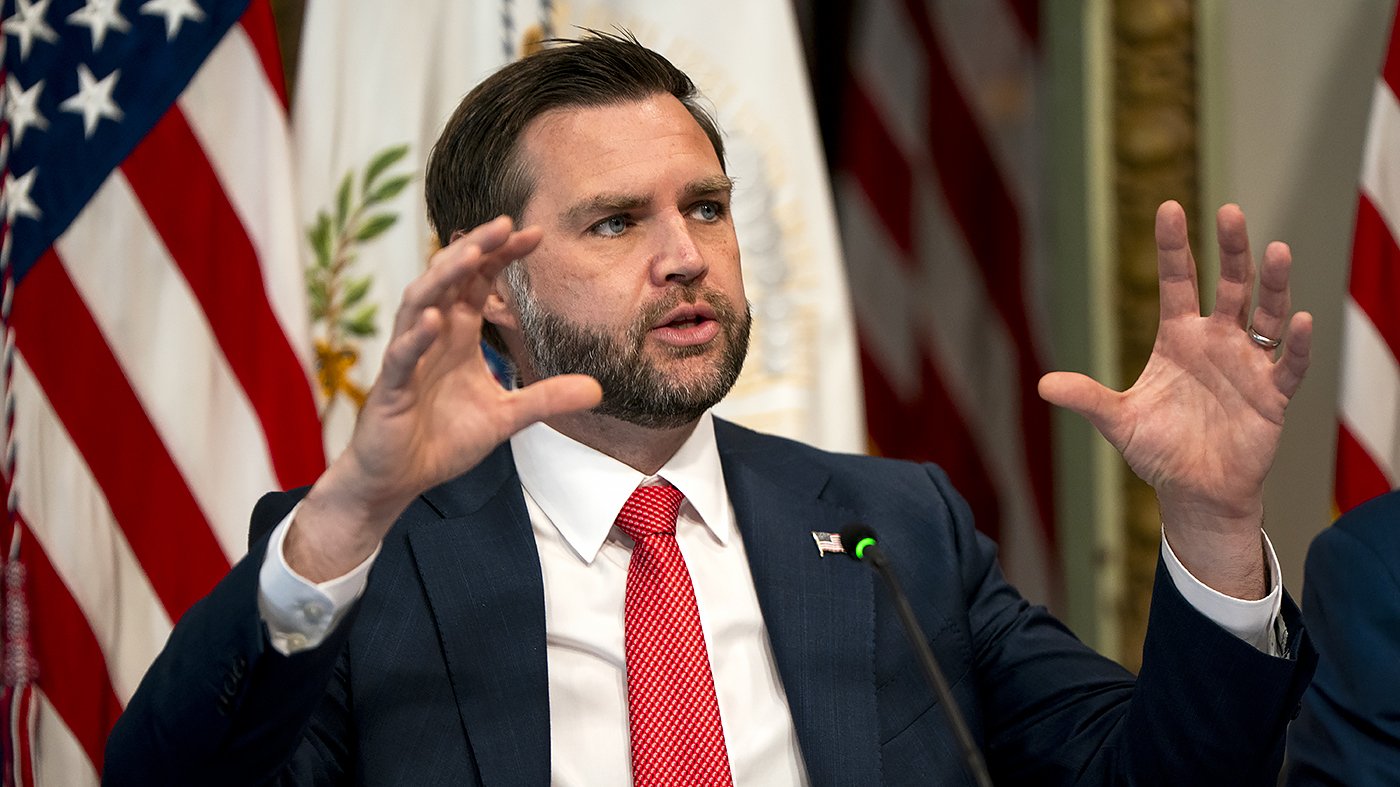
Vice President Vance said Saturday that the United States has seen some movement in its negotiations with Iran, but he cautioned that the conflict is far from resolved as the Trump administration continues to press Tehran for concessions.
Appearing on Fox News, Vance pointed to talks between Iran and Oman regarding the reopening of the Strait of Hormuz as a sign of incremental progress. However, he was quick to temper expectations, saying, "This thing is not over. It's obviously not at the beginning. We're in the middle of the game."
The vice president emphasized that Washington is employing a broad range of tools—diplomatic, economic, and military—to secure the best outcome for the American people. His remarks come amid growing internal debate over the trajectory of the nearly six-month-old war.
According to a CNN report, Joint Chiefs of Staff Chair Gen. Dan Caine has been urging top administration officials to find an "off-ramp" from the conflict. Caine reportedly raised this in conversations with CIA Director John Ratcliffe, Secretary of State Marco Rubio, and Vance, warning that continued airstrikes alone are unlikely to achieve President Trump's objectives.
One source familiar with the discussions told CNN, "Caine is looking for an off ramp." The nation's top military officer and others have privately conceded that bombing Iran is unlikely to force the regime to accept a deal on Trump's terms, adding to concerns about the effectiveness of military action.
These internal deliberations come ahead of meetings with the president, where officials aim to coordinate their message about the risks and limitations of further military escalation, including options that would not require deploying U.S. ground troops.
The administration's strategy faces scrutiny as public opinion shows unease. A recent poll found that half of Americans expect the Iran war to lead to broader Middle East instability, reflecting anxiety over the conflict's trajectory.
Meanwhile, a separate analysis suggests that an Iran-Oman pact could potentially give Tehran leverage over the Strait of Hormuz, complicating U.S. efforts to secure shipping lanes and pressure Iran economically.
Vance's public stance remains firm, but the behind-the-scenes push for an exit strategy signals a potential shift in the administration's approach. As the war grinds on, the question of how to achieve a favorable outcome without endless military engagement is becoming more pressing.