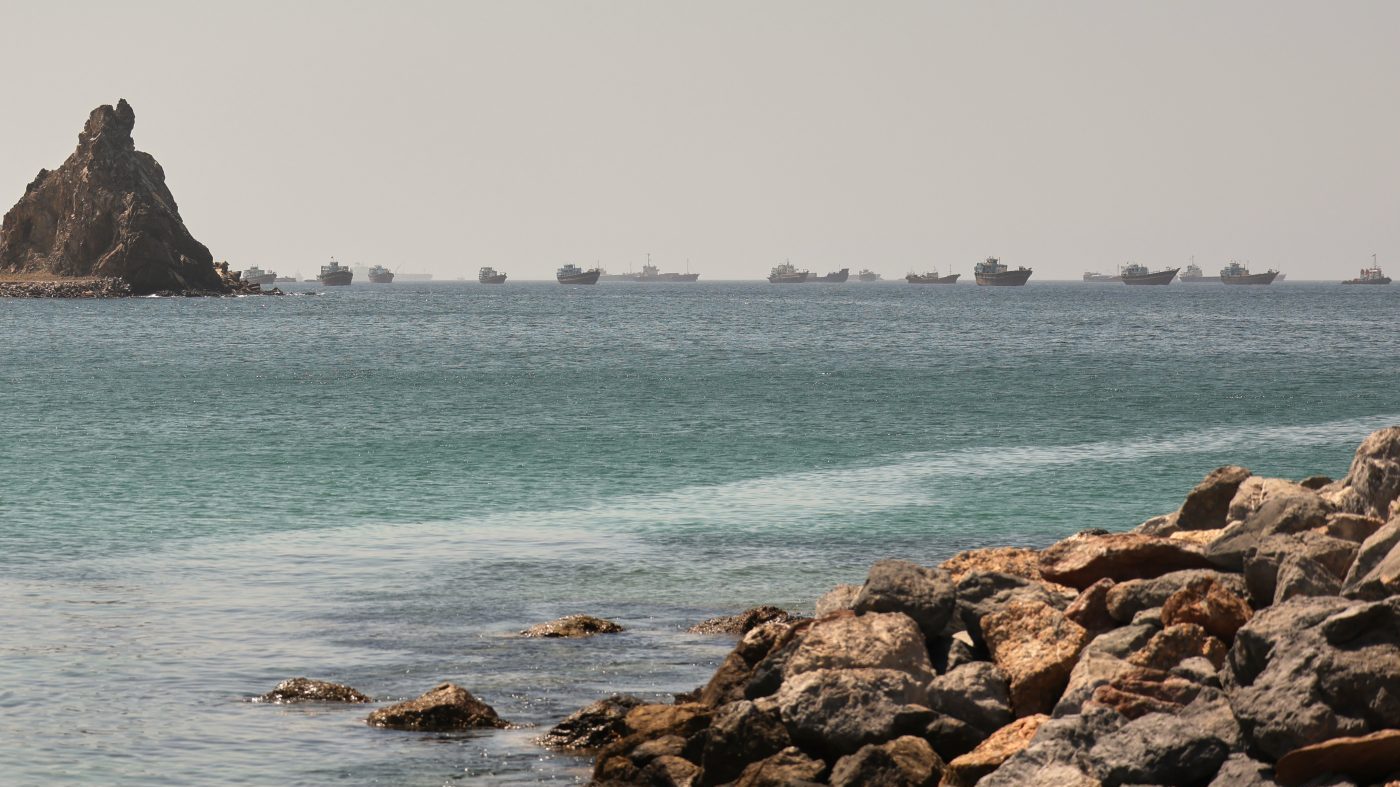
Talks between Tehran and Muscat are advancing toward an agreement that would reopen the strategic Strait of Hormuz and place its traffic under joint Iranian-Omani management, a development that would effectively hand Iran a major strategic victory after months of U.S.-led military pressure.
The framework, still being finalized, would reportedly give Iran authority over vessels entering the Persian Gulf through the strait. The division of responsibilities for outbound shipping and the extent of Iranian oversight remain unresolved. Officials from both countries reportedly agreed on a new transit route on Wednesday, though the strait would not reopen immediately even if a deal is signed.

Such an arrangement would directly contradict repeated assurances from the Trump administration that Iran could never control access to the waterway. Yet President Trump, searching for a way out of a six-month conflict that has proven costly and unpopular, appears eager to leverage the Iran-Oman talks as a stepping stone toward a broader nuclear agreement with Tehran.
Analysts say the emerging deal signals that the U.S.-led war effort has not achieved its stated goal of forcing Iran into unconditional surrender. Instead, Tehran has retained—and perhaps strengthened—its leverage over the world's most vital oil chokepoint.
"It seems as though if there is an agreement, it will be one in which Iran retains its ability to control traffic through the Strait of Hormuz," said Mona Yacoubian, director of the Middle East program at the Center for Strategic and International Studies. She noted that any U.S. acceptance of the terms would likely trigger a new 60-day window for U.S.-Iran peace negotiations, as originally envisioned in a June memorandum of understanding that collapsed when hostilities resumed.
"Ultimately Iran will continue to insist on its ability to control the strait," Yacoubian said. "It's not so much a compromise, but how that is affected, and whether there is, in essence, a face-saving way for the U.S. to acquiesce to the agreement. That's the big question."
The details have shifted rapidly this week, with reports suggesting a deal could be finalized by Friday. The strait's closure has driven up fuel and consumer goods prices, as roughly one-fifth of global oil and natural gas supplies normally transit the waterway.
Financial terms remain a sticking point. Reuters reported that Iran is seeking transit fees of 5 to 7 percent of cargo value, while Oman is pushing for around 3 percent. Washington, which had controlled the strait before the war, wants to keep fees at zero.
Complicating matters further, Iran continues to deny that it is negotiating directly with the United States, even as Trump insisted Tuesday that talks were "moving along very nicely" and that a deal could be signed "tomorrow or the next day." He also told Fox News that his administration was engaged in "very good discussions" with Iranian officials, including an "all-day negotiation," while warning that if Tehran "backs out again, they are going to get hit really hard."
Speaking in Las Vegas on Wednesday, Trump offered no new clarity on the status of the talks, saying only that he would prefer a deal because he does not want to kill people.
The administration's reliance on military pressure has so far failed to reopen the strait. Months of airstrikes, including a two-week bombing campaign in July, have drained U.S. stocks of critical munitions without achieving the desired result. That shortage has reportedly influenced Trump's decision not to escalate further, amid concerns from Gulf allies about U.S. capacity.
"They recognize they have this leverage," said Bryan Clark, a senior fellow at the Hudson Institute. "They feel like there's really no way the U.S. is going to claw it back because the U.S. isn't willing to do the larger operation that would be necessary to force open the Strait of Hormuz and deny Iran that ability to control it."
Trump has repeatedly threatened military action only to pull back and offer negotiations, a cycle that has repeated at least five times since April. Yacoubian questioned how long that pattern can continue, citing dwindling interceptor missile inventories, the approaching midterm elections, and the domestic economic impact of higher prices.
Even if a deal is reached, it could quickly unravel. Clark warned that Trump might view criticism that Iran got the better end of the bargain as a sign of weakness and order renewed strikes, prompting Iran to close the strait again. "Then we'll be right back at it," he said.
For now, the Iran-Oman track represents the most concrete path toward de-escalation, but it also underscores how far the strategic balance has shifted since the conflict began.