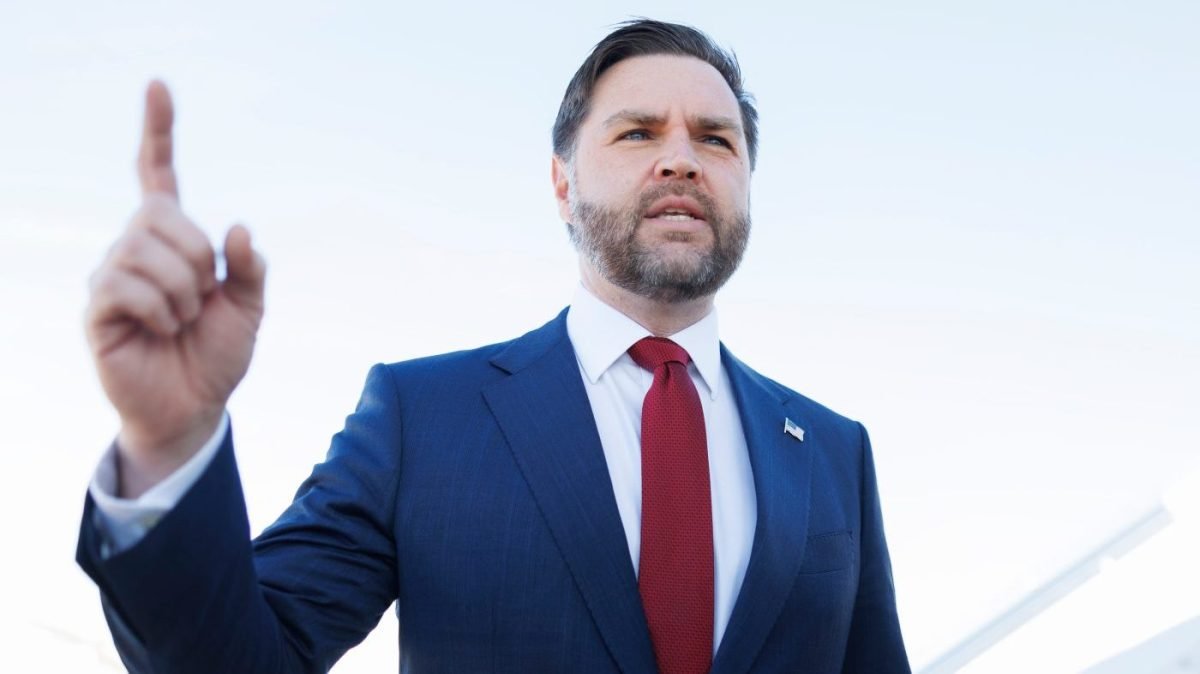
Vice President JD Vance solidified his position as the leading contender for the 2028 Republican presidential nomination, capturing a commanding 53 percent of the vote in the Conservative Political Action Conference's annual straw poll. The survey, conducted Saturday in Grapevine, Texas, provides an early snapshot of sentiment among the party's activist base as speculation intensifies about the post-Trump era.
Rubio's Surge and Distant Competition
Secretary of State Marco Rubio emerged as a clear, though distant, second choice with 35 percent support. The result marks a dramatic rise for Rubio, who garnered only 3 percent in last year's CPAC poll. Florida Governor Ron DeSantis and Donald Trump Jr. tied for a remote third place at 2 percent each.
A list of other potential candidates received minimal backing. Senators Ted Cruz of Texas and Rand Paul of Kentucky, Defense Secretary Pete Hegseth, Director of National Intelligence Tulsi Gabbard, and Texas Governor Greg Abbott each received 1 percent support. Two other listed contenders failed to register any votes.
Interpreting the Early Barometer
The CPAC straw poll is widely monitored as an indicator of preferences within the conservative grassroots. Vance's dominant performance suggests core Republican voters currently view him as the natural successor to advance the political movement championed by President Trump. The Vice President's standing has been consistently strong; he led last year's poll with 61 percent support.
President Trump's absence from this year's conference—his first in a decade—occurred against a backdrop of international crisis and domestic political pressure. He is reportedly focused on managing the ongoing conflict with Iran and addressing rising energy costs ahead of the midterm elections.
The Succession Question Simmers
While Vance has long been considered the heir apparent since joining the 2024 ticket, Trump's recent public praise for Rubio's diplomatic work has injected uncertainty into the party's future leadership. This has fueled quiet debate among donors and operatives about who will eventually carry the party's banner.
"Trump knows this is playing in the backdrop, and he's struggling with it," a Republican fundraiser familiar with internal discussions told The Hill. "That's why he keeps asking people what they're thinking." The dynamic highlights the broader party tensions that will define the coming years.
Public Denials of Rivalry
Both principals have publicly downplayed any sense of competition. In a November interview, Vance dismissed the notion of a rivalry with Rubio. "People have asked me, 'Do you see Marco as a rival?'" Vance told Fox News. "First of all, if either of us end up running, it's a long ways in the future, and neither of us is entitled to it. So I think it would be ridiculous for me to say Marco is a rival. No, Marco is a colleague."
For his part, Rubio told Vanity Fair in December that he would be "one of the first people to support" Vance should the Vice President launch a White House bid. These public statements contrast with the clear jockeying for position reflected in the poll and the intense speculation surrounding the GOP's future direction.
The Road to 2028
The poll's outcome, while non-binding, sets an initial marker for the next presidential cycle. With Trump constitutionally barred from another term, the contest to lead the Republican Party is effectively underway. Vance's role as Vice President and his close alignment with Trump's base give him a formidable advantage, but Rubio's significant gain in support indicates a potential alternative path for voters seeking a different style of leadership.
The coming years will test this early alignment, as potential candidates like Rand Paul position themselves and external events reshape the political landscape. For now, the CPAC stage shows a party whose base is looking toward Vance, with Rubio establishing himself as the most plausible challenger.