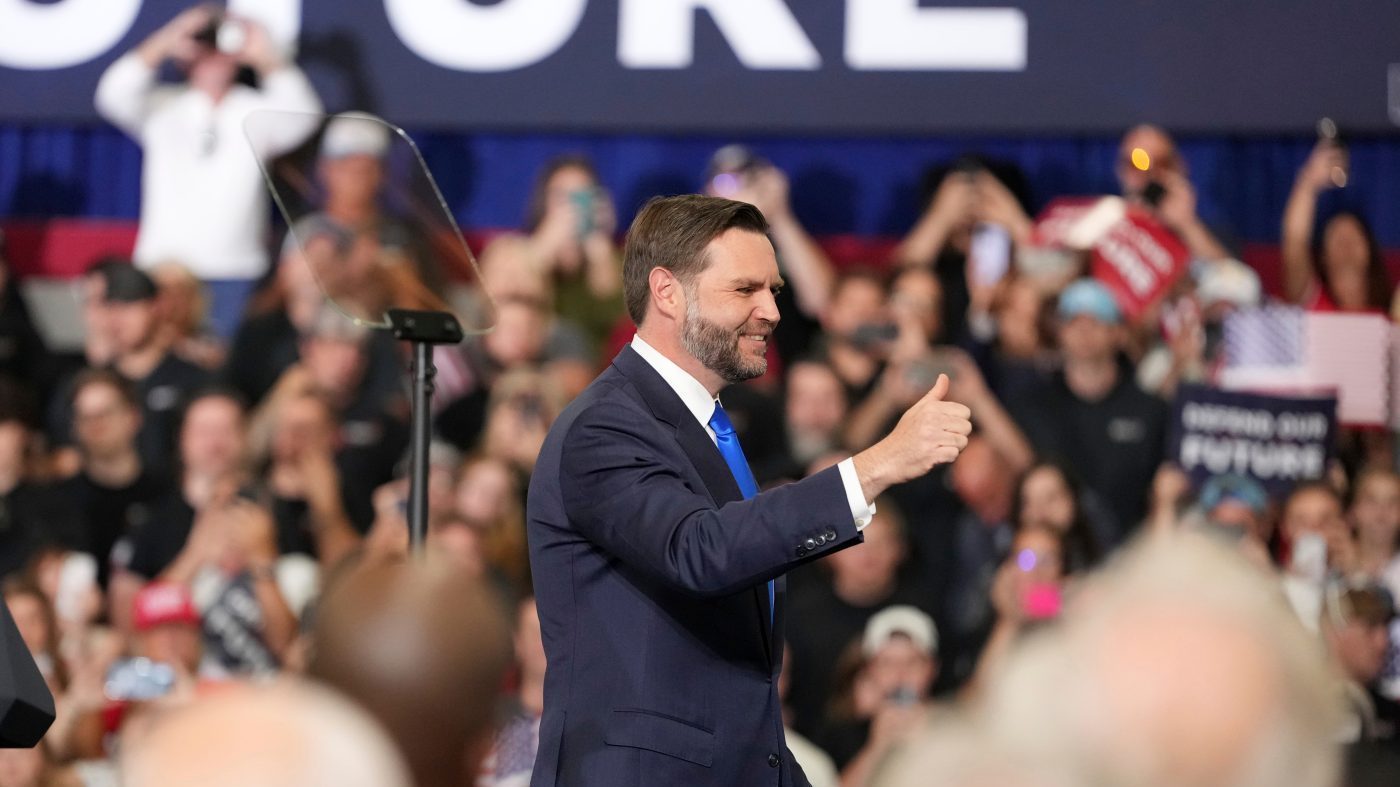
Vice President Vance on Monday confirmed that he had contacted senior U.S. military officers across the Middle East, Asia, and Europe to solicit their assessments of the ongoing military engagement with Iran, pushing back on a recent New York Times report that framed the outreach as unusual.
Speaking to reporters, Vance acknowledged the calls but sought to normalize them. "I trust Pete and I trust Dan Caine, but I found that story very weird," he said, referring to Defense Secretary Pete Hegseth and Gen. Dan Caine, chairman of the Joint Chiefs of Staff. "It's like the vice president calls around to admirals and generals to try to understand America's foreign policy, of course I do."
The New York Times reported last Thursday that Vance placed the calls during the spring and summer after President Trump directed him to explore ways to end the standoff between Washington and Tehran. According to the report, the vice president sought direct input from commanders on the ground, a move that some officials viewed as an unusual end-run around traditional chains of command.
The commanders reportedly voiced concerns to Vance about the availability of Patriot interceptor missiles, a critical asset for defending U.S. forces and allies in the region. The discussions also covered broader strategy, campaign objectives, casualty projections, and the security of the Strait of Hormuz, a vital chokepoint for global oil shipments.
Vance came away from those conversations with heightened unease, according to the Times, after learning how much pain Tehran's leadership was prepared to absorb to ensure the regime's survival. He later relayed those concerns directly to Trump and his inner circle, the report said.
The vice president has long been skeptical of protracted U.S. military commitments abroad, and the report suggests he raised alarms about the potential for a wider war with Iran. His stance aligns with the administration's broader push to reduce overseas entanglements, though critics argue that his direct outreach to military commanders could undermine civilian control and institutional processes.
Earlier this month, Vance declined to characterize the U.S. operation in Iran as a "war," telling reporters at a press briefing: "I wouldn't call it a war. Right now, there is no active shooting. I recognize there have been places where this has flared up."
The confirmation comes amid a backdrop of heightened political scrutiny over the administration's foreign policy decisions, including shifts in security policy and ongoing debates about the use of military force. Vance's comments also resonate with his recent public engagements, such as his speech in Dallas that fueled speculation about his political future, and his defense of his friendship with Tucker Carlson in a press room clash.
As the situation in Iran remains fluid, Vance's direct engagement with military leaders underscores the administration's internal deliberations over how to manage a conflict that has yet to be formally declared a war. The vice president's insistence on hearing from commanders on the front lines suggests a hands-on approach, even as he seeks to reassure the public that the U.S. is not sliding into another prolonged conflict.