The U.S. military has nearly depleted its stockpiles of its most advanced long-range missiles and interceptors for a key missile defense system after more than five months of airstrikes against Iran, according to multiple reports on Tuesday. The situation has renewed concerns about America's ability to respond to other potential conflicts around the globe.
Two sources familiar with the matter told Reuters that the Army has used up "virtually all" of its Army Tactical Missile Systems (ATACMS) and Precision Strike Missiles (PrSM), both surface-to-surface munitions that cost roughly $1 million each. The ATACMS, manufactured by Lockheed Martin, can be launched from HIMARS mobile launchers and strike targets up to 190 miles away with a payload of nearly 400 pounds of explosives. The PrSM, also made by Lockheed Martin, is the next-generation long-range missile with a range exceeding 300 miles and can be fired from both MLRS M270 and HIMARS launchers, designed to replace the ATACMS.

Because the PrSM is a newer munition, with deliveries beginning only in 2023, its inventory was already limited before the conflict with Tehran. A report from the Center for Strategic and International Studies (CSIS) in April estimated the U.S. military had around 90 PrSMs prior to the war. The dwindling supply could force the U.S. military to rely more heavily on piloted bombing missions if President Trump approves an expanded airstrike campaign against Iran.
In a statement provided to Reuters, President Trump insisted the U.S. has "far more munitions than anyone in the world" and "far more than we need." He added, "Our defense companies are, at this moment, making more munitions than they have ever made before, in addition to expanding their plants and equipment at record levels." However, industry experts told The Hill that despite increased production, it will take at least a few years to replenish the stockpile to pre-war levels.
Separately, CNN reported Tuesday, citing two people familiar with the matter, that the U.S. military has consumed close to 80 percent of its Terminal High Altitude Area Defense (THAAD) missile inventory and about half of its Patriot interceptors since the war with Iran began. Before the conflict, the U.S. had roughly 452 THAAD missiles and around 2,200 Patriot missiles, according to CSIS.
Chief Pentagon spokesperson Sean Parnell pushed back on the reports, telling CNN, "America's military is the most powerful in the world and has everything it needs to execute at the time and place of the President's choosing." He added, "We have executed multiple successful operations across combatant commands while ensuring the U.S. military possesses a deep arsenal of capabilities to protect our people and our interests." Defense Secretary Pete Hegseth also criticized CNN's coverage, blasting the network's on-screen graphic that described the weapons supplies as "dangerously low." In a social media post, he wrote, "That banner is NOT TRUE, @CNN. Shame on you. We don't hate the Fake News media enough."
U.S. allies in the Gulf have voiced concerns about the state of the air defense stockpiles they rely on to intercept Iranian missiles and one-way attack drones. A recent CSIS estimate noted that the U.S. had just over 450 THAADs before the war and was left with between 234 and 278 as of late July. The think tank warned, "Diminished stockpiles may force the United States and its coalition partners to take more risks with interceptions. There are no good alternatives to Patriot and THAAD for ballistic missile defense," adding that U.S. Navy ships equipped with Standard Missiles are often too far away to help.
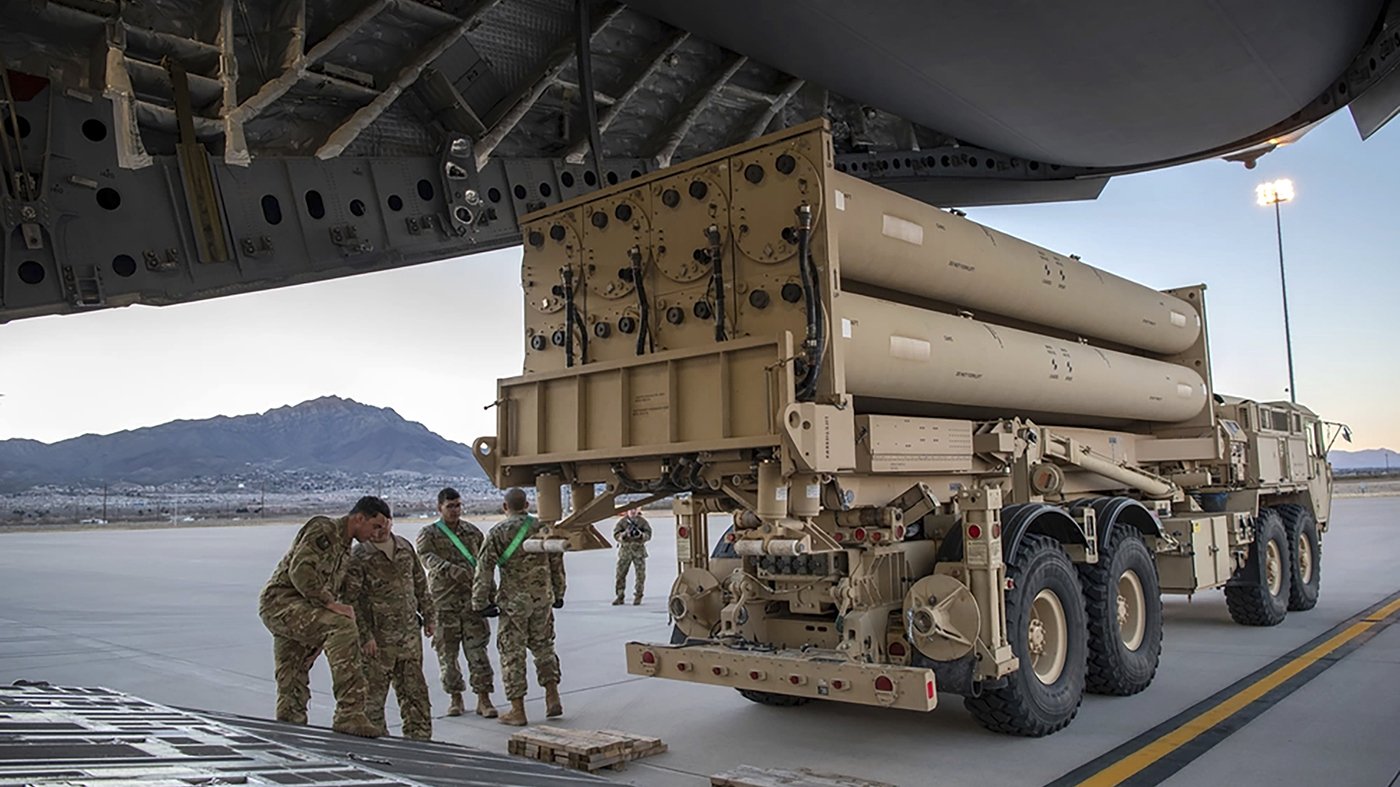
The THAAD interceptors, also produced by Lockheed Martin, are truck-mounted launchers capable of shooting down short, medium, and intermediate-range ballistic missiles, both inside and outside the Earth's atmosphere. The depletion of these systems has implications for U.S. strategic posture, especially as the Pentagon continues to support Ukraine with similar munitions. As Ukraine presses for more missiles, the strain on U.S. inventories becomes more pronounced. The situation also echoes broader concerns about missile defense readiness that analysts have raised in recent months.
With the conflict showing no signs of abating, the question of how to sustain both Ukraine and U.S. operations in the Middle East remains a pressing challenge. The Pentagon's ability to replenish these critical munitions will be a key factor in shaping future military options, as efficiency in production becomes as important as raw output. The coming months will test whether the administration's assurances of ample stockpiles hold up under continued operational demands.