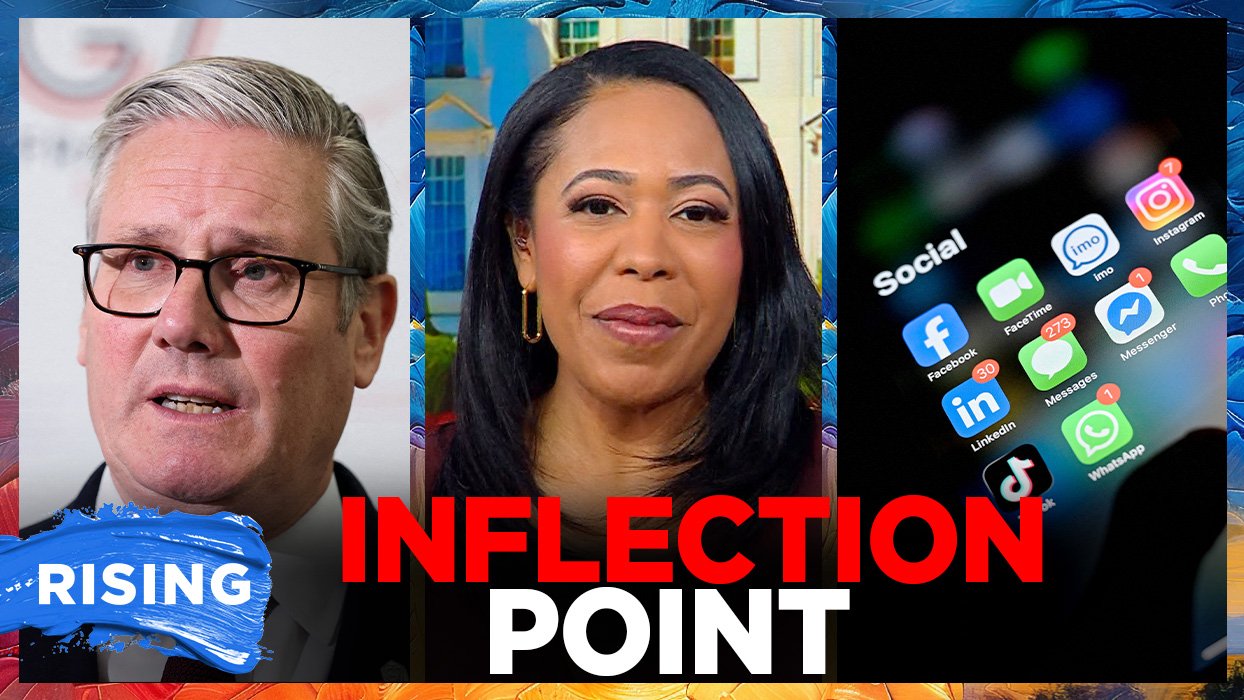
British Prime Minister Keir Starmer has announced that the United Kingdom will prohibit children under 16 from using social media platforms like TikTok, Instagram, Snapchat, Facebook, YouTube, and X. The policy, unveiled Monday, follows Australia’s lead and ranks among the most aggressive government efforts to curb youth access to social media.
The announcement comes as governments worldwide grapple with growing evidence linking excessive social media use to anxiety, depression, sleep disruption, and body-image issues among adolescents. Research shows teens who spend more than three hours daily on these platforms face roughly double the risk of mental health symptoms, and nearly half of U.S. teens report being online “almost constantly,” according to Pew Research Center.
But the U.K. move has drawn criticism from the United States. Ahead of Starmer’s announcement, Washington warned London against using “prescribed one-size-fits-all government restrictions” and “blunt regulatory instruments.” When asked whether the ban might alienate former President Donald Trump, Starmer replied, “There has always been a recognition that leaders have to take steps to protect children. I don’t think that’s controversial.”
The U.K. is not alone. Australia, Indonesia, and Malaysia have enacted similar restrictions. In the U.S., lawmakers have proposed age-verification requirements, parental consent laws, and limits on addictive algorithms, but many of these efforts have stalled in court. Tech companies and trade groups have challenged state laws on First Amendment grounds, delaying or blocking several child protection measures before they could take effect.
Australia’s experience offers a cautionary tale. Six months after implementing the world’s first nationwide ban for under-16s, many teenagers reportedly still access platforms using fake birthdates or older siblings’ accounts. The ban did not eliminate social media, but it shifted the conversation. Parents reported that the law gave them “backup,” making it easier to say no and challenging the assumption that every child should be on social media by middle school.
“I don’t think this can all fall on parents,” said Lindsey Granger, a NewsNation contributor and co-host of The Hill’s commentary show “Rising.” “Not every family has the luxury of hovering over a teenager’s shoulder every time they open an app. Some parents are working two jobs. Some are raising children alone. And some are simply up against an impossible challenge: trying to compete with platforms designed by some of the smartest engineers in the world to capture and keep a child’s attention.”
Recent court cases signal that accountability may be coming. Juries have begun finding social media companies liable for addictive design features—like infinite scroll, autoplay, push notifications, and algorithmic amplification—that keep young users scrolling longer. Lawsuits accuse platforms of knowingly using these tools to maximize engagement despite mounting concerns about children’s mental health.
Tech companies, Granger argued, “know exactly what concerns parents have. They know the research. They know the criticism. They know the risks. So they should not wait for a judge, a jury, or a government mandate.” She added that if these platforms can engineer sophisticated algorithms to predict what a teenager wants to watch next, they can certainly build stronger protections for kids.
While legislation moves slowly and court fights could take years, children are growing up on these platforms now. Whether one supports an outright ban or not, the status quo is increasingly untenable. The conversation should not just be about what governments are willing to do, but also about what social media companies are willing to do when nobody is forcing them. Protecting kids should not require a lawsuit.