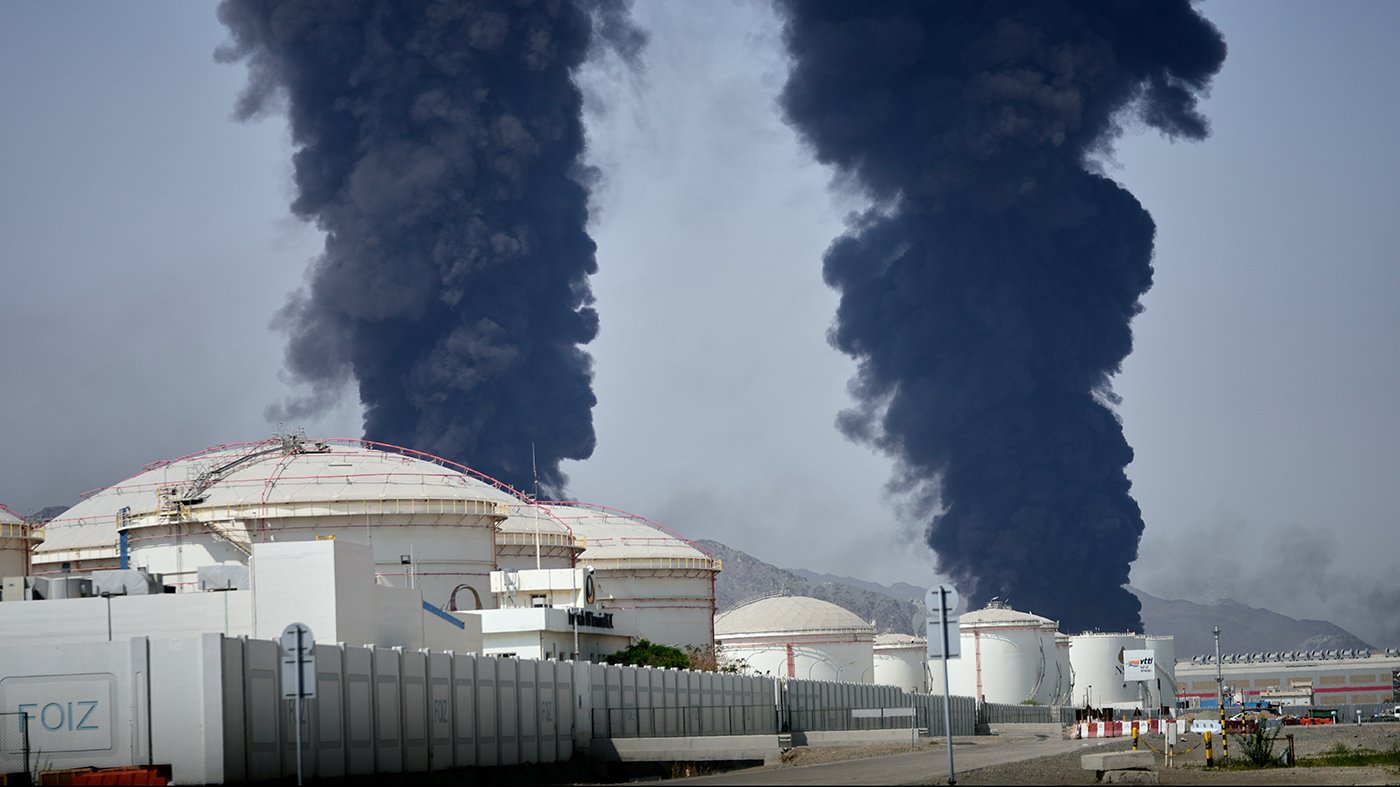
Amid escalating regional hostilities, the United Arab Emirates has emerged as the principal target for Iranian missile and drone attacks within the Gulf Cooperation Council states. While Emirati air defenses have engaged thousands of incoming threats since late February, several projectiles have penetrated these systems, striking civilian infrastructure including residential areas, an oil terminal, and Dubai International Airport.
Strategic Alignment Draws Iranian Fire
Analysts point to the UAE's deepening strategic partnerships as the core reason for its targeting. The nation hosts the critical Al Dhafra Air Base for U.S. forces and has normalized relations with Israel, positioning itself as a central node linking Western and regional security architectures. "By striking the UAE, Iran aims to disrupt its role as a regional connector and inflict broader economic consequences on global trade and energy markets," said Brian Katulis, a senior fellow at the Middle East Institute. He noted that Iranian leadership views the Emirates' economic success with "significant envy."
This perception of alignment is critical. Marwa Maziad, a visiting lecturer at the University of Maryland, stated that Tehran considers the UAE the Gulf state "most strategically aligned" with Israel. "From Iran's perspective, Gulf states that fail to deter U.S.-Israeli actions risk having their territory treated as part of the battlefield," Maziad explained. This dynamic echoes the broader coordinated pressure from adversarial states testing U.S. strategic commitments worldwide.
The Economic and Defense Calculus
The attacks exploit the UAE's economic vulnerabilities. Brian Carter of the American Enterprise Institute described the Emirati economy as "fragile," with Dubai's international prominence creating a "damage multiplier" effect. Each successful strike carries disproportionate political and economic weight.
Abu Dhabi's defense relies on a layered network including U.S.-made Patriot and THAAD systems, designed for ballistic missile interception. Official figures report engagements with over 1,700 drones and 350 ballistic missiles since the conflict began, resulting in military and civilian casualties. However, a sustainability challenge looms: Iran's cheap drones and missiles are countered by far costlier interceptors. "If the conflict drags on, the cost and attrition dynamic could become a serious strategic problem," Maziad warned.
This military strain coincides with expanded Western military authorizations against Iranian assets, highlighting the conflict's widening geography. The UAE's response has included cracking down on Iranian-linked entities within its borders, such as shuttering an Iranian cultural club and hospital in Dubai.
Shifting Reporting and Strategic Reassessment
The UAE's public reporting on the attacks has grown less transparent, shifting from detailing interceptions to noting general "engagements." Carter suggests operational security drives this change, as revealing intercept success rates could expose defense inventory levels to Iranian planners.
Politically, the assaults are forcing a fundamental rethink in Abu Dhabi. Anwar Gargash, diplomatic adviser to the UAE president, stated the attacks "are forcing the Gulf state to rethink its security" and could lead to strengthened ties with the United States. "This is the cost of Iran's misguided calculations," Gargash declared. This reassessment underscores the complex risks for regional partners under the U.S. security umbrella, a theme paralleled in domestic U.S. debates where figures like Congressman Comer have praised aggressive security deployments that spark political controversy.
The sustained Iranian campaign against the UAE represents more than a tactical exchange; it is a strategic pressure test on a key U.S. ally, with implications for regional stability, global energy flows, and the future of Washington's security partnerships in the Middle East.