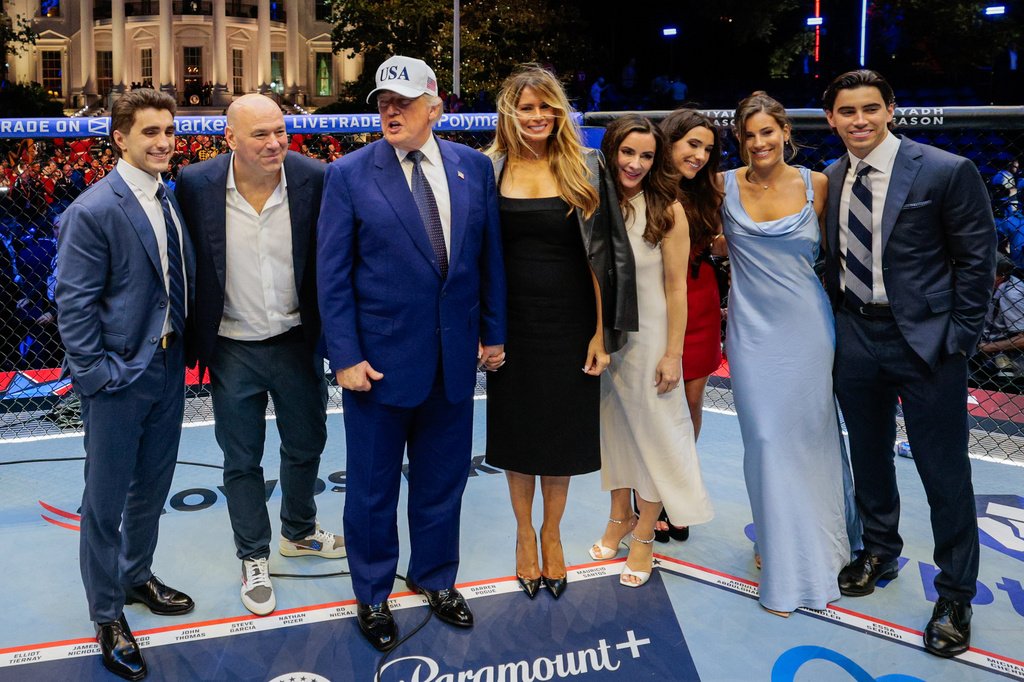
The view from the 14th Street Bridge into Washington once offered a majestic panorama: the Capitol dome, the Washington Monument, the Lincoln Memorial. That sweeping vista now includes a garish red, white, and blue claw structure that looks more at home at a theme park than the nation's front yard. President Trump had the UFC's signature Octagon fighting ring installed on the South Lawn for his 80th birthday celebration, and the result has drawn sharp criticism from those who see it as a crass departure from presidential decorum.
Trump defended the spectacle in a video last week, comparing the Octagon to the Eiffel Tower and suggesting it might become a permanent fixture. "We're building something in front of the White House that's quite attractive to a lot of people," he said, musing that they might "never ever take it down." The structure looms higher than the White House itself, dwarfing the executive mansion and dominating the National Mall.
The reaction from even some of Trump's allies was telling. Right-wing commentator Jack Posobiec, touring the site with reporters, exclaimed, "It's literally Vegas!" The comparison was apt: the setup was as flashy and commercial as anything on the Strip, a world away from the solemnity expected of the White House grounds. Critics argue that the event, which the White House also billed as part of America's 250th birthday, cheapened the occasion.
Past presidents have marked national milestones with cultural luminaries. John F. Kennedy invited poet Robert Frost and cellist Pablo Casals. George W. Bush hosted B.B. King and Eartha Kitt. Barack Obama brought in Aretha Franklin, Beyoncé, and Stevie Wonder. Joe Biden's inauguration featured poet Amanda Gorman. Trump's choice: mixed martial arts.
Sunday night's broadcast featured fourteen fighters—six of them non-citizens—battling inside the cage with kicks, punches, and elbows, often drawing blood. The late Senator John McCain once condemned such contests as "human cock-fighting" and pushed for state bans. Trump's embrace of the sport at the White House marks a stark reversal of that legacy.
Critics draw parallels to Roman emperors who staged gladiatorial games for public entertainment. The historian Suetonius recorded that Emperor Caligula, bored during intermissions, once ordered guards to throw an entire section of the audience into the arena to be devoured by wild beasts. While Trump stopped short of such extremes, the symbolism of a leader celebrating his birthday with staged violence has not been lost on observers.
The event also comes amid other controversies that have tested the administration's political capital. Trump's recent denial of a $300 billion Iran fund has created confusion over a potential peace deal, and his brief military confrontation with Iran could have lasting consequences for the GOP. Meanwhile, lawmakers have warned Interior Secretary Doug Burgum and the National Park Service that they lack legal authority to build a proposed triumphal arch on the Mall, another project that critics say prioritizes spectacle over substance.
For now, the Octagon remains on the South Lawn, a symbol of Trump's unorthodox approach to the presidency. Whether it will stay for his 81st birthday—or be dismantled before then—remains an open question.