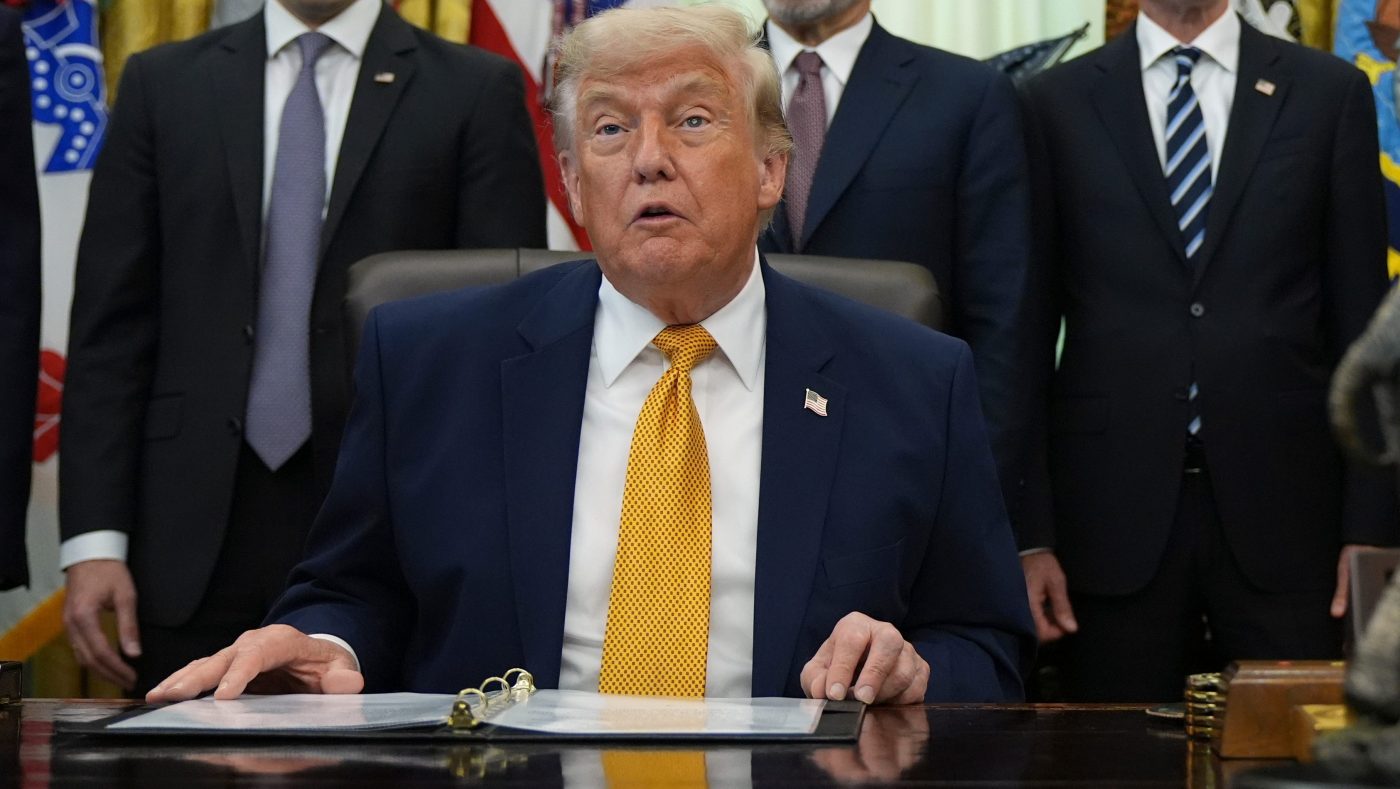
President Trump signed two executive orders on Monday designed to propel American research into quantum computing and shore up cybersecurity defenses against future quantum threats. The directives mark a concerted push to maintain U.S. leadership in a field that promises both revolutionary computational power and significant security vulnerabilities.
Quantum computing, which leverages the principles of quantum physics to process information exponentially faster than classical machines, remains in its infancy but is expected to transform industries from finance to defense. However, the same capabilities that make it so powerful also threaten to break the encryption algorithms that currently protect everything from online banking to critical infrastructure. The White House has framed the twin orders as a necessary pairing of innovation and security.

“We’re going to be investing in American quantum leadership like never before to stay ahead of the pack,” Trump said during a signing ceremony in the Oval Office. “We’re way ahead right now. We’ll keep it that way.”
The first executive order directs the development of a quantum computer powerful enough for advanced scientific research and requires federal agencies to draft plans for deploying quantum-enabled technology. It also aims to strengthen domestic supply chains for quantum components and materials while protecting the nascent ecosystem from potential threats.
The second order focuses on the urgent shift to post-quantum cryptography, a new form of encryption designed to withstand attacks from quantum computers. The directive sets a 2031 deadline for completing this migration across federal systems. As quantum computing matures, it is expected to render current public-key cryptography obsolete, exposing sensitive data to potential breaches.
National Cyber Director Sean Cairncross underscored the stakes at Monday’s ceremony. “As quantum rolls forward, it will challenge public key cryptography, which is what secures everything. It secures our financial transactions, our civilian critical infrastructure, and it secures the digital systems that Americans rely on for their daily life,” he said. “These two executive orders, which pair innovation and security, will address those issues. As we move forward, innovation and security have to be balanced.”
The administration’s quantum push extends beyond executive action. The White House recently finalized agreements with nine quantum companies, providing $2 billion in federal funding through the CHIPS Act and taking equity stakes in each firm. This investment mirrors broader efforts to bolster domestic semiconductor production and reduce reliance on foreign supply chains.
Critics have noted the administration’s broader governance style has sometimes been erratic, with some lawmakers questioning the coherence of its technology policies. Still, the quantum orders reflect a focused attempt to anticipate and mitigate risks posed by emerging tech. As the field evolves, the balance between accelerating innovation and safeguarding systems will remain a central challenge for policymakers.