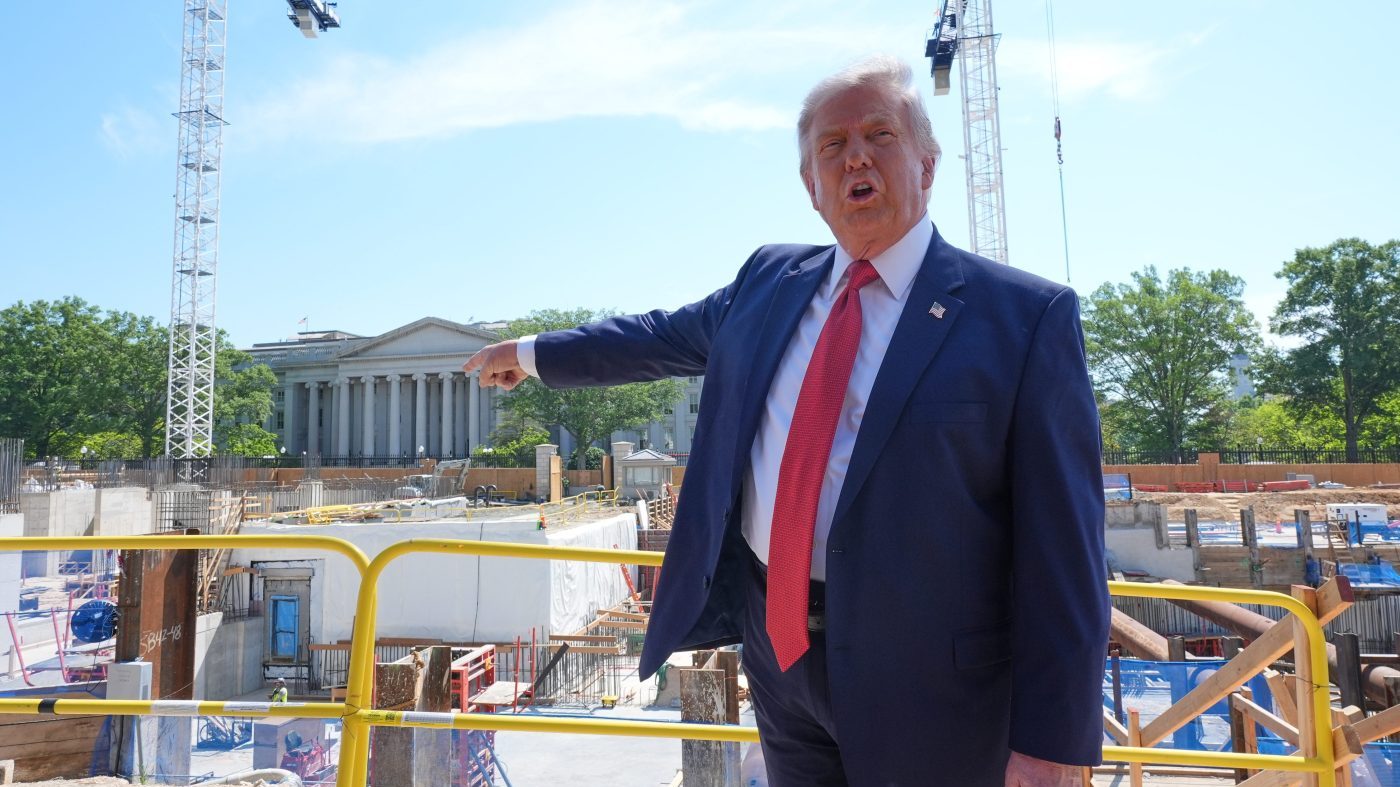
A new report from The Washington Post reveals that the price tag for the White House ballroom has surged to $600 million, with more than half of that—$307 million—coming from taxpayer-funded sources. This directly contradicts President Trump’s repeated assurances that private donors would foot the entire bill for the project, which he initially estimated at $400 million.
Records obtained by the Post show that as of March 2025, officials overseeing the construction—led by Virginia-based Clark Construction—planned to draw $293 million from “private sources.” The remaining $307 million was slated to come from the Secret Service ($155 million), the White House Military Office ($149 million), and the Executive Residence ($3 million)—all funded by taxpayer dollars. Clark Construction did not respond to requests for comment.
The White House has defended the cost overruns by emphasizing security requirements. “The East Wing Modernization Project is inextricably tied to the security of the President, the White House grounds and the certain security infrastructure assets,” spokesperson Davis Ingle told The Hill. He added that the space would serve as a “secure and appropriate venue for Presidents for generations to come.”
Trump has framed the ballroom as a gift to the nation, but the project has drawn bipartisan criticism in Congress. Lawmakers have objected to the sudden demolition of the East Wing and the use of public funds. Sen. Susan Collins (R-Maine) told the Post, “President Trump indicated that the ballroom was going to be built with private donations. I think that’s the commitment that should be kept.”
The project’s scope has expanded beyond a simple ballroom. Trump has discussed adding an underground military bunker, enhanced security features, and increasing seating capacity from 650 to 999 guests. These changes have driven up costs. The president also sought $1 billion from Congress for ballroom security upgrades following an assassination attempt at the White House Correspondents’ dinner, but senators rejected the measure.
Last October, a slate of major corporations and wealthy donors—including Microsoft, Amazon, Meta, Apple, Google, Coinbase, Comcast, T-Mobile, the Adelson Family Foundation, and crypto investors Tyler and Cameron Winklevoss—pledged donations to the Trust for the National Mall, a 501(c)(3) group funding the ballroom. Critics have raised corruption concerns, noting that many of these companies hold lucrative federal contracts worth millions.
The controversy underscores a broader debate over executive power and fiscal accountability. As the project’s costs continue to climb, lawmakers in both parties are pressing for transparency. For more on related political tensions, see our coverage of Newsom’s demand for records from the Trump DOJ and the ongoing scrutiny of federal spending in expired USAID contraceptives costing taxpayers thousands.