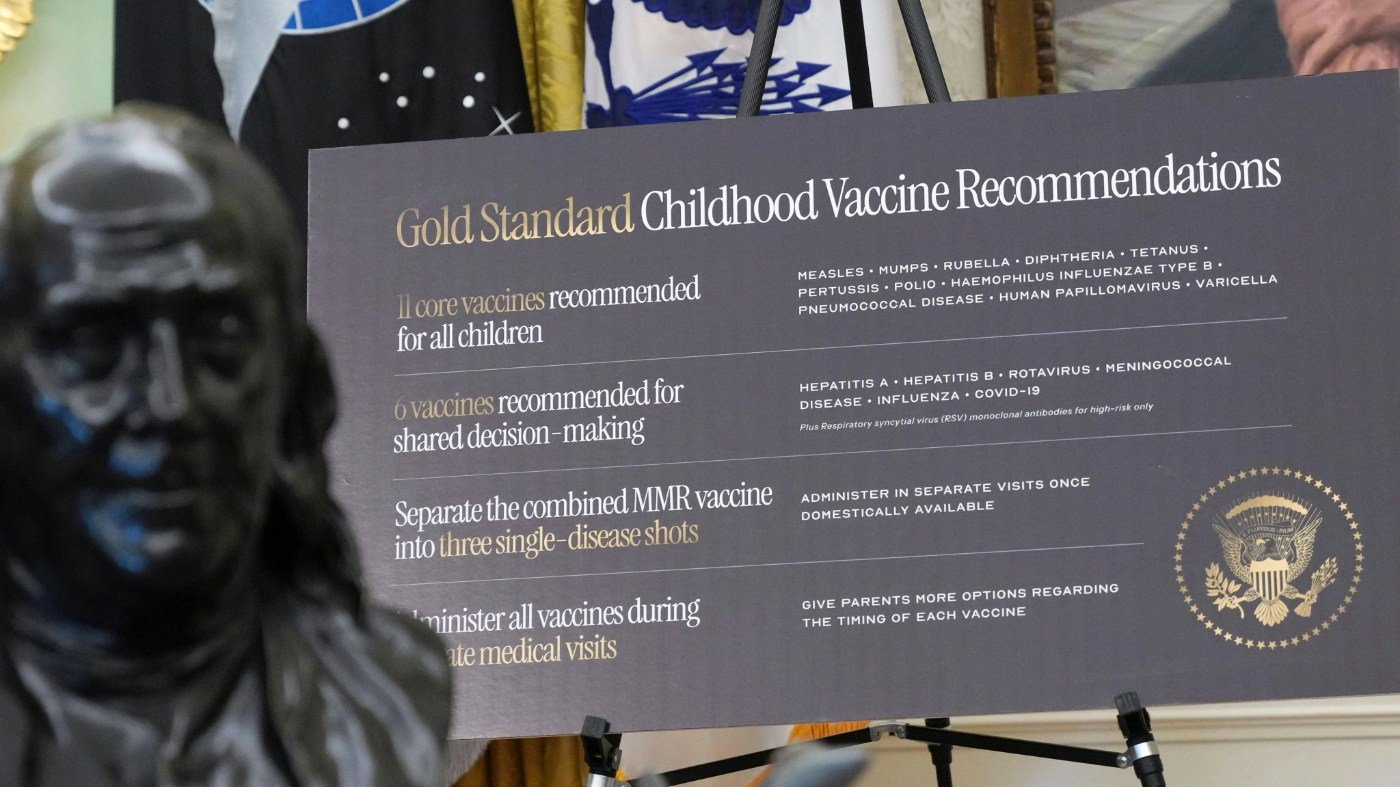
President Trump's August 10 executive order directing the US to adopt a significantly reduced childhood vaccine schedule has sparked sharp criticism from public health experts. The president argued the move would “finally align the United States with other advanced and developed nations around the world,” but a closer look at global health systems suggests he is drawing the wrong conclusions.
Reginald D. Williams II, senior vice president at the Commonwealth Fund and leader of its international health program, has spent his career studying healthcare systems worldwide. He argues that while the US should indeed look abroad for lessons, vaccine policy is not where Denmark or other top-performing nations offer their best guidance.

“There are plenty of lessons the U.S. should take from countries such as Denmark, but vaccine policy is not one of them,” Williams writes in a new analysis.
Americans spend more on healthcare than any other nation, yet live shorter, less healthy lives compared to peers in Denmark, Germany, and Japan. Those countries consistently outperform the US on life expectancy, infant mortality, and chronic disease rates. But their success is not rooted in different vaccine schedules. In fact, the US schedule closely mirrors those of many peer nations—targeting the same diseases with similar vaccines on similar timelines.
Denmark, however, is something of an outlier. Its schedule reflects choices made for a relatively small, homogeneous country with universal care and low baseline disease rates—conditions that do not apply in the US. Countries with stronger primary care systems can often achieve the same protection with fewer doses because they ensure children receive care on time. The US builds in more doses as a buffer against its fragmented system.
If policymakers truly want to understand why Denmark and other peers are healthier, they should ask different questions: Why do these countries have better access to care, stronger outcomes, and longer lifespans? How did they build affordable, accessible systems that treat people before they become sick? The answers are not complicated.
Denmark, Germany, Japan, and many others have invested in universal health coverage and affordable care. Residents generally have a regular primary care doctor and can get appointments when needed. Prescription drugs are far more affordable, and vaccines are free and widely available. Mothers and children receive robust support through both the healthcare system and public health policies that address basic needs.
These sustained investments lead to earlier disease detection, better management of chronic conditions, stronger preventive care, and healthier mothers, infants, and children. Denmark—often cited by the Make America Healthy Again movement as a success story—achieved its outcomes through decades of wise policy choices, not a single vaccine schedule.
Meanwhile, millions of Americans remain uninsured or underinsured. Many with coverage face high deductibles and out-of-pocket costs, forcing them to delay recommended care. Some skip medications due to price, and medical debt is a daily reality. The US consistently sees higher rates of preventable illness and mortality, spending more and getting less.
If the goal is to make America healthy again, the focus should be on policies that make other countries healthy: making healthcare and prescription drugs more accessible and affordable, investing in primary care, maternal and child health, prevention, and public health. Building a system that promotes health throughout life—rather than waiting until illness becomes a crisis—is the real lesson from abroad.
As Williams concludes, “Health is built by investments and policies that ensure care is not an exclusive privilege but a fundamental right for all.”
Related coverage: Florida's proposed vaccine mandate rollback and criticism of Overton's role in the vaccine order highlight the ongoing political battles over immunization policy.