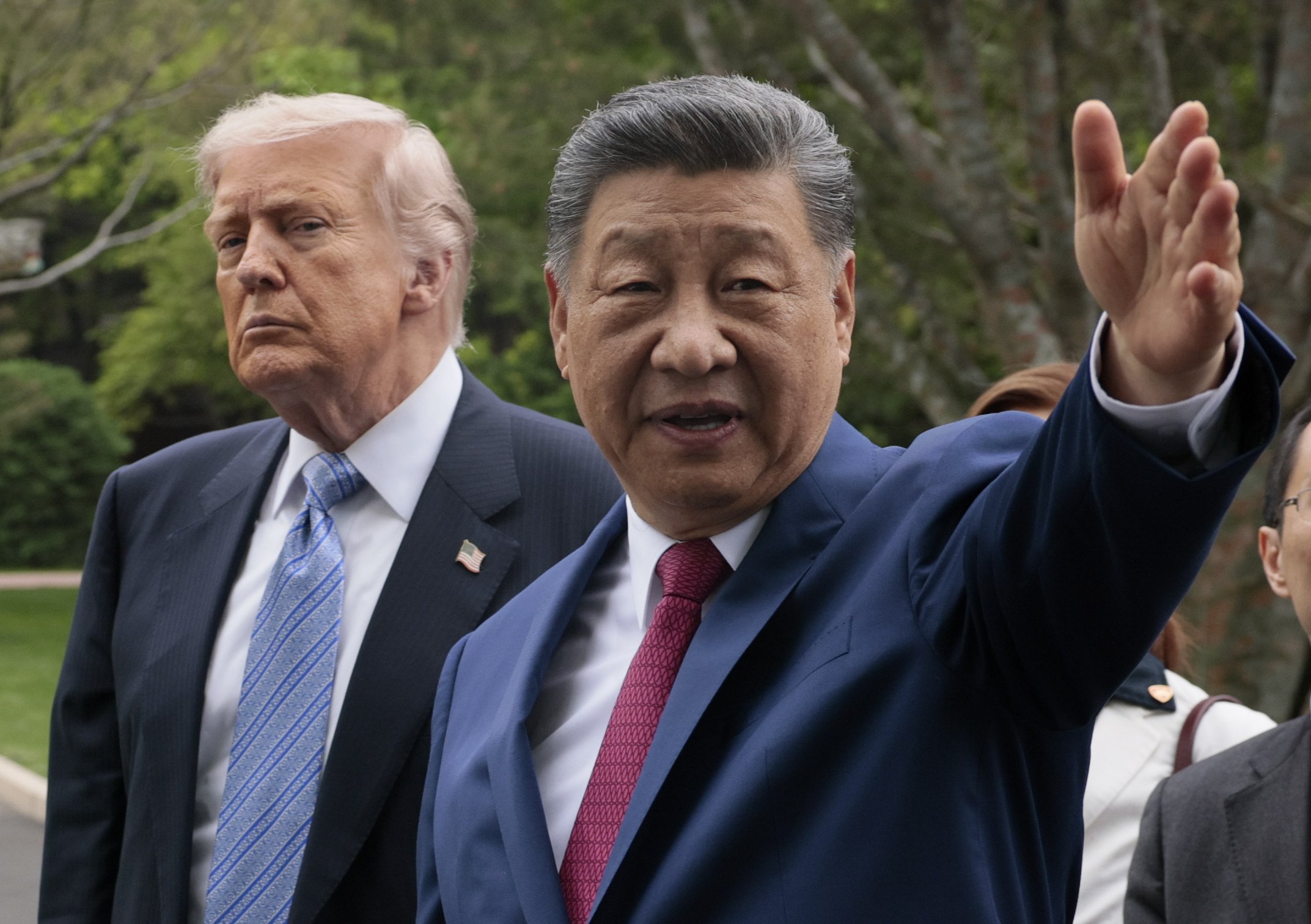
President Trump's state visit to China last week delivered few of his own goals while advancing nearly all of Xi Jinping's, particularly on the issue of Taiwan. The meeting, overshadowed by the Iran crisis and Trump's domestic political troubles, saw the Chinese leader seize the upper hand and dictate terms on what he calls the paramount issue in bilateral relations.
China's strategic partnership with Iran, including material support for Tehran's aggression in the Middle East, had already put Trump in a weak negotiating position. With oil prices spiking due to the Strait of Hormuz blockade and inflation battering his approval ratings ahead of the midterms, Trump needed Xi's help to pressure Tehran—and Xi made sure to extract maximum concessions in return.

In the weeks before the meeting, Xi launched a coordinated campaign to put Taiwan at the center of the agenda. He explicitly warned that mishandling the Taiwan question could trigger clashes or even conflict between the two powers. At the state dinner, he repeated that warning verbatim. Trump's response: complete silence.
This marks a sharp departure from Trump's first term, when he growled ominously about Taiwan, saying 'China knows what I'm gonna do.' That ambiguity was a deliberate deterrent. Now, with national security aides sidelined and Secretary of State Marco Rubio and Defense Secretary Pete Hegseth isolated in their warnings about China, Trump appears more focused on trade deals and corporate investments than on defending Taiwan.
The administration's silence is all the more striking given that Beijing has consistently distorted past U.S. statements, including Henry Kissinger's 1972 acknowledgment that Taiwan is part of China, as American endorsement of its position. Xi can now plausibly claim that his warnings were met with no dissent from the U.S. side.
Rubio did issue a vague statement that the U.S. position has not changed, but offered no specifics. Trump himself said in December that Xi had assured him there would be no military move against Taiwan during his term, but gave no indication of what the U.S. promised in return—possibly including cuts to arms sales to Taipei.
This dynamic echoes the administration's broader approach to political loyalty, as seen in recent primary battles where Trump has targeted dissenters. The president's willingness to punish Republican defectors contrasts sharply with his passivity toward Beijing's threats.
By failing to respond firmly to Xi's increasingly blatant warnings, Trump is missing a critical opportunity to reinforce U.S. deterrent credibility across the Taiwan Strait. The result may be a more aggressive Beijing, emboldened by what it sees as implicit American acquiescence.