President Trump's abrupt switch to a backup aircraft during last month's NATO summit in Turkey—prompted by what intelligence officials described as a credible assassination threat from Iran—has ignited a political firestorm over the safety of those left behind on the president's usual plane.
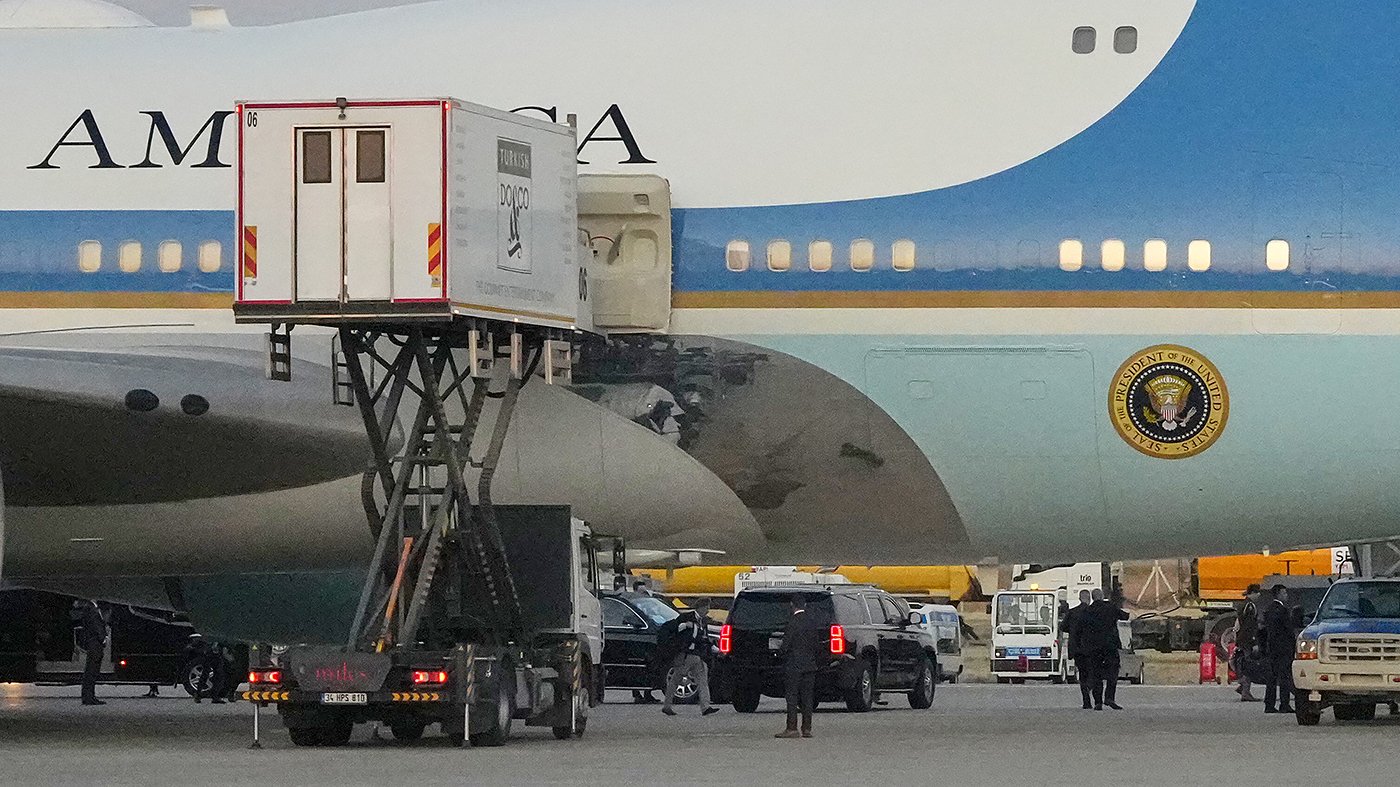
The ruse, first reported by The Washington Post, involved Trump hiding in a catering truck that transported him from the older Air Force One jet to a smaller Air Force C-32A. The decoy plane carried Cabinet members, White House aides, and reporters, who were unaware of the switch until after the fact.
What Sparked the Switch?
The National Security Agency, CIA, and Turkey's National Intelligence Organization had picked up intelligence about a potential surface-to-air missile attack on Air Force One, according to two U.S. officials who spoke to CBS News. Israel also passed along threat information to the CIA, though U.S. intelligence analysts reportedly viewed the intelligence as "low confidence" and "Israeli-derived."
A person briefed on the matter told Reuters that officials were "scrambling to head off what they thought was a credible, imminent threat" on the final day of Trump's Ankara visit.
Who Was on Which Plane?
Defense Secretary Pete Hegseth and White House aides Natalie Harp, Walt Nauta, and Dan Scavino flew with Trump on the smaller C-32A. Secretary of State Marco Rubio and Treasury Secretary Scott Bessent—fourth and fifth in the presidential line of succession—were aboard the older Air Force One, along with White House deputy chief of staff Stephen Miller and communications director Steven Cheung. About a dozen reporters were also on the decoy plane.
One reporter told the Post that covering the White House involves "defending the president" but that "that's not my job... Reporters take risks as part of the job but not on behalf of the president."
How the Switch Was Executed
Before departing Ankara on July 8, Trump told reporters he would fly on the older Air Force One instead of the newer Boeing 747-8, citing Iran threats and noting the newer jet would be displayed at a U.K. air base. Video footage analyzed by The New York Times shows Trump boarding the older plane with shades drawn, then a catering container being driven to the C-32A, where Trump apparently transferred. All three planes landed at Mildenhall military base in England, with Trump later moved by vehicle to the older jet, then boarding the Qatari-gifted 747 for the flight back to Washington.
Trump's Defense
Trump told reporters Tuesday that the Secret Service directed the switch. "I guess there was a threat out there. I didn't really ask too much about it," he said, adding that he "never worried" and that the plane he flew on was "at greater risk." He shrugged off concerns: "I don't worry about anything, to be honest. Whatever it is. You know my attitude? Whatever."
Lawmakers React
Senate Minority Leader Chuck Schumer (D-N.Y.) demanded a briefing, calling the ploy "unacceptable" and accusing the administration of leaving Congress "in the dark." Sen. Chris Coons (D-Del.) called it "a despicable incident of disrespect for the press and for members of his own Cabinet," questioning how Rubio, Bessent, and Miller feel about being used as decoys.
The incident has also drawn attention to the broader Trump administration's approach to Iran, which has shifted in recent weeks. Critics argue the decoy tactic underscores a reckless disregard for the safety of officials and journalists who serve the public's right to know.
As the story develops, Rubio and Bessent's presence on the decoy plane has become a focal point, with questions about whether such a ruse should ever be repeated.