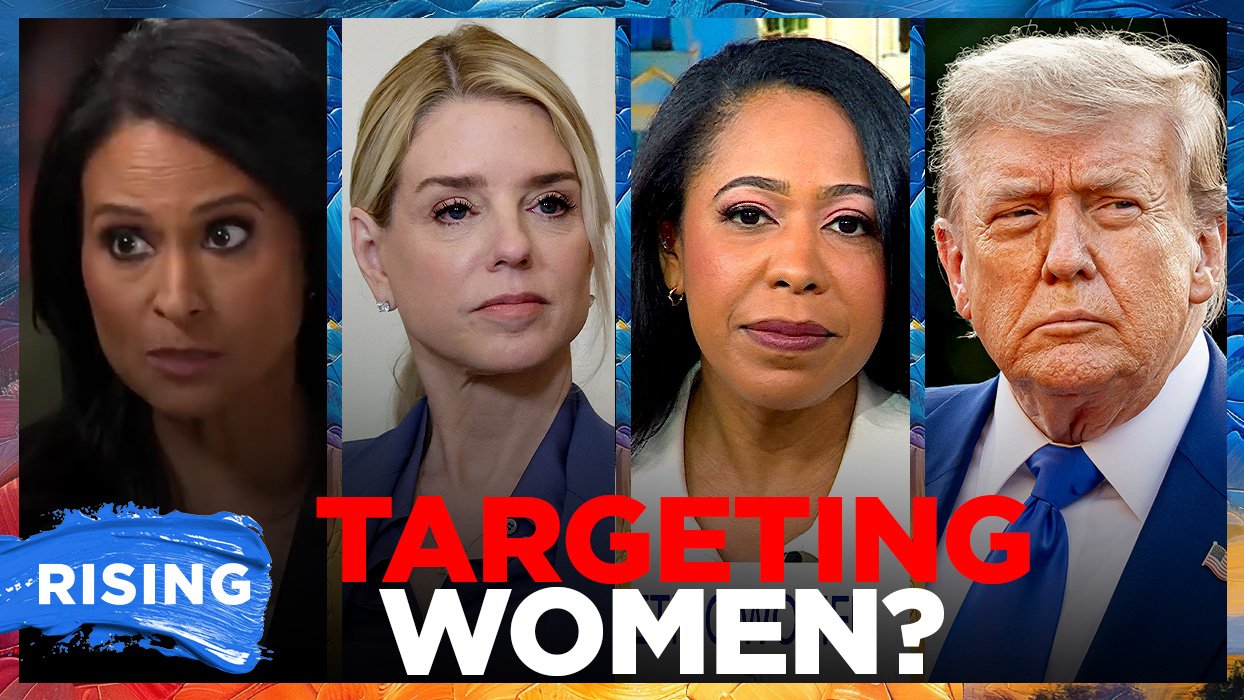
Over the past few weeks, President Trump has told CNN's Kaitlan Collins to smile, walked out of an NBC interview with Kristen Welker after calling her “crooked,” and said “quiet, piggy” to a woman reporter on Air Force One. These aren't isolated incidents—they're part of a broader pattern that extends beyond rhetoric into how this administration governs.
While Trump is known for being combative across the board, his most personal insults—especially those targeting appearance—are disproportionately aimed at women. The question is whether this attitude translates into policy and personnel decisions.
Consider the headlines. The Washington Post reports that more women are being shut out of senior positions in Trump's second term. The Daily Beast notes a “damning record” with an all-female firing spree. Every Cabinet-level official to leave so far—Tulsi Gabbard, Kristi Noem, Pam Bondi, and Lori Chavez-DeRemer—has been a woman, and every one was replaced by a man. The Post found that more women have exited Cabinet-level roles at this point than in any previous administration on record. Meanwhile, Kash Patel still holds his job.
Supporters may call it coincidence, but then there's Defense Secretary Pete Hegseth's decision to block promotions of Black and female Navy officers. Hegseth removed nine officers from a Navy promotion list, including all three women selected. The result: no women will be promoted to one-star admiral this year, despite women making up roughly a quarter of Navy officers and nearly a third of mid-level ranks. Hegseth's focus on military readiness for Cuba hasn't stopped the fallout from this move.
Female Navy officers now fear a career cap, according to reporting. One incident can be explained away; two can be debated. But patterns start to speak for themselves. When women journalists are repeatedly singled out and demeaned, when women are disproportionately leaving senior leadership positions, and when women in the military see promotion opportunities vanish, those aren't isolated headlines anymore.
This administration seems far more comfortable criticizing women than elevating them. As new rules for prediction markets are unveiled, the gender dynamics within the White House remain stark. The pattern is clear, and many women are noticing.