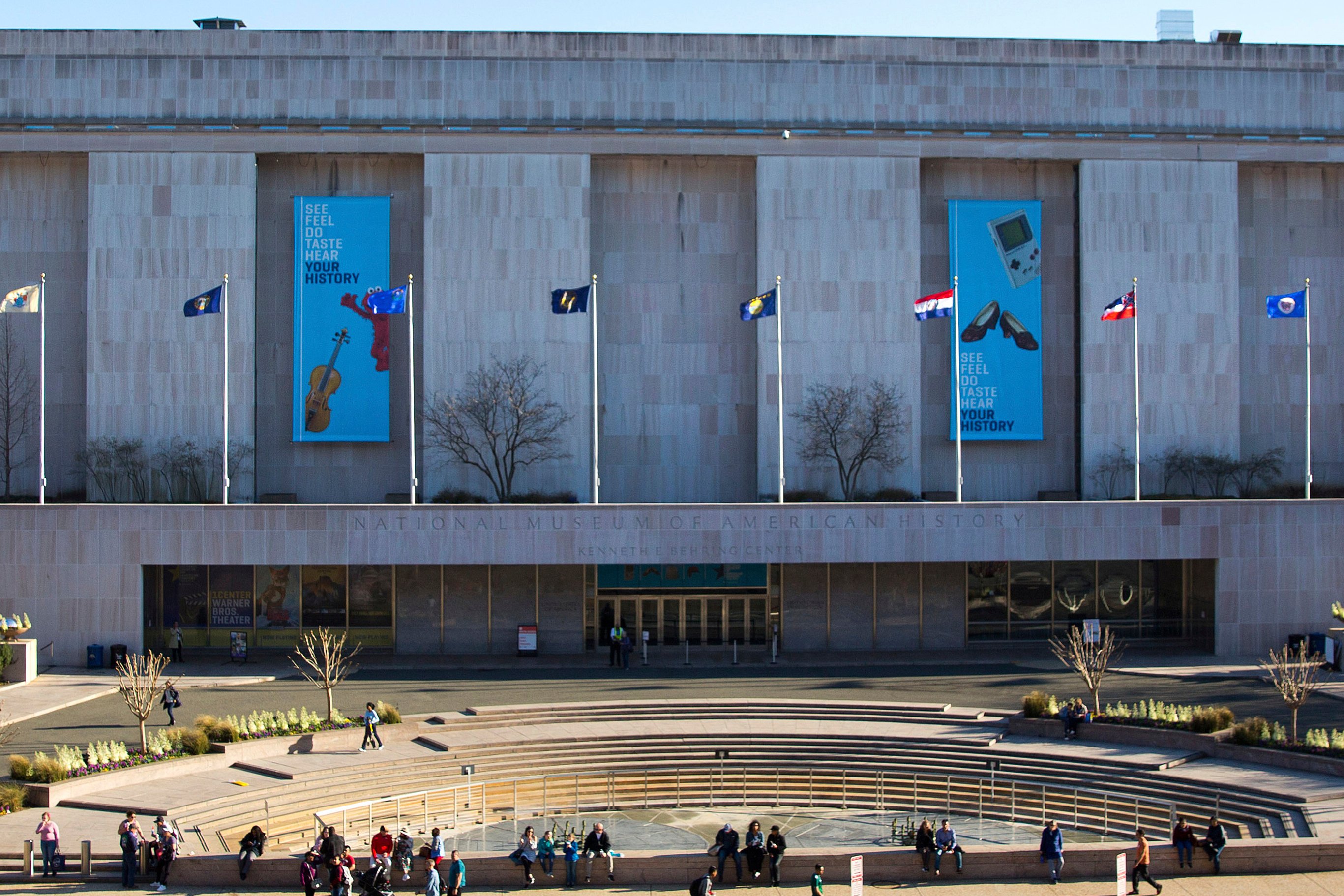
President Trump on Friday signed an executive order mandating that warning signs be placed outside the Smithsonian's National Museum of American History, telling visitors that some displays do not align with his view of the nation's past. The order, titled "Restoring Trust in the Smithsonian Institution," cites a White House Domestic Policy Council report that accused museum leadership of using history as a "prime tool" for advancing social justice rather than preserving a shared national heritage.
"The Report demonstrates that the Smithsonian leadership does not present American history as a shared national inheritance to be taught and celebrated, but instead views American history as a 'prime tool' to advance ideas of social justice and the radical transformation of our society," Trump wrote in the executive order. The Smithsonian declined to comment on the directive.
The order directs the administration to "take all available steps" to address the report's findings, including encouraging corrections and installing temporary warning signs outside the museum. This move is the latest salvo in an ongoing clash between Trump and the Smithsonian, which has drawn criticism from the president and Republican lawmakers over its portrayal of American history.
The White House report specifically singled out NMAH Director Anthea Hartig, citing her statement that she views history as a "prime tool of social justice." During testimony before the House Subcommittee on Delivering on Government Efficiency earlier this week, Hartig was grilled by GOP lawmakers over allegations that the museum is rewriting history. She defended the institution, saying it "does not take sides in America's political debates."
"We preserve and document the evidence of American life in all of its breadth, so that the public can encounter the past and draw their own conclusions," Hartig told lawmakers. The controversy echoes Trump's broader attacks on institutions he claims are pushing a liberal agenda.
Earlier this year, Trump criticized the Smithsonian and National Park Service sites for focusing too heavily on the history of enslavement in the U.S., rather than the country's "success." The administration's attempt to remove an exhibit on slavery from George Washington's home near Independence Hall in Philadelphia sparked a legal battle over presidential authority. In a post on Truth Social, Trump wrote, "The Smithsonian is OUT OF CONTROL, where everything discussed is how horrible our Country is, how bad Slavery was, and how unaccomplished the downtrodden have been — Nothing about Success, nothing about Brightness, nothing about the Future."
The executive order comes amid a broader pattern of Trump using executive power to reshape cultural narratives, including his use of obscure trade laws to redefine conflicts. Critics argue the move is an attempt to politicize a nonpartisan institution. The White House report cited Hartig's comments as evidence of bias, but Hartig maintained the museum's mission is to present evidence for the public to interpret.
The dispute highlights a deepening rift over how American history should be taught and displayed. Trump's order requires the administration to report back on progress within 60 days, setting the stage for further confrontation with one of the nation's most respected cultural institutions.