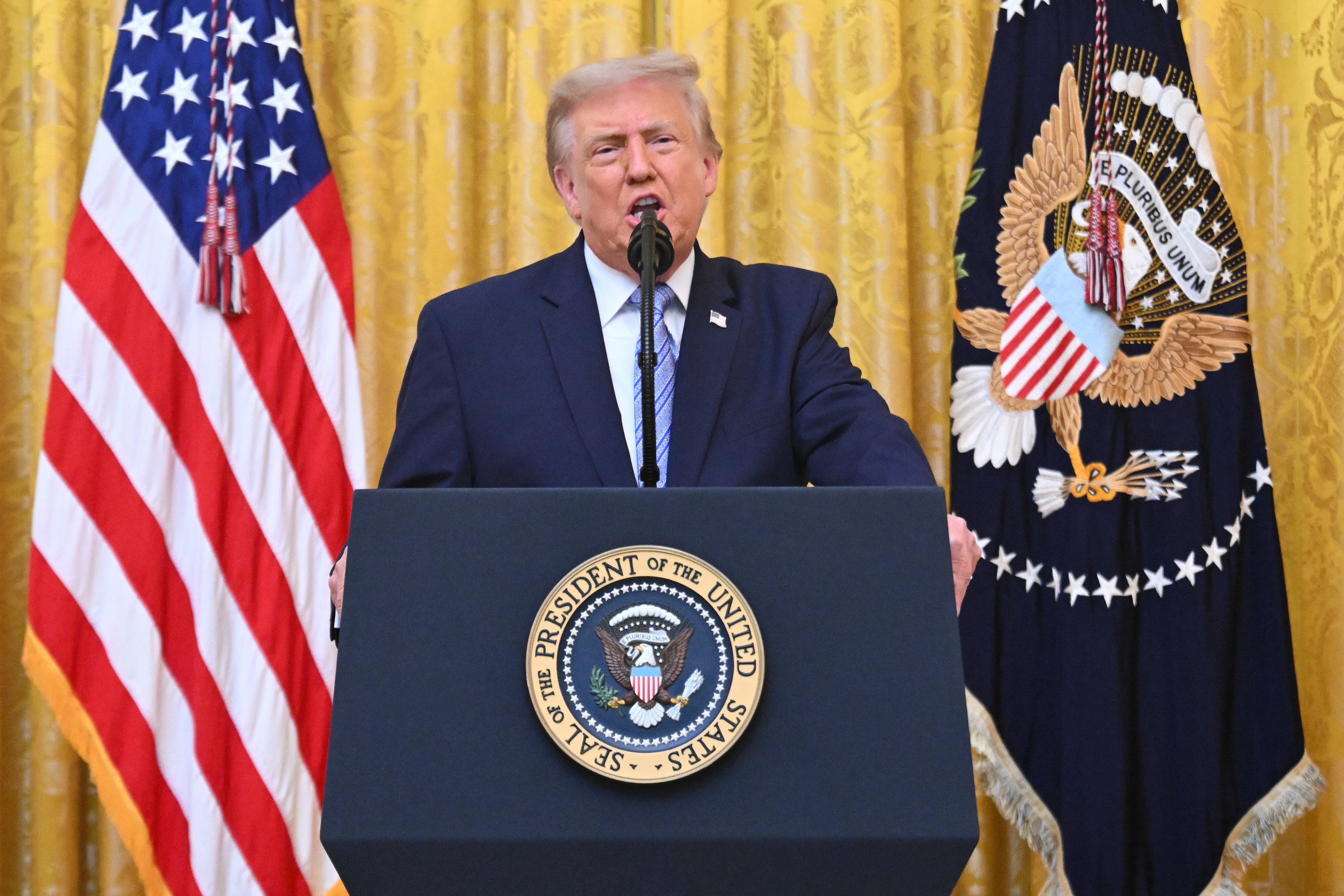
President Donald Trump's July 16 address, in which he exaggerated the vulnerability of U.S. elections to foreign interference, drew sharp rebuke from Senate Intelligence Vice Chairman Mark Warner (D-Va.). Warner characterized the speech as “a whole series of falsehoods, accusations, I believe aimed at trying to undermine America’s confidence in our system.”
With the November midterms approaching, Trump appears driven by fear that Republicans could lose control of the House and possibly the Senate. Major networks, including ABC, NBC, and CNN, refused to carry his Oval Office speech live, anticipating misleading claims. In response, the president has leveled authoritarian-like threats, warning of “future broadcast license proceedings” against those outlets.

Trump's disinformation campaign follows a strongman's playbook, seeking to quash dissent and delegitimize the electoral process. Citing unverified data on noncitizen voting, he made a sweeping, unsubstantiated claim: “These disclosures reveal an election system so broken and so vulnerable that no one can possibly defend it.” Notably, even in New Jersey, where 6,600 non-citizens were found to have registered, only 400 actually voted.
The president's bombastic stance is undercut by his own electoral history. In 2016, he lost the national popular vote but won the Electoral College—a constitutional outcome that proved the system's resilience. In 2020, he lost re-election for legitimate political reasons, yet his refusal to concede helped spark the January 6 Capitol riot. The same “broken system” held firm. One must ask: was the system suddenly “unbroken” when Trump won a delayed reelection on November 5, 2024?
Trump's repeated lies about winning in 2020 have taken root among his base. According to a recent poll, 50% of Republicans believe the 2020 election was rigged, compared to 28% of all Americans. A master manipulator who cannot bear to lose, Trump manufactures reasons for defeat and repeats them until his supporters believe them. Now, with low approval ratings, America faces a no-win election scenario.
In his July 16 speech, Trump's strategy was clear: undermine electoral confidence and create widespread uncertainty. If Republicans retain control of Capitol Hill, his team will boast of a free and fair election. If they lose, the election will be branded as stolen by illegal voters, foreign interference, machine tampering, mail-in fraud, Democrat cheating, media bias, or other fabricated causes.
The day after Trump's speech, Homeland Security Secretary Markwayne Mullin flagged several of these factors for anticipated Republican midterm losses, threatening to cut federal grant funds or interfere later. Elections, however, are run by county boards reporting to state boards, with no federal meddling and safeguards against nationwide manipulation. Yet Trump, who has expanded presidential power like no other, is now driven to exert federal control under the guise of “election integrity,” using fear, threats, and intimidation.
Trump has not shied away from election intimidation. In a May 10 Truth Social post, he announced plans to deploy an “Election Integrity Army in every single State to preserve the sanctity of each legal vote,” warning it would be “much bigger and stronger” than in 2024. A recent study found voters expect and fear widespread federal ICE deployment at polling places, while trust in elections has declined.
Americans will know Trump has gone full authoritarian if he invokes the Insurrection Act, which authorizes the military to suppress civil disorder. He threatened to do so in January, and a prescient Hill op-ed suggested it was a dress rehearsal for the midterms. Possible scenarios include: declaring a national emergency to justify armed federal supervision, rejecting midterm outcomes and ordering the military to block Democratic majorities, or using force to crush protests if Republicans retain control but voters believe the election was rigged.
Other strongman tactics could involve the U.S. Postal Service interfering with mail-in ballots—an unresolved issue worth watching. Trump has also fired remaining Democrats from the independent Election Assistance Commission and decimated the agency protecting election cybersecurity. As the midterms approach, the question remains: will voter participation decline or rise in response? Either way, America's first authoritarian president is testing the limits of democracy.
For more on the political landscape, see GOP hawks push Trump to escalate Iran strikes as oil hits $100 and Democrats reject fears of socialist takeover ahead of midterms. Also read about the Trump-Thune feud over the stalled Senate agenda and Democratic states suing Trump over FEMA grant conditions tied to elections and immigration.