Republican defense hawks are pushing President Trump to escalate military operations against Iran as the president considers what he describes as a “massive attack” on the Islamic Republic. The calls come amid stalled negotiations and ongoing Houthi strikes on commercial vessels in the Red Sea, raising fears of a broader regional conflict.
Oil prices surged past $100 a barrel on Thursday for the first time since May, adding economic pressure to the political calculus. Public support for the conflict has been declining, but key GOP lawmakers are urging the White House to maintain or increase the tempo of airstrikes.
Senate Armed Services Chairman Roger Wicker (R-Miss.) said he spoke with Trump multiple times this week about Iran, encouraging the president to continue pounding the country. “I’ve expressed publicly and privately my approval of finishing the job, and realizing that negotiations were getting us nowhere,” Wicker told The Hill. “Iran has no intention of negotiating in good faith.” He added that the U.S. can keep the Strait of Hormuz open on its own terms, which he called “the key to a successful conclusion of hostilities.”
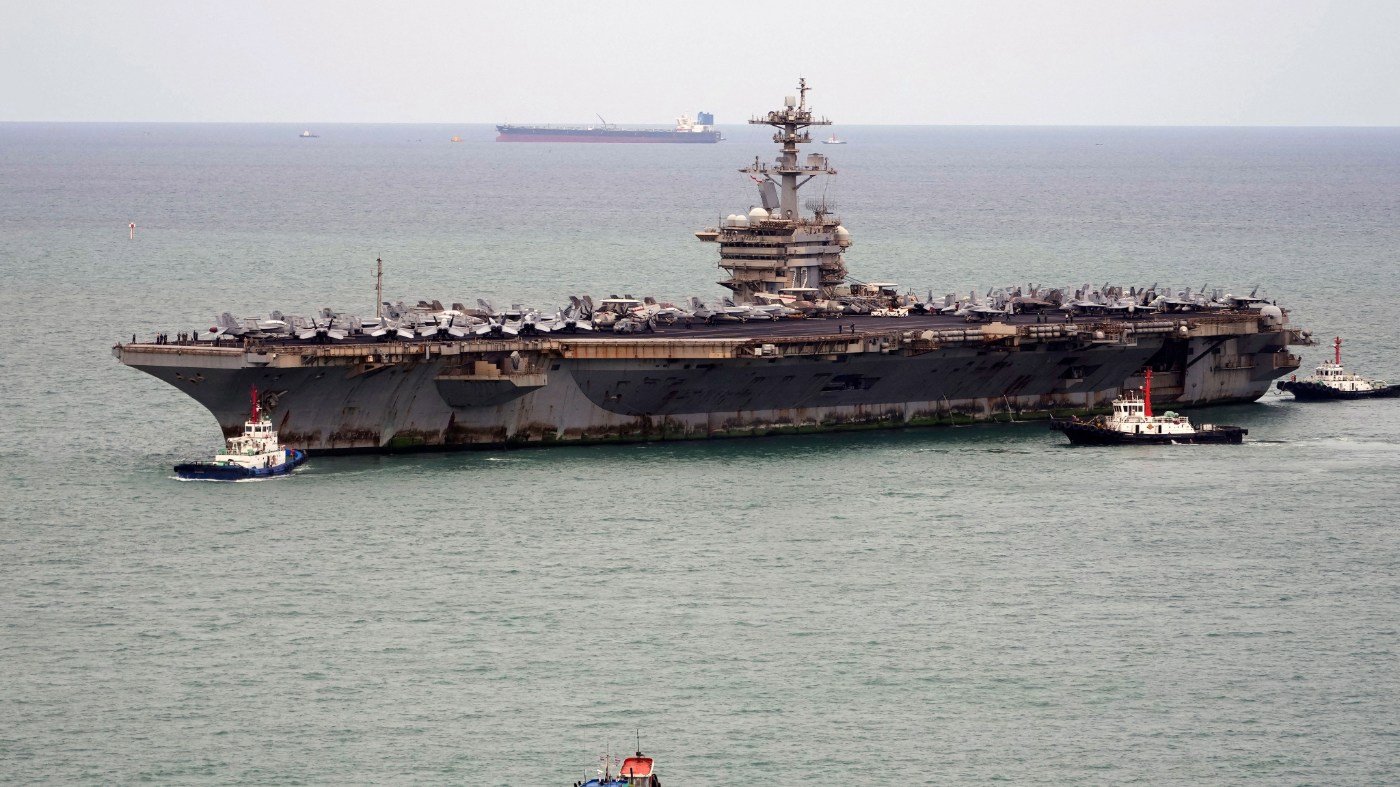
Trump has not made a final decision on a major new offensive but told Axios in a Thursday interview, “I am considering a massive attack. Bigger than ever before. I am close to making a decision. We are all set for it.” The U.S. military has already conducted 13 consecutive days of airstrikes targeting Iran’s maritime capabilities, missile and drone storage, coastal surveillance, air defense, and command centers, according to U.S. Central Command. Centcom declined to disclose the total number of targets hit.
Iran has retaliated with ballistic and cruise missiles and one-way attack drones aimed at U.S. allies in the Gulf. The Islamic Revolutionary Guards Corps claimed it struck Kuwait and Jordan, including a communications tower. Kuwait’s military said its air defense systems were intercepting Iranian drones and missiles.
Rep. Ronny Jackson (R-Texas), a close Trump ally and candidate for House Armed Services Committee chair, called for maximum force. “I would do everything I possibly can right now to turn them around,” Jackson said. “Maximum pressure from the air and maximum security of the Strait; anything they have that could cause problems in the Strait needs to be destroyed.”
Rep. Derrick Van Orden (R-Wis.), a former Navy SEAL and HASC member, credited Trump’s tough stance with bringing Tehran to the table in the past. “We got to remember the goal. This is to make sure Iran never has a nuclear weapon,” he said. “If they had a nuclear umbrella over the Strait of Hormuz, it becomes a binary choice: nuclear war or those radical mullahs controlling the strait in perpetuity.”
Rep. Don Bacon (R-Neb.), a retired Air Force brigadier general, argued that Iran must initiate peace. “If we do it, they’re going to think it’s weakness,” he said. “Tehran needs to know it’s being crushed militarily and forced to stick out their hand to say please stop.”
Rep. Rich McCormick (R-Ga.), a former Marine helicopter pilot, said Iran has shown only “defiance” and no “good faith” in talks. He noted that Trump faces a delicate balance with midterm elections approaching. “Wars never become more popular over time. The faster you end them, the better,” McCormick said. “Even when it’s violent, you save lives by being decisive and turning the people against their own leadership.” He called for regime change in Iran, advising Trump to trust his instincts.
The push for escalation comes as the Trump administration navigates multiple fronts, including a feud with Senate Republicans over stalled legislative priorities and legal battles with Democratic states over FEMA grant conditions. The White House has not set a deadline for a decision on a major new operation.