Democratic lawmakers are pushing back against fears that the party is being overtaken by its far-left wing, insisting that primary wins by democratic socialists do not signal a shift in control. Amid internal debates over Israel and other issues, party leaders are pointing to decades of collaboration with independent socialist Senator Bernie Sanders as evidence that the coalition can withstand ideological diversity.
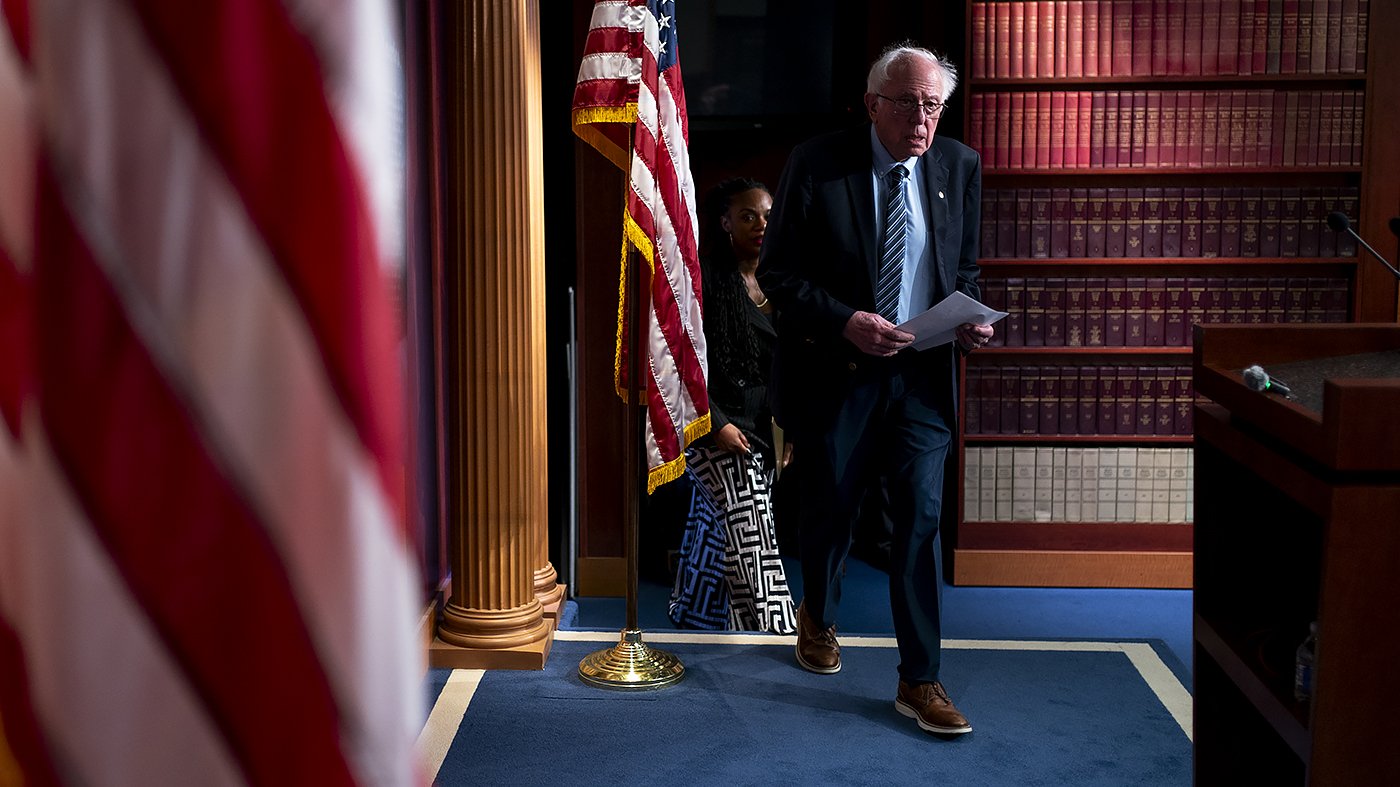
“I’ve served in the Senate with an avowed socialist, Bernie Sanders, for years,” said retiring Senator Dick Durbin (D-Ill.). “Found him to be a good person to work with that I agree with many times. So I think the tent for the Democratic Party can accommodate diversity.” Others note that far-left candidates often win in deeply liberal districts, limiting their national impact.
Representative Ritchie Torres (D-N.Y.), a staunch Israel supporter who won his primary handily, acknowledged the Democratic Socialists of America (DSA) as a “visible vocal minority” but rejected claims of a takeover. “The reality is that has the DSA taken over the Democratic Party? No. Does it represent anywhere approaching a majority of the party? No,” Torres said. He added that DSA-aligned officials remain popular in some areas, making them a political reality rather than a threat.
Concerns escalated this week after former Obama adviser Van Jones warned that the DSA was “hijacking” the party, specifically criticizing its refusal to condemn Hamas and its “no police, no prisons, no borders” agenda. “I’m tired of being told that, to be a progressive, I now must swear allegiance to crazy ideas,” Jones wrote on X. Representative Josh Gottheimer (D-N.J.) echoed that sentiment, declaring that DSA members “are not Democrats.”
These comments surfaced as House Democrats showed sharp divisions on Israel, with over 100 voting to end U.S. military aid to the country—a move that split the caucus leadership. Republicans are seizing on the discord, with House Majority Leader Steve Scalise (R-La.) framing DSA-backed candidates as useful foils. “In swing districts, it draws an incredibly sharp contrast between our incumbent Republicans … against these communists who want to literally defund the police,” Scalise said, referencing the DSA’s platform calling for abolishing police and prisons.
Meanwhile, progressive leaders are welcoming the new socialist nominees. Representative Pramila Jayapal (D-Wash.) recently met with Melat Kiros, who unseated a Democratic incumbent in Colorado’s 1st District. Jayapal expressed disappointment in Jones’s critique, arguing that the primary results reflect a grassroots surge. “All of these elections are showing us that there is an energy, an urgency, a passion, a fire around the country … to have a stronger Democratic Party,” she said.
With Democrats aiming to reclaim House and Senate majorities, some polls show the generic ballot tightening as socialist candidates gain attention. But even skeptics like Senator John Hickenlooper (D-Colo.) see room for collaboration. “Do these people believe in universal health care? … Do you believe that climate change is really a serious issue? Yes, mostly they do,” Hickenlooper said, advocating for a bigger tent despite policy differences. As primaries continue, the party’s ability to balance its left and center will be tested, but leaders remain confident the coalition can hold.