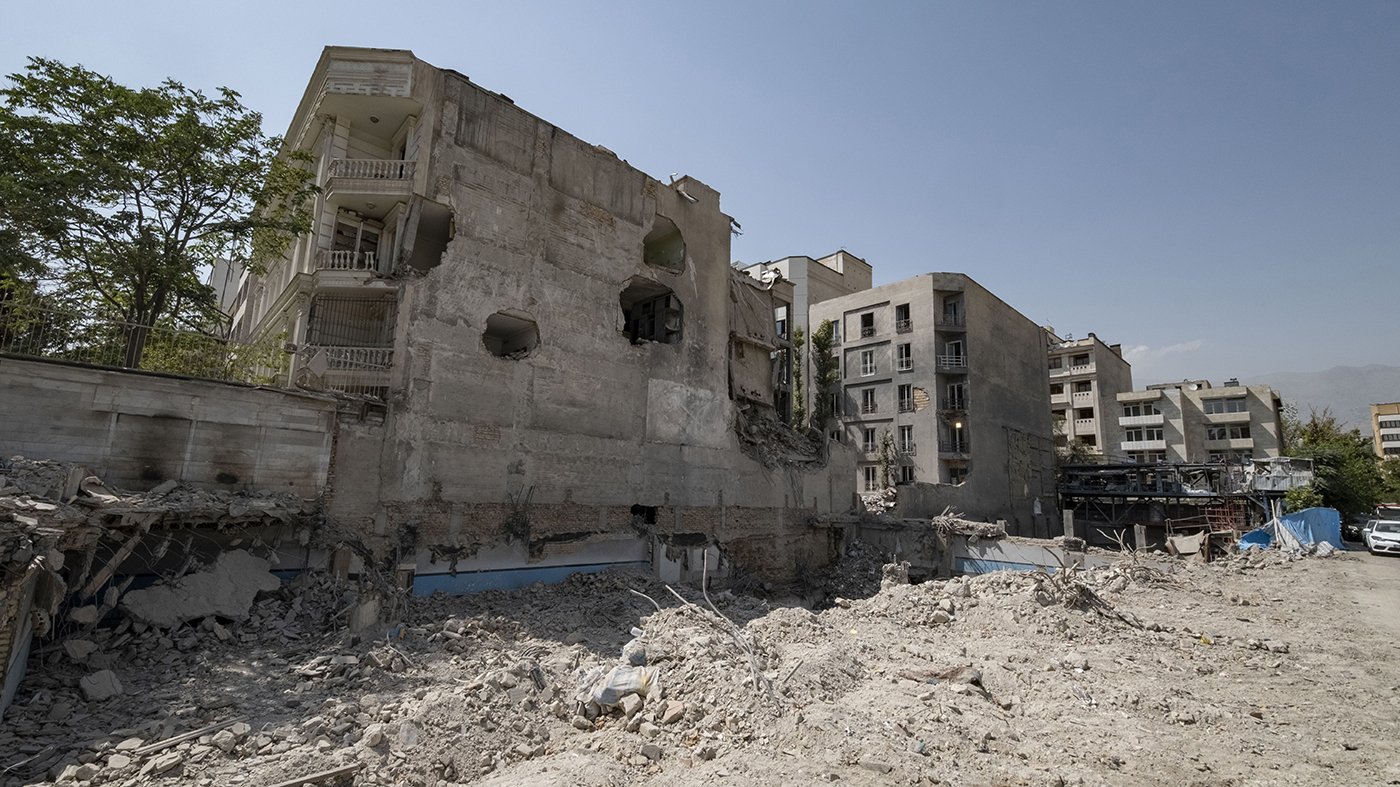
President Trump is escalating rhetoric and military preparations for a potential large-scale operation against Iran, but a chorus of experts and former officials is pushing back on the notion that more bombing will achieve Washington's goals. Despite signals that the U.S. military is gearing up for a renewed campaign, analysts argue that targeting bridges, water facilities, and power plants is unlikely to compel Tehran to soften its negotiating stance.
“I don't think it will change Iran's calculation in any way, because from Iran's perspective, this is a war of survival,” said Sina Azodi, director of the Middle East Studies Program at George Washington University. “Bombing from the air is not going to change Iran's calculation, even if the U.S. intensifies it.” Azodi warned that escalation would only deepen regional suffering and “destroy any chance of diplomacy.”
White House Weighs Military Options
Trump convened a Friday afternoon meeting at the White House with his national security team to discuss military options, according to a source familiar with the talks. Speaking to reporters afterward, Trump said the U.S. remains in dialogue with Iran but added, “We're ready to go. Look, we're locked and loaded.” The president’s comments came amid fresh intelligence assessments that suggest air power alone will not shift Tehran’s calculus.
A former senior U.S. intelligence official, granted anonymity to speak candidly, argued that without a comprehensive strategy combining a naval blockade, securing the Strait of Hormuz, and absorbing international economic costs, progress is unlikely. “You're not going to bomb yourself into a ceasefire,” the official said. “You've got to make the economic instrument of power just as significant as the military.”
The Chairman of the Joint Chiefs of Staff, Gen. Dan Caine, acknowledged the limits of air power during a Senate hearing this week. “Academically, as you look across the totality of history, air power's got limits,” Caine told Sen. Jack Reed (D-R.I.), emphasizing the need to pair military action with diplomatic, informational, and economic tools.
Nuclear Program and Regional Fallout
Michael “Mick” Mulroy, a former Deputy Assistant Secretary of Defense for the Middle East, said the U.S. faces unpalatable options. Without reopening the Strait of Hormuz and securing new nuclear commitments, he warned, “this would be a perpetual conflict.” Mulroy noted that easing sanctions could allow Iran to rebuild military capabilities faster than the U.S. can replenish precision munitions and interceptors. “The options are not good,” he said.
U.S. and U.K. officials are planning a major conference next week to discuss protecting ships transiting the Strait of Hormuz, a White House official told The Hill. Gen. Caine may represent the U.S. at the meeting, according to another source. The administration has also faced criticism over its handling of related issues, including the Saudi nuclear deal and broader regional diplomacy.
Experts also pointed to the diminishing value of current targets. Saeid Golkar, an Iranian security services expert at the University of Tennessee at Chattanooga, said the U.S. is “running out of targets” as Iran hides its remaining military assets. He suggested that killing key figures like IRGC commander Ahmad Vahidi or parliament speaker Mohammad Bagher Ghalibaf might shift the calculus, but acknowledged that such strikes would risk further escalation.
Azodi urged a return to a revised Memorandum of Understanding, arguing that a ceasefire alone is insufficient. “You need a comprehensive agreement with language no longer open to interpretation,” he said, adding that the U.S. must abide by its commitments. The administration's recent moves, including canceling certain federal grants, have drawn scrutiny over their political motivations.
As the White House weighs its next steps, the consensus among analysts is clear: without a broader strategy that integrates military, economic, and diplomatic pressure, intensified strikes are unlikely to break Iran or bring it back to the negotiating table.