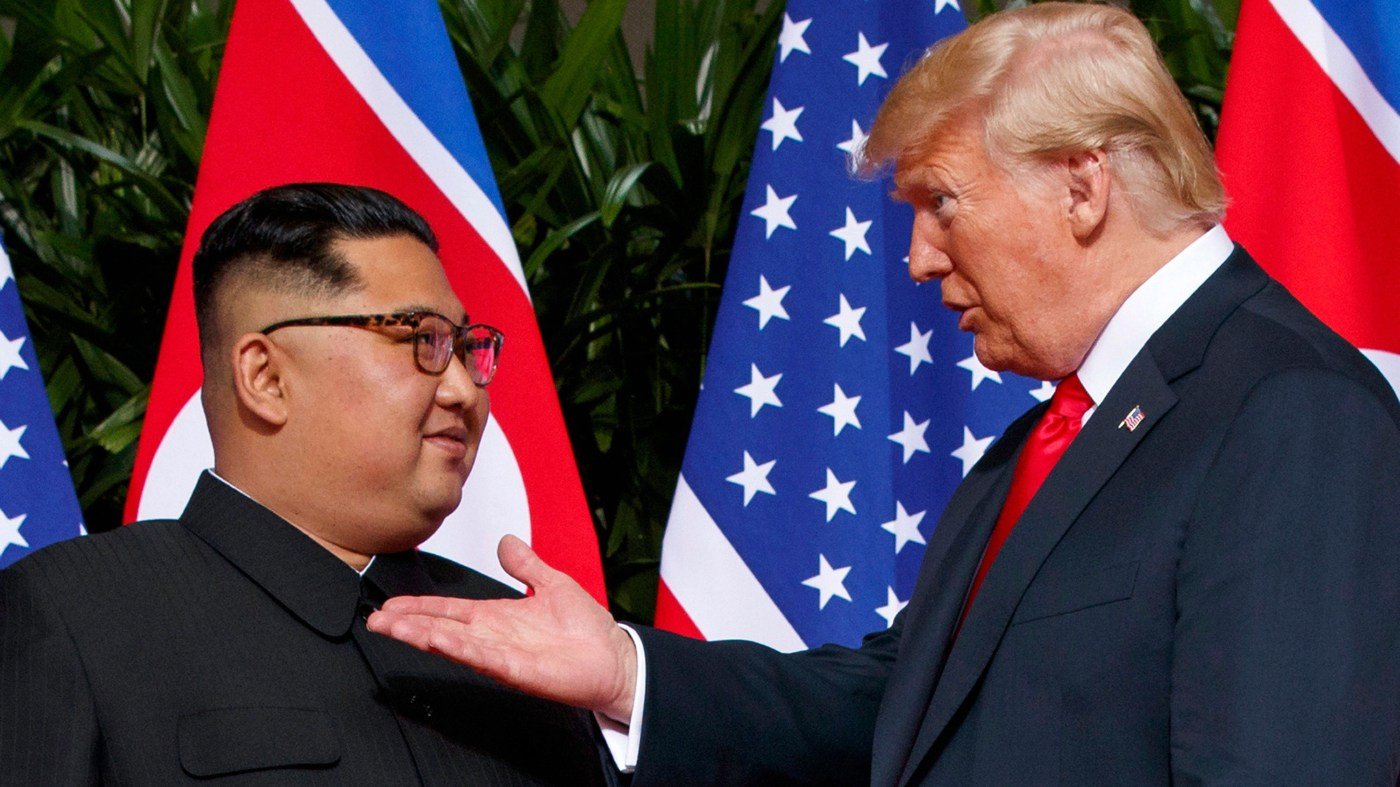
President Trump's latest overtures toward North Korea—scaling back joint military exercises in the South and floating another summit with Kim Jong Un—have reignited a long-simmering debate: is it time to formally end the Korean War, or is this diplomatic gambit too risky?
Critics have dismissed the moves as dangerous or a distraction, but supporters argue that after 76 years, the status quo of an unresolved conflict is the real threat. The Korean War never officially ended; a peace treaty was never signed, and the Demilitarized Zone remains a scar of mines and barbed wire. Thousands of U.S. troops are still stationed in the South, a costly and provocative presence that North Korea has long cited as justification for its own military buildup.
The roots of the division trace back to 1945, when the U.S. and Soviet Union, having defeated imperial Japan, split the peninsula into occupation zones. That temporary partition became permanent after the war, and successive U.S. administrations have relied on militarization, sanctions, and isolation to manage the North—a strategy that has done little to curb Pyongyang's hostility or advance peace, according to analysts.
Trump's willingness to engage, as he did in 2018 when he met Kim in Singapore and Hanoi, produced tangible results: North Korea conducted no major missile tests that year. Yet his 'art of the deal' was undercut by critics who refuse to see North Korea as a legitimate diplomatic partner. Now, with South Korean President Lee Jae Myung welcoming engagement and Kim Yo Jong publicly noting Kim's 'great relationship' with Trump, the door for dialogue appears open.
Some argue that North Korea's nuclear arsenal precludes peace. But the U.S., which holds the world's second-largest nuclear stockpile, has engaged diplomatically with nuclear-armed states like China, Russia, India, and Israel. Denuclearization, advocates say, should be a long-term goal, not a precondition for talks.
Reducing or ending joint military exercises—annual maneuvers that cost U.S. taxpayers millions and involve thousands of troops—could ease tensions, proponents argue. A gradual drawdown of U.S. forces in South Korea, which also carries a heavy financial burden, would remove a key pretext for North Korean aggression. Such steps, they say, are essential to building trust and moving toward a lasting peace.
Trump's record on Korea is mixed, but his recent budget-busting promises and willingness to break with convention suggest he might be open to a bold diplomatic push. Yet the political climate is fraught, with Republicans facing a brutal midterm hangover and Trump's foreign policy moves under scrutiny. The upcoming House rebuke of Trump's Iran military actions shows Congress is wary of executive overreach, but Korea diplomacy may be a different matter.
Ultimately, the question is whether the U.S. is willing to treat North Korea as a partner in ending a war that has dragged on for generations. As Joseph Seeley, a historian of Korea at the University of Virginia, argues, lasting peace requires recognizing Pyongyang's legitimacy, not just its threat. Trump's latest moves may be imperfect, but they offer a chance to break a dangerous cycle that has kept the Korean Peninsula on edge for 76 years.