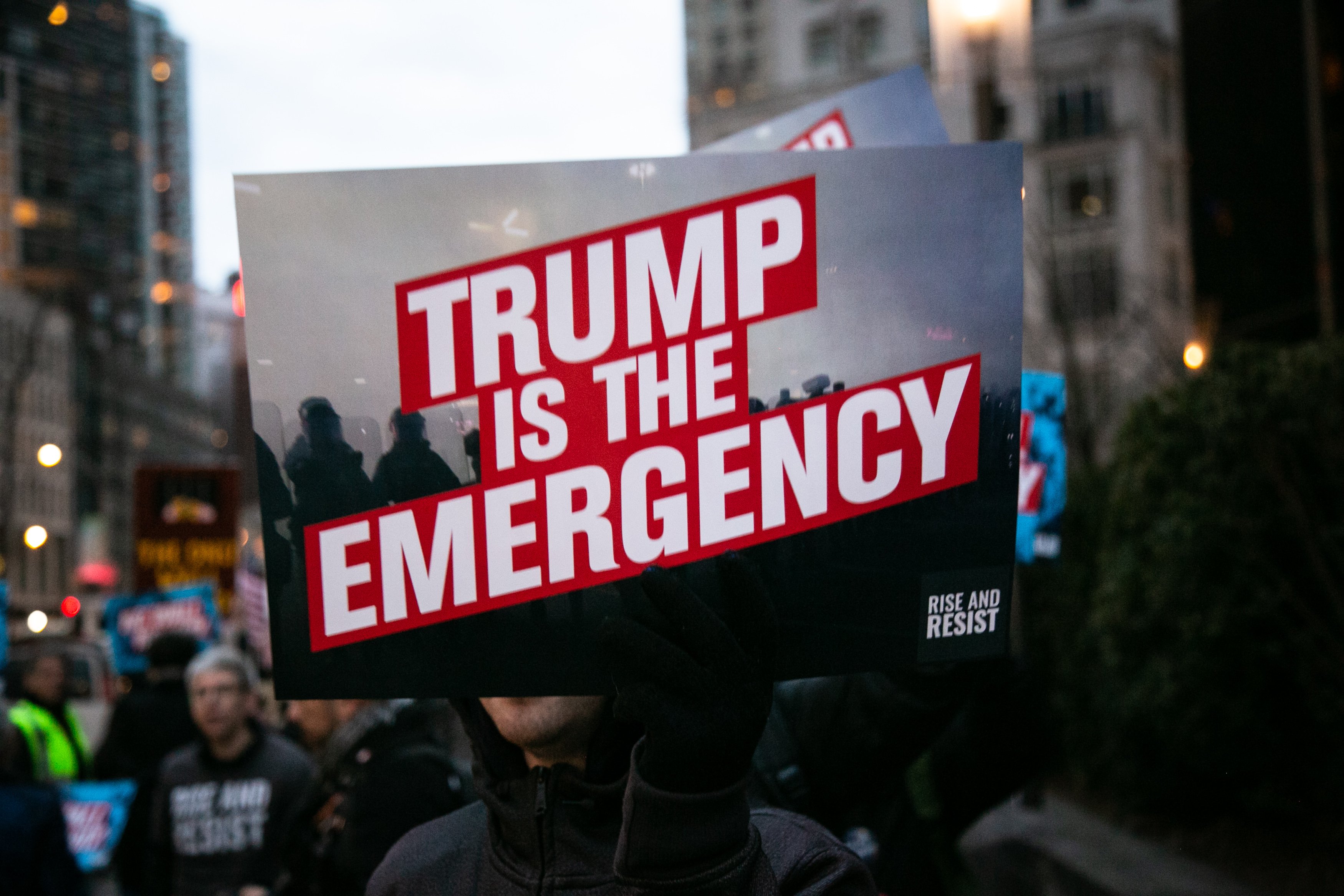
President Donald Trump is employing national emergency declarations as a routine governance tool, declaring 23 such emergencies across his two terms—far surpassing his predecessors. This frequent use of extraordinary executive authority allows the administration to bypass legislative processes and regulatory reviews for hundreds of actions, raising profound constitutional concerns.
From Exception to Standard Procedure
Recent declarations have included labeling long airport wait times a national emergency to fund TSA officers and declaring a "crime emergency" in Washington, D.C. While the immediate goals—like paying government workers—may be popular, the method represents a significant shift. Each declaration unlocks over 130 statutory powers, some granting authority to seize communications, freeze bank accounts, or deploy troops abroad. Legal scholars note that perpetual emergency rule is a hallmark of authoritarian systems, allowing leaders to govern outside normal legal constraints while maintaining a facade of legality.
A Law Designed to Limit, Now Used to Expand
The 1976 National Emergencies Act was passed by Congress to rein in expanding presidential powers. A Senate committee that helped draft it warned that during crises, a president's emergency powers "appear to be virtually unlimited." The law, however, did not define what constitutes an emergency. Instead, it gave Congress authority to terminate declarations—a power used only once in four decades. When Congress refused funding for a border wall during Trump's first term, he declared a national emergency to appropriate money anyway. Lawmakers passed a bipartisan resolution to end it, but Trump vetoed the measure.
Past presidents have invoked emergency powers for widely recognized crises. After the 9/11 attacks, President George W. Bush used them to mobilize reservists and sanction terrorist networks. President Joe Biden invoked them to sanction Russia following its invasion of Ukraine. In contrast, Trump's emergencies often address policies with tenuous connections to immediate national security threats, such as imposing tariffs or intervening in foreign legal matters. For instance, he declared Canada's failure to block fentanyl a national health emergency, despite less than 1% of U.S.-bound fentanyl crossing that border. When Brazil prosecuted former President Jair Bolsonaro, a Trump ally, for an attempted coup, Trump labeled it "political persecution" and imposed retaliatory tariffs.
Judicial Pushback and Circumvention
Courts have occasionally intervened. Judges have temporarily blocked some deportation orders and prevented the federalization of National Guard troops for domestic protest response. The Supreme Court ruled Trump's use of the International Economic Emergency Powers Act for sweeping tariffs unconstitutional. However, litigation is slow, and orders often remain in effect during appeals. Trump has shown willingness to circumvent unfavorable rulings. After condemning the Supreme Court's tariff decision and insulting the justices, he imposed similar tariffs under a different statute. This pattern reflects a broader challenge to institutional norms that extends beyond executive power.
The Broader Political Context
While other presidents have arguably stretched emergency authority—Biden cited the COVID-19 emergency for student loan relief—none have sought to normalize the practice to this extent. Trump's actions occur amid a fragmented political landscape where congressional gridlock often incentivizes executive action. The precedent set could empower future presidents to govern through perpetual emergency, fundamentally altering the balance of power. As Justice Robert Jackson warned in a landmark opinion cited by the 1970s Senate committee, the founders suspected that "emergency powers would tend to kindle emergencies," providing "a ready pretext for usurpation."
The immediate effects of these declarations are tangible—shifting trade policies, redirected funds, altered military deployments. But the enduring damage may be to the constitutional system itself. Once institutional norms are eroded, they are difficult to restore. A future president could revoke these orders, but the normalization of emergency governance could leave a lasting imprint on American democracy, making extraordinary powers ordinary and weakening the legislative check on executive overreach.